


-
Yep. Swing isn't just playing uneven 8th notes. There are a few more things to it.
 Originally Posted by Beats_and_Guitars
-
03-24-2026 10:44 PM

-
Curious as to why you use the term uneven rather than calling them what they are- swung 8th notes. Possibly because calling the swung 8th notes implies you can swing 8th notes? Originally Posted by Strat-itis
Sent from my iPhone using Tapatalk
-
Because you don't define a term with the same term..
-
Anyway you can definitely teach swing. Just because something is rhythm doesn't mean it's ineffable. And just because something isn't a single damn step doesn't mean it's ineffable.
Like the OP said:
1. Uneven 8th notes.
2. Backbeat.
3. Emphasizing the upbeats.
You also need:
4. Flux.
5. Phrasing.
6. Harmonic momentum.
Then all tempos aren't 8th note based. You need to be able to:
7. Subdivide to triplets and 16th notes.
8. Double time this for ballads..
Possibly more. Swinging isn't just playing uneven 8th notes.Last edited by Strat-itis; 03-25-2026 at 03:20 AM.
-
It’s hard to tell who’s arguing that swing is a teachable concept and who isn’t at this point and I haven’t been referencing the log of posts my apologies if I took you the wrong way. Originally Posted by Strat-itis
I’ve only recently joined this forum and it has so far been a mostly confrontational experience and it appears that now I’m on the defensive with my responses. That’s my bad.
Sent from my iPhone using Tapatalk
-
it is somewhat difficult to figure out where you're coming from. you write "When people say “you can’t teach swing” I’d wholeheartedly disagree" but you never make the point why you disagree or give us a glimpse into your teaching and how you teach swing. you can tell from my sig where i stand on this topic. i've been teaching for 30 years now. Originally Posted by Beats_and_Guitars
-
I think what doesn't help the discussion is that 'swing' means different things depending on context.
I can totally coach a student to place swing up beats, develop a more mature style of articulation, phrase bop lines better, sit more in the pocket etc etc. This will result in the player swinging more and at least sounding idiomatically like they are playing jazz.
This is fairly objective and there is a right and wrong way to do it. You can teach people the ABC's of swing rhythm to the point where they aren't making basic mistakes.
For example, if you and play with a pro big band, you will be placing the upbeat hits and so on with the horn section, and there is an established professional way to do this that people learn by playing with big bands. And then you can get into the stylistic specifics of a Basie feel, for example. The rhythm guitar function in a certain way and so on.
Do I think I can coach a student to swing like Lester Young? Probably not.
In the real world, for example swing rhythm guitar, you might be dead on it with the metronome at home, but depending on what band leader you work with they might want you to lay back more, or push more. The metronome becomes a sort of metric baseline but it isn't the be all and end all. (Some just learned their time by playing with great players, not so common these days.)
And this is all more subjective and something that you have to learn experientially. And that goes for a lot of the nuances. At that point swing is no longer something you need to fix, but an actual art form that's the life and soul of classic jazz playing.
Its much like saying
- Can a composition professor teach someone to compose a piece? Yes.
- Can they coach them on compositional technique? Also yes.
- Can they teach them to compose like Beethoven? Stylistically, maybe - but not really lol. Artists are gonna Art. For everyone else, you can learn the craft.
I also think a lot of things people associate with swing include non-rhythm aspects - sound, vibe, size of the guitar, choice of hat etc. And of the style of music. Trad people don't think bop swings (TBH a lot of the early bop stuff didn't really), bop people don't think that the contemporary guys swing and so on. We all like to moan about players we don't like.
That's music - it's a holistic thing. Almost like it's a performance art of something.
-
You're good, I'm not mad at you. I get annoyed with threads when they default to dogma that music is intrinsically ineffable and you're better off not knowing what you're doing. This one is weirder and is just defaulting to vague pedantry.. Originally Posted by Beats_and_Guitars
Last edited by Strat-itis; 03-25-2026 at 10:23 AM.
-
There's this;
Or you can blast some Basie and play along with a one note solo.
-
My argument is that swing DOESN'T just live in the eighth note to eighth note relationship. That's my whole "stop worrying about the lives of two eighth notes" response. There's so many other rhythmic details that contribute to how we swing. My frustration is that we can't really have a discussion about "teaching swing" if we never took "teaching rhythm" seriously enough in the first place. Originally Posted by Christian Miller
Rhythm organizes all the building blocks we learn in our studies and transforms it all into music. Rhythm isn't a building block itself. Rather, it's the agent of creation and execution. Without rhythm to tie everything together, we are left playing meanderings about theory--and that's not what drives most of us to listen to this music (whether we admit that or not). We listen to this music because it "sounds good." One of the key reasons why jazz "sounds good" is because whatever is being played by that musician is being COMMUNICATED via their rhythmic intention. We know that as a musician's confidence, but it's actually rhythmic intent. Advanced harmonic knowhow sounds like shit without rhythmic intent.
If you want to talk "swing", then you have to take rhythm seriously too. Hard to do when we marginalize rhythm in music education. That's not an "us of the jazz guitar forum" problem. That's a larger, systemic issue with music education. Maybe it requires a new approach to teaching, and maybe that's a welcome change. As a teacher who's taught just about all grade levels and abilities across the country, I take any domain of education extremely seriously. As a student, how can I learn about rhythm if resources are almost as barren as a desert? Why do I need to seek out these scant resources, as if I was exploring the final frontier of music? Rhythm as an organizing and transformative agent of creation SHOULDN'T be a novel topic in music, at all. My words shouldn't sound like gobbledygook (do they always?) about rhythm, they should be obvious truth.
I guess I got pulled back into the forum, for the time being. Hey everyone. Hopefully my stay will be nice and short for everyone's sake
Last edited by PickingMyEars; 03-25-2026 at 02:56 PM.
-
There's the behavior, then there's the analysis and description of the behavior--and I use "then" because the behavior precedes the analysis. "Teaching" the behavior can deploy any number of approaches, depending on both student and teacher. I note that Christian often uses "coach," which strikes me as a crucial way of thinking of "teaching" a physical skill. (I also like his use of "craft.")
And if I keep pulling that process apart, it seems to me that it probably starts with getting the student to hear "swing," since you can't perform what you can't hear. (Well, I suppose there might be a pedagogy that manages to anatomize the physical components sufficiently that a series of "do this" instructions might produce "swing," but I wonder how the player would know it had been accomplished.)
Next stage: instruction and advice on the physical behaviors, with or without abstract-theoretical anatomizing/describing of the components of the target activity. At the risk of being seen as proud of my limitations, I repeat that I got as far as I did with playing swing without the help of formal, theoretical training. (I can barely construe standard notation, particularly time.) I attempted to mimic what I heard and, in workshops, got practical advice on improving it. "Swung eighths" didn't mean anything to me practically, though I'm capable of understanding why that transcribing convention is appropriate. But that description was not as important as sitting in with swinging players--and figuring out how to accompany my singing, which, I have to say, swings pretty well. (Reinforced by decades of paying attention to how to read poetry--and of the study of the linguistics, rhetoric, and prosody, which I do understand.)
An analytical and notational system can probably come very close to accounting for a given musical result--I'm pretty sure that, say, Pro Tools can locate and isolate exactly what's going on in a recording--find where "the swing" happens. And that analytical result could drive instruction. But that would still feed into some version of the teacher's "try it this way." The heart of learning a craft remains imitation and repetition, and, if you're lucky, advice from a practitioner to augment one's own perceptions of the result.
-
@Christian Miller I didn't want to suggest that your instruction is null and void. The suggestions about time feel and commitment to melodic ideas that you gave me were on point. I guess the Youtube fame I got from that video submission was a perk as well
Knowing how to play the upbeats, being able to play straight but laid back (Dexter Gordan), and having technique to swing are all crucial. Actually, I would love to see a video on "left hand technique" and swing in the near future.
All that is great, and starts the conversation. The issue is that we rarely get beyond "obsessing over the lives of two eighth notes" problem. Christian, that's public domain and you are more than welcome to take that to the bank
Hopefully @Rob MacKillop's book study on THE JIMMY RANEY BOOK will reveal the rhythmic nuance that produces authentic swing feel and propulsion to our improvisation. I think the "feel" part is a bit of a misnomer. "Swing feel" isn't some magic spice (I am working on the figurative language here, pamo) that you can sprinkle on your playing. Swing happens due to a whole litany of rhythmic nuance that musicians learned from the oral tradition--just like how they learned how to improvise. Charlie Parker was a rhythmic genius, and yet too many ignore his rhythm.
That's why I push back against "feel." You need to use your ears and imitate, yes. You need to learn by playing with other great musicians, yes. But you also need to be aware of the all the rhythmic/melodic/technical choices you make to achieve that dance. Swing is more than bickering eighth notes and cool shades
Last edited by PickingMyEars; 03-26-2026 at 01:12 AM.
-
Indeed, the correct choice of hat is also vital
Sent from my iPhone using Tapatalk
-
Tbh the two most important things in jazz guitar are the things many students habitually avoid - working on your ears and working on rhythm.
As we guitarists I daresay tend to have two left feet, this can se like a hopeless task. It is not, as far as I can tell, but I don’t think it’s something you can fix with yet another system. Although - learning to play precise grid time is a good skill to develop and that is math, basically. Accurate subdivision etc.
But I’m afraid feel is more nuanced and subjective thing and comes through the oral tradition and the community of practice. As Charles MacPherson puts it, while we can all define the beat objectively, the space between two beats is a zone of creativity and play.
Sent from my iPhone using Tapatalk
-
Maybe, we all should learn how to dance first, before playing guitar.

-
I did a lot of ear training, but that led to a lot of guestimating on stage. When I would find a lick or solo I liked, I would immediately take it apart and mess with it creatively. I couldn't play complete phrases. I'd get color notes and arpeggios, but no clear phrases. No clear vocabulary. Many of you noticed when I posted my playing years ago. Originally Posted by Christian Miller
The issue was: I never practiced playing the material exactly as is and IN TIME for long enough to get it into my ears.
My teacher is a stickler for playing in time and in rhythm. Many students of Barry Harris seem to have that same adherence to rhythm and time. Shan from "Jazz Skills" also says the same on repeat: play it in time and don't slow down mid tempo.
Whether you are practicing a complex phrase, harmonic progression, or entire tune--play it in time and don't slow down for the challenging bits once you set the tempo. If there's something difficult, work it up and play it in time as quickly as possible.
In order to develop our time feel, we need to make playing in time a daily priority. Easier said than done, especially for us perfectionists who randomly slow down to play it right (looking at me!) If we practice playing in time as much as possible, we start hearing our ideas clearly in time. That realization was a huge, albeit obvious, realization for me.
Rhythmic intention. Exactitude with our musical timing. Practicing music in time so we can hear and play it in time on the bandstand. Sounds easy and obvious until you make it a dictum of every practice session. Even better if you can play "in time" without a metronome every session.Last edited by PickingMyEars; 03-26-2026 at 11:37 AM.
-
I started dancing not long after I got my first guitar at age ten--my mother taught me the basic "box" (a foxtrot pattern) and what she called "lindy" steps. And when I was in high school (1958-62), social dancing of all kinds was the norm. (That changed a few years later, when the various rock dances displaced swing and ballroom styles. My 72-year-old brother never danced.) Originally Posted by GuyBoden
I'm not sure how directly dancing affected my early guitar playing--back then I was doing folky material--and by college I'd stopped social dancing but kept right on playing folky guitar for the next thirty years. But when I got around to playing swing in my fifties, I also returned to dancing at Augusta's swing weeks, and the two activities felt mutually reinforcing. On the other hand, I don't recall ever seeing any of my guitar instructors on the dance floor, and they were all very swinging players.
I suspect that decades of attentive listening to all kinds of music was pretty important--I remember the pleasure of recognizing the jig in a Bach gigue and the peasant dance rhythms in Bartok or Haydn. And following the drum solos in "Sing, Sing, Sing" and "Take Five."
-
I have to say that I find the use of 'we' in your posts a little off putting sometimes. It makes them read in a way that I don't think is intentional. Originally Posted by PickingMyEars
What you describe is a more schematic approach to music. Which is what I generally advocate here. It's not the only path, but if you want to play straightahead jazz, I think it is the most well trodden one.
Yes, practicing things in time is very important.
OTOH, playing things out of time is important too, and sometimes a necessary stage before we try to play things in time, especially for those at a lower level on their instrument or when the music is technically demanding for the player. I do think habitually slowing everything down is a bad idea if your aim is to assimilate music for improv etc... Do it only when necessary. (But maybe that is very bad advice for a concert musician.)
Hearing things in time, as they should sound is key, and that's something that can get lost when - ahem - "we" slow things down. As you know Barry did everything in tempo. But sometimes people hear things a bit inaccurately. I know I did (still do Tbh), and my students get things a bit wrong sometimes. So that's where the input of a teacher or other listener can be useful. Learning to sing and play important rhythms - for example the quarter and half note triplet - can open the ears to these sounds when they appear.
In fact, I see pretty much all music learning as a cycle between what you play and what you hear. I believe that is one thing that often gets overlooked in ear training - there's a feedback loop. Playing rhythms definitely helps with hearing rhythms, as it does for lines, chords and tunes.
Recording yourself can show up things you weren't aware of as well.Last edited by Christian Miller; 03-26-2026 at 01:00 PM.
-
no more "weeeeeeeeeeeeeeeeee" statements
There, out of my system.
We might have to define "practicing in time."
Sounds simple. Put on a metronome. Learn a phrase of music. Got it. Check.
When we ingrain something in time, our muscles memory can access the material in time (something I definitely neglected in my practice) and our inner ears can access that material in time. Aurality, as you and me used to discuss. Same with playing a whole tune.
The issue is the whole "start and stop" of the process. That is what I had problems with for YEARS. Oh wait. If I can just. Lemme try that part again. It's just an arpeggio to the 9th. I know how this works, I should be able to play it. Slower? Faster? Argh! Stupid guitar. Maybe I should move on to some new material. What was I practicing again?
I've come to terms with the reality of my woodshed. You hear what you practice, and you play what you practice. I am returning to ear training to practice longitudinal hearing--being able to keep an idea in my head for a longer period of time as I try to develop it. All that said, if my practice sessions are a bunch of "start/stop" error correction--that's what I hear! That's what I engrain!
The metronome is a great tool, but just because I put on a metronome--doesn't mean I am practicing in time. Just because I put the reps in, doesn't mean I am practicing in time.
My teacher calls me out on this all the time. Work up the specifics out of time. But, as soon as you can, play it in time. He says, "when you commit to a tempo, commit to the tempo. Don't stop or slow down. You will hear it wrong if you don't follow through when you commit to a tempo."
Easier said than done. One way to practice swinging is to "commit to your tempo" and internalize how things sound in musical time. My younger self would have foot me tooth and nail for this post.
No we's about it I think we're saying the same thing, but the whole "practice in time/tempo" needed clarification.
-
Well if I've understood things right, I think Peter's classical guitar teachers would have told you to do it so slowly there was no possibility of error. This is advice you find elsewhere too of course. Provided you have good technique and fingerings, it's excellent advice if you want to learn to effortlessly play a Bach fugue, say. Originally Posted by PickingMyEars
OTOH music contains many other challenges than simply mastering repertoire for recitals. Sight reading is an obvious one. Improvisation is another.
Yeah, so this is my bug bear with everyone. My child students complain about it, but I'm stickler for this from the off - I get them to sing the things through at tempo before they play them. It seems to help. I think you have to have an idea of it in your mind's ear to stand a chance really. But just trying to get kids to stop playing a series of undifferentiated notes one at a time in splendid isolation from the next is a task in itself. I try to train them to recognise shapes in the music, start perceiving music in phrases - scales are an obvious one, and would be an obvious one to hear too.The metronome is a great tool, but just because I put on a metronome--doesn't mean I am practicing in time. Just because I put the reps in, doesn't mean I am practicing in time.
My teacher calls me out on this all the time. Work up the specifics out of time. But, as soon as you can, play it in time. He says, "when you commit to a tempo, commit to the tempo. Don't stop or slow down. You will hear it wrong if you don't follow through when you commit to a tempo."
In notation there are more issues. The visual complexity of common pop and jazz rhythms when notated, the apparent insurmountable conceptual barrier of the bar line that none may cross, and so on. Ear is - easier... in many ways.
Usually if you've done all of that work, and your technique is working right, playing the thing with a metronome is really not much of an issue. Even for the kids. Some of them have much better natural time than me tbh.
Yes, I remember.Easier said than done. One way to practice swinging is to "commit to your tempo" and internalize how things sound in musical time. My younger self would have foot me tooth and nail for this post.
I mean I think that's why transcription is so important. It's not about learning other people's stuff, although it can be. Really, it's about learning how to music. Learning solos and songs by ear teaches you everything you need. Paul Berliner talks about players being so tuned in by ear that they could shadow a soloist as they were playing their solo. Mental.No we's about it I think we're saying the same thing, but the whole "practice in time/tempo" needed clarification.
For such musicians there was no need to have a word for 'transcription'. It's like the way having a word for 'ear training' tells you everything about what's wrong with today's music education. (Mea culpa haha.)
Lately having to write things down for my channel, I really appreciate the extra listening I have to do to the rhythm side just to work out how to approximate the thing in notation. I used to be a bit sniffy about writing things down, but I now think it concentrates your listening even more.
-
And in terms of teaching swing to these elementary school age kids, the guitar book has an excellent little etude of basic swing feel. (It's a blues in A)
So, it's just about coaching them to play the upbeat pushes super late, and lay back on the eighths. You can get them to do this in year 2 or 3 (1st or 2nd Grade US).
The words help!
For the soloing, I usually cross out some of the notes (definitely B), and get them to focus on playing rhythmic phrases with plenty of repetitions. Blues riffs, basically. And then I see if I can get them to come back in on the head. So they play their first jazz guitar at age 6 or 7. But even here, I aim on getting the feel and phrasing right. Same for the classical stuff.
These are just general principles that can applied to any level...
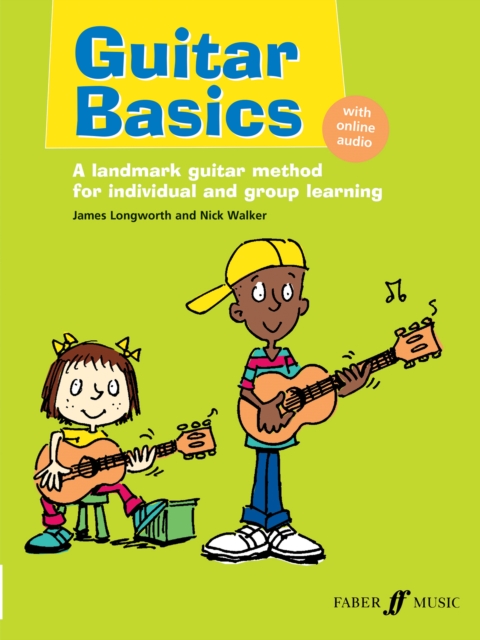
The book - Guitar Basics - is cool because it introduces syncopations early on - which definitely not true of more traditional classical guitar methods like the Guitarist's Way. It also backing tracks, which helps with the 'play in tempo!' thing. Lots of ear and improv games. The teachers are clearly along the same lines as I am. We, you might say, are pushing towards the same goals.
-
I have yet to force anyone to sing this incredibly cringe vocalese I came up with of 16 bars of Jim Hall solo - but the concept is the same
Sorry about that.
-
Christian, this is poetry. Originally Posted by Christian Miller
-
Excellent, the "Guitar Basics" book seems to be aimed at my level of incompetence: Originally Posted by Christian Miller
-
Tbh it’s made me a better musician haha Originally Posted by GuyBoden
There’s a few volumes of it now, honestly no better method for basic reading if you can get past the presentation
Sent from my iPhone using Tapatalk


 Reply With Quote


New LEDs Day
Today, 07:28 PM in Other Styles / Instruments