

There Will Never Be Another You is one of my favorite jazz standards. I love the melody and the chord changes are easy, but not too easy to improvise over. The song was first recorded in 1942 by clarinetist Woody Herman but wasn’t very well known until Chet Baker recorded his vocal rendition in 1954.
To help you get this tune under your fingers this lesson will introduce you to the theme and takes you through a voice leading study, a scale study, a chord comping study, and an arpeggio study.
Here is the complete audio track of what you will learn in this lesson:
Here’s the backing track:
THE JAZZ GUITAR CHORD DICTIONARY (FREE eBOOK)
Download now and learn 244 chord shapes!
There Will Never Be Another You – Chord Melody Theme
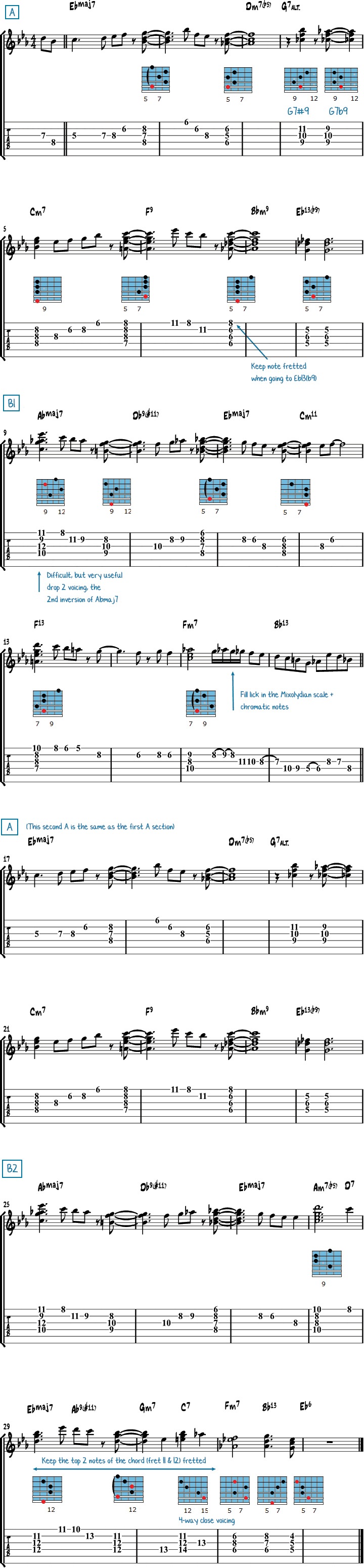
The theme is arranged to play in a trio with bass and drums. Most of the harmonization is done with drop 2 chord voicings.
There Will Never Be Another You has an A B1 A B2 structure. The second A has the same arrangement as the first A.
The chord diagrams in between the notation and the tabs are a reference only, to see from which chord the used voicings are derived. Fret only the chord notes as written in the tabs, no need to fret the entire chord.
There Will Never Be Another You – Voice Leading Solo
In the first solo on A, I put the emphasis on voice leading.
Voice leading in improvisation is like a skeleton you can build your guitar solo around. The way it works is by arranging a smooth, harmonious line that follows the chord changes and in which the most important notes of a chord (3 and 7 + tensions) fall on the strong beats. A voice leading usually doesn’t use large intervals.
In the study below, I’ve put 2 voice leadings, one on the high notes, one on the low notes. The orange voice leading (mainly) follows the 3ds of the chords, the blue one (mainly) follows the 5ths of the chords.

There Will Never Be Another You – Scale Study
There Will Never Be Another You is in the key of Eb major. You can get a long way by using the Eb major scale for your solos, but there are chords in the song where Eb major won’t work.
Before we go to the study, here’s an overview of the basic guitar scales you can use for improvising.

Bebop Scales
At the end of the voice leading study and also in the scale study, I use the bebop scale a couple of times.
The bebop scale is frequently used in jazz improvisation and is derived from the Mixolydian, Ionian, and Dorian modes. They are called bebop scales because they were often used by jazz artists from the bebop area like Charlie Parker.
There are 3 bebop scales:
1) The dominant bebop scale: is a Mixolydian scale with a chromatic note between 1 and b7 (bebop scales are usually played descending).
Here’s an example of the Bb dominant bebop scale:

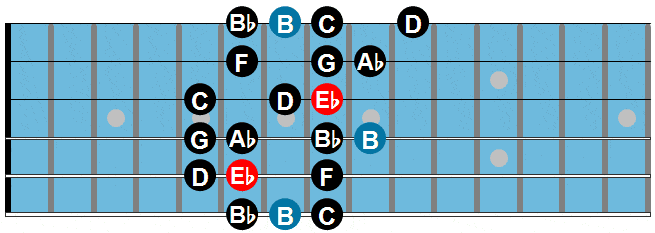
2) The major bebop scale: is a major scale with a chromatic note between 6 and 5.
Here’s an example of the Eb major bebop scale:
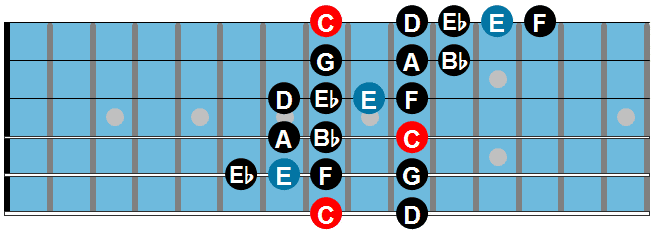
3) The minor bebop scale (aka Dorian bebop scale): is a Dorian mode with a chromatic note between 4 and b3.
Here’s an example of the C minor bebop scale:
The Harmonic Minor Scale
I also use the harmonic minor scale in this study.
The harmonic minor scale is one of the first choices to play over dominant chords that resolve into a minor chord.
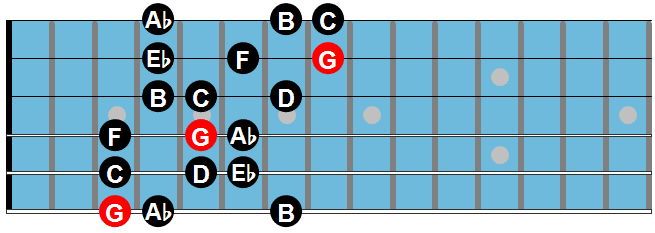
If G7 is going to Cm7 for example, you can use the C harmonic minor scale to play over G7.
The C harmonic minor scale played over a G dominant chord is also known as G Phrygian dominant scale.
Here’s an example of the G Phrygian dominant scale (= C harmonic minor scale):
Scale Study
There Will Never Be Another You – Arpeggio Study
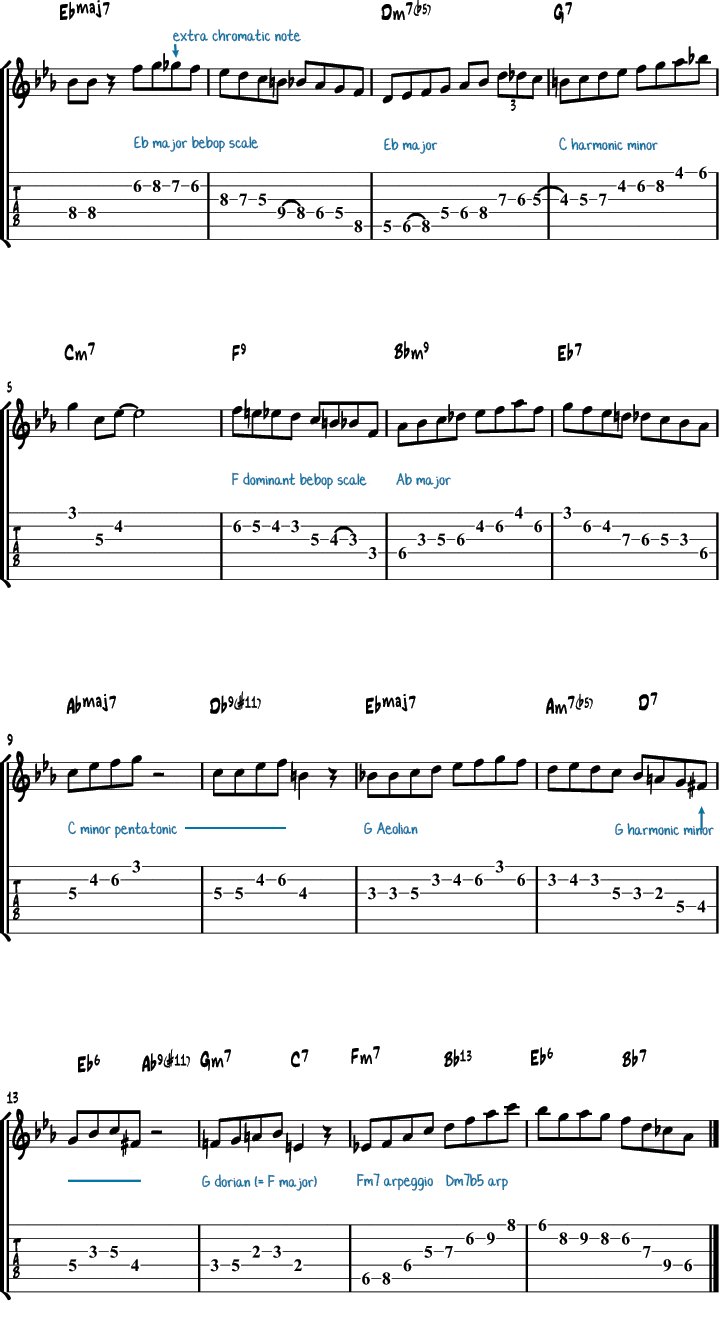
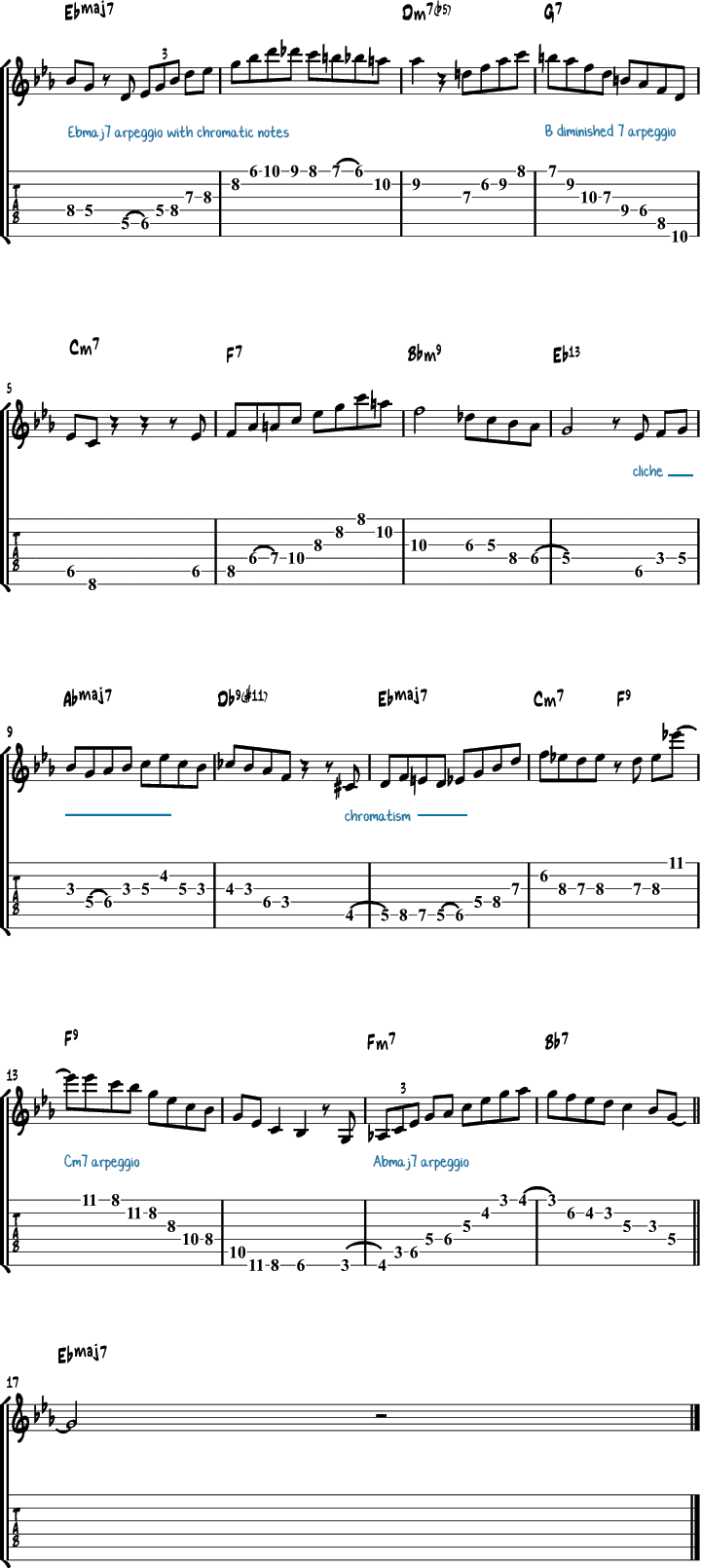
Next, we’ll have a look at an arpeggio study over There Will Never Be Another You.
B Diminished Arpeggio (Bar 4)
In bar 4 I play a B diminished arpeggio over G7.
This is a common substitution in jazz improvisation.
To play over a dominant chord, play the diminished arpeggio that starts on the 3rd of the dominant chord.
Bdim7 has the notes B D F Ab. Over G7 these notes sound like 3 5 b7 and b9:
| Bdim7 Arpeggio | B | D | F | Ab |
|---|---|---|---|---|
| Played over G7 | 3 | 5 | b7 | b9 |
You can also start a diminished arpeggio on the b9 (might easier to visualize on the fretboard), 5 or b7 of the dominant chord as these diminished chords are the identical in notes. Over G7 that would be Abdim7, Ddim7, and Fdim7.
Here’s how the B diminished arpeggio looks on the fretboard:

Cm7 Arpeggio (Bar 12)
In bar 13 I play a Cm7 arpeggio over F7.
This is a substitution often used by Wes Montgomery. The notes C Eb G Bb sound like 5 b7 9 4 over F7. The fourth is played instead of the third of F7, resulting in a sus4 sound.
| Cm7 Arpeggio | C | Eb | G | Bb |
|---|---|---|---|---|
| Played over F7 | 5 | b7 | 9 | 4 |
Abmaj7 Arpeggio (Bar 15)
In bar 15 I play an Abmaj7 arpeggio over Fm7.
This is another common substitution for minor chords. The notes Ab C Eb G sound like b3 5 b7 9 over Fm7.
| Abmaj7 Arpeggio | Ab | C | Eb | G |
|---|---|---|---|---|
| Played over Fm7 | b3 | 5 | b7 | 9 |
The Arpeggio Study
There Will Never Be Another You – Comping Study
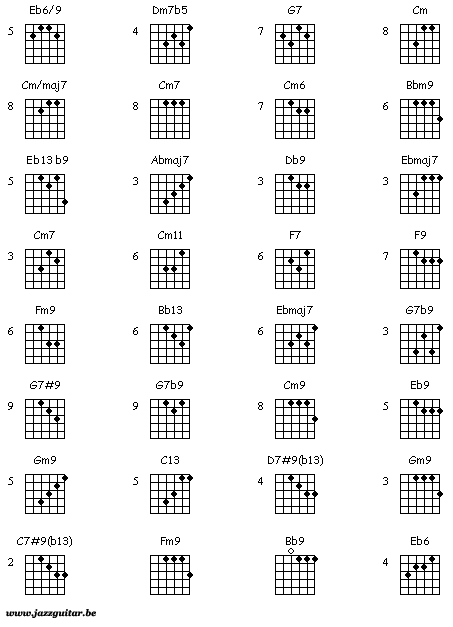
Here’s the guitar chord chart with the voicings used in this comping study. Most of them are pretty basic, but I omitted the bass note a lot of times so they might look a bit different.
Backing Track
Listen & Play Along
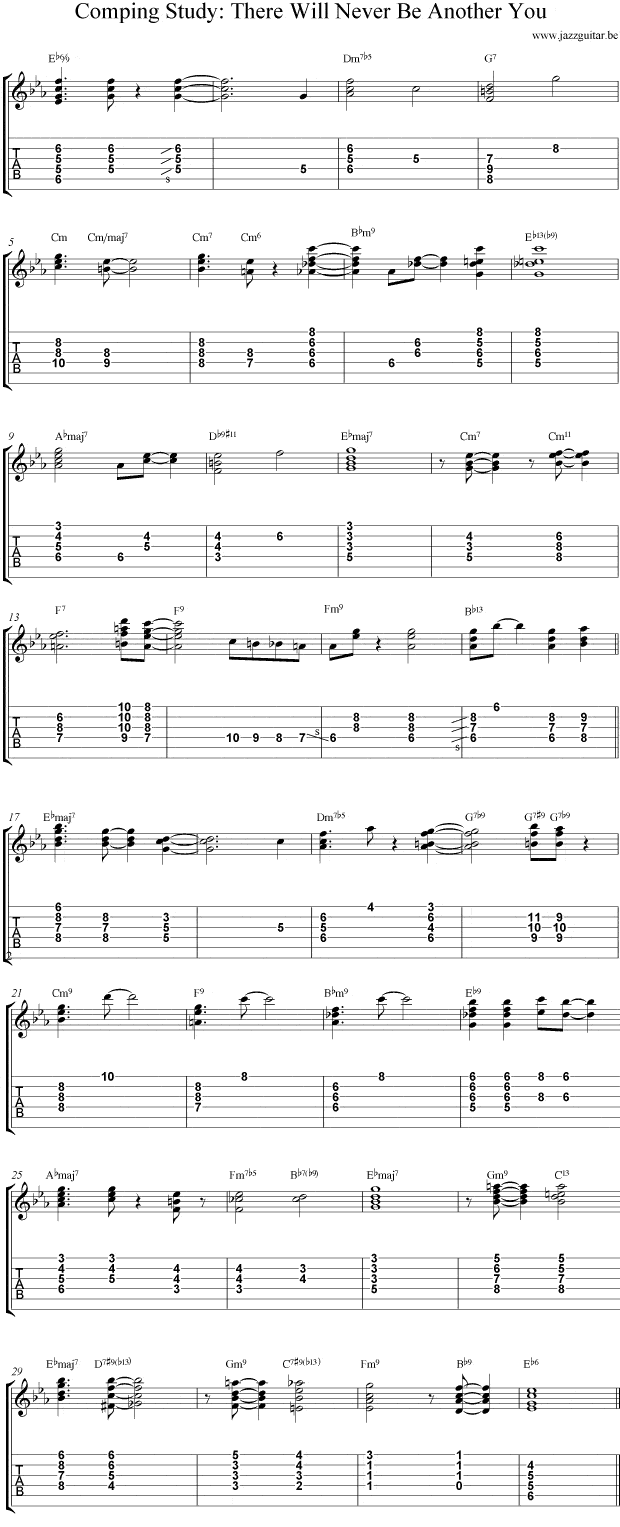
Bars 3-4
Here I omit the bass note in these voicings (and most other voicings in this comping lesson).
The 1 and the 5 are the least important notes of a chord (when you’re playing with a bass instrument).
3 and 7 are the most important notes and tensions make a voicing interesting. This doesn’t mean you always have to play tensions, basic chord voicings like the ones in this II V work as well.
Bars 5-6
Here I use a line cliché, a chromatic line going from the 1 of a chord to the 6 that is used quite often in bebop and Latin music.
In Bar 6 I play the Bbm 1 beat early (on the 4). This is called anticipation and can be used to give a tune a bit more drive. You can anticipate a quarter note or a quaver (like the end of bar 13).
Bar 20
This is a very useful chord cliche, going from the #9 to the b9 of the dominant chord to the 5 of the target chord.
Bar 28
This basic Bbmaj7 chord voicing is the first substitute for Gm9. The next voicing, Bbmaj7#11 is a substitute for C 13.
Bar 32
Here I play a 6 chord here because it’s the end of the chorus. A 6 chord is more stable than a maj7 chord, so it’s better to play a 6 when a chord requires a tonic sound.

Hi Dirk
What a great work! Thanx very, very much! You cover all aspects: theme, chords, voice leading, scales, arpeggio, comping… and you explain all the things very well.
One thing – in the comping section you refer in bar 28 to Bbmaj7. But there the chords are A-7b5 and D7. So I think you confused this with bar 16. Right?
Thanks Rudolf! The chords in bar 28 are Gm9 (Bbmaj7) and C13 (Bbmaj7#11).
This is a great lesson, thank you all so much!
brilliant lessons
hello, can you explain me why do you use C harmonic minor scale to play over G7 chord? Same question about Bb major scale over Cm7 chord. I do not understand, they do not fit to each other!
Hi Eugene, G7 is the 5th degree of the C harmonic minor scale, that’s why this scale is a common choice for dominant chords going to a minor chord. From a modes point of view, you can also name this scale the G Phrygian dominant scale (= C harmonic minor scale). The Cm7-F7 is a ii V in Bb major that does not resolve, hence the Bb major scale (= C Dorian scale = F Mixolydian scale).
This is a very good look into all aspects of a song: there is really everything you need to know about actually playing the song: chord-melody, comping, scales, arpeggios, all well explained! And all for FREE!
A very good job!
Hi Dirk, great lesson as ever! Thank you !
Muito bom. Obrigado
Muito bom. ,grato
Estou estudando esse material guitar.com
Muito obrigado
cara essa aulas são tremendas , não o cara n]ao se apaixonar pelo jazz, parabéns guitar-master
Is the explanation in the Jazz Standards Study Guide the same as this lesson? The reason I ask is that I love how thorough that ‘There Will Never…’ is done.
A very thorough lesson. Just happen to be working on this one at the moment…many excellent new ideas. Thank you Dirk!
Wow! Another great lesson…will enjoy practicing it!thanks
Great lesson as always!
Great lesson, Dirk! Thank You very much.
Another awesome lesson! I have learned so much from this site in the last year and a half. Thank-you so much! I noticed in this article you said… Here’s an example of the Eb major bebop scale… but the image below it is for Bb it would appear on my end.
Thanks for the feedback, Spencer! I just noticed I’ve put a wrong image for the Bb dominant bebop scale, fixed that. The Eb major bebop scale is correct though. Eb major bebop is the same scale as a C dominant bebop scale btw…
Thanks Dirk, a very helpful analysis here! Im not quite following this comment though: ‘Eb major bebop is the same scale as a C dominant bebop scale’. Wouldn’t Eb major have both an Eb and an Ab where C dominant does not? Thanks
Great, thank you!
Great lesson! Chapeau😀👌