


-
That's a fairly common sentiment, which fits my experience to some extent. It's not easy to find people to play live jazz with, and it can take a lot of effort, maybe a bit of luck, and can be costly in terms of time and money, to do so. That may in part depend on region and locale, not to mention socio-cultural factors.
 Originally Posted by rlrhett
This thread has a come along way from recommending our favorite jazz book! At the same time what you, and several others, have brought are tangential and meaningful discussions.
I live in a semi-rural area of Japan that's within a forty minute drive of a small city, and a two hour drive to a larger city. Nothing on the scale of Tokyo, where I have been to jams when I get a chance to travel there. The problem with the big cities is the jam joints are small, there are incredible players going to them, and one is lucky to even get to play one tune at a jam.
But gradually, over time in my small corner of the world, I found several venues that hold regular jazz jams and I go to a few every month. With travel expenses, participation fees and a coffee or two, it can cost the equivalent of 20USD per jam. It can take up to 2 hours to get to and from a jam session, while most sessions last about 3 hours. Jazz jams are frequented by players of various levels and there appear to be some opportunities to play.
It might be worth noting that most joints that hold jazz jams are not bars, where the goal of a jam session might be for the host band to entertain an audience and then call a few up to join them. Rather, these are regional "live houses," small Mom and Pop shops that provide a space and backline for live music. Usually, between events, they hold jam sessions. As far as I can tell, some of these venues are an outgrowth of the old "jazz kissaten" tradition, coffee shops with a stereo system and walls of vinyl to provide a public listening space. At one point, there were hundreds of jazz kissaten throughout Japan. The tradition is now in decline; some have closed but others have repurposed as live houses. So, for sure, there are historical, economic and cultural factors that play a role in availability of jam sessions.
The first jazz joint I heard about was from a work colleague, who heard I play guitar and told her husband, a regional saxophonist. He invited me to a venue for a gig he was on, and I later learned that the venue held open jazz jams. So going to places where there is live jazz is a factor; not the Blue Note artist level, but more local and regionally focused. If available within a reasonable driving distance, small venues may be a good place to start.
By hanging out where there is live jazz, I started to recognize some people. Not the touring pros who pop in and out for a concert once in a while; it was just the local and regional folks who enjoy playing jazz. One afternoon, I was at an ice cream parlor with the Mrs., and saw a trumpet player who was on the gig with the sax player noted above. He was there with his family. We got to talking and he mentioned a monthly invitation-only jazz jam session. He gave me the details, and I showed up with my guitar the next time. I introduced myself as a friend of so-and-so, and they let me in. Later, the trumpet player arrived, and that helped. I now go to a jazz jam session there whenever possible. That experience eventually led me to finding out about a few other small venues that hold jazz jams, mostly open jams. I also found out about, and went a few times, to a blues joint that holds a weekly open jam. More recently, my Gen Z students tell me there's a regional live house that holds open rock jams.
Overall, I found most people are happy to play jazz with others of any age and capability. One venue openly welcomes beginners, but the intermediate and even some advanced players also go there. It seems to have a kind of mutually supportive community vibe. For what it's worth, in my limited view, jazz is not just for top players to put on shows; it's also a kind of a social music and for that to work we all have to keep the doors open to everyone.
It took several years for this to all come together, and before that playing jazz was indeed, as you suggest, a lonely pursuit. When I went to my first jazz jam session, I was in my mid-fifties and could barely play a couple of standards; most of my time up until then was spent playing alone at home. I couldn't imagine what I described above. Granted, I might be very fortunate to have these kinds of opportunities, and I do fully realize that they may evaporate at any moment, kinda like life itself. But at the same time, it doesn't feel like a fool's errand to strive toward finding people and places, and nurturing the possibilities, to play live jazz.
These are just my personal opinions, and I wish everyone the best in their jazz journeys!
-
08-29-2025 11:21 PM

-
Interesting! When I visited Japan my impression was jazz was quite popular. Is that actually the case? Originally Posted by JazzPadd
Sent from my iPhone using Tapatalk
-
Agreed that time spent immersed in the music is ultimately more important to being to play jazz, but that books can introduce a lot of cool concepts.
Some books that I have found helpful:
- My college instructor's book Jazz Swing Guitar by Jon Wheatley (lots of technical exercises and musical examples in the styles of various players; I naturally did a lot of work out of this book in college)
- Barry Galbraith's book Guitar Comping (all transcriptions of very melodic and creative accompaniments; he doesn't necessarily spoon-feed you any concepts, which leaves a lot of room for the player to absorb the ideas on their own)
The Leavitt books are not jazz books per se, but they are a fantastic resource for improving one's reading and understanding of the fretboard. Perhaps a bit off-topic, but for those who also enjoy classical, I have found the exercises in Scott Tennant's Pumping Nylon very helpful (and the fretting-hand work can only help with your technical proficiency in jazz music).
-
It is interesting, and thanks for asking! In my experience, jazz does seem quite popular in Japan. Of course, not to the level of pop stars, etc., but there does seem to be quite a lot of people who like listening and playing jazz. One can even hear it as muzak in some shops. But I have no basis to compare it to other places beyond my own limited experience here. Originally Posted by Christian Miller
Live jazz has a large following with many participants. Big bands are still big in Japan, and some prefectures have an annual big band festival that highlights school and university jazz big bands. There is also a lot of live jazz played by pro and semi pro musicians at small and large clubs throughout the country, and of course jazz jam sessions are quite popular, too.
This time of year, several cities have summer and autumn jazz festivals, including those that attract touring musicians, but also those that provide opportunities for amateur and part-time musicians to play jazz live. I participate in one of those every October, in which the city center for a weekend is turned into an ongoing live jazz concert. I'm rehearsing for this year's street jazz festival. Last year, for the tenth anniversary, there were a dozen stages with 4-6 acts on each, and local merchants, cafes and restaurants participated.
Of course, international jazz acts have Japan on their touring destinations, although the big name acts tend to stay in Tokyo and Osaka. But there are also touring jazz musicians who make their way to lesser known regions. A couple of years ago, an American jazz guitarist played a few of gigs in nearby venues, and led a guitar workshop and gave some lessons.
Jazz has a long and interesting history in Japan. There's been some good books about that, but the one that leaps to mind is E. Taylor Atkins "Blue Nippon." For a while, he was based in Japan and also wrote some articles, including one about Japanese "jazz towns."
Some journalists have documented traveling in Japan, exploring its various jazz scenes.
And a recent book. "Tokyo Jazz Joints," is collection of photos of "jazz kissaten" and similar places, focusing on Tokyo but also with photos of various jazz cafes in other locales. These are small public listening spaces focused on jazz, usually with a large vinyl collection but also more recently with CDs. At one point, there were hundreds of these all throughout Japan. It's been in slow decline, but there also seems to be an upsurge in rural areas.
Before coming to Japan I had no idea that jazz was this prevalent. I came here for work but am very thankful for having found such a jazz presence, which has became one of several reasons for staying. I have been to Tokyo and other big cities for concerts and jams and such, but most of my jazz activities lately are participating in open jam sessions at several small regional venues, some of which appear to me to resemble the jazz kissaten of yore.
Thanks again for asking! I'm sure there must be some other places with their own rich jazz history. One of my students is a jazz bassist in Vietnam, and another plays jazz in Norway, while another mentioned a jazz festival this summer in Hungary. I'm toying with the idea to maybe do a jazz tour of the world, visiting people, seeing live jazz, and jamming. I'd really love to learn something about the jazz presence in your, and other JGO member, locales.
-
Some of my current favorites:
Wolf Marshalls Jazz Guitar Course (Great reference book)
Corey Christiansen Essential Lines Book Series (Great lick library)
Randy Vincent Guitarist's Introduction to Jazz (Great Jazz Introduction)
-
More importantly, I support her back. Marriage is a partnership. Originally Posted by alltunes
-
Jazz Theory: From Basic to Advanced Study by Dariusz Terefenko
Has this book mentioned in this thread? It seems to have been getting great reviews on Amazon.
Not sure if this is a good Jazz Theory book. It seems a bit pricy too.
Does anyone own / use it for reference or learning about Jazz? It doesn't seem to be guitar oriented book.Last edited by GBRow; 09-11-2025 at 08:43 AM.
-
I ended up ordering the book, because someone recommended it as good resource for learning Jazz Theory. Just wondering, if any of you here happens to own / use the book, and how they find the book.
-
I mean it’s a very cool book… it goes down some deep and interesting rabbit holes. Frankly I've not had time go through 10% of it. Originally Posted by GBRow
It's quite heavy classical influenced theory, I would say. So there's chord scale things, II-V-I's, reharmonisation techniques and so on but there's also stuff on Milton Babbit style pitch set theory and a bit of Schenkerian style analysis. He's also a partimento guy. There's a whole appendix on common practice harmony that was excised for the book (I think) which is all partimento stuff. Will attach a link if anyone's interested lol.
But to give you an idea - this is what he was teaching on his theory class at Eastman. It's not beginner friendly, and there's a lot of scores, transcriptions, breakdowns of things like Bach chorales, all kinds of crazy stuff. I think it's cool, but I am basically insane.
He's a bit more modal theory than me, so I'd don't think about the bop stuff in the same way, but I think it's cool. LOT of info, and it's as far as I have read, correct info. His scale breakdowns on things like Confirmation are IMO right even if I'd teach them myself in a different way.
It won’t in my opinion do much for you if you can’t play jazz already. If you do it’s a very cool sourcebook for exploring ideas.
It depends what you want. Theory books are obviously not methods.
Sent from my iPhone using TapatalkLast edited by Christian Miller; 09-11-2025 at 05:06 PM.
-
It had to be said, but I'm glad it didn't need to be me. Originally Posted by Christian Miller
-
isn’t that a prerequisite to dedicating your life to a hunk of wood with wires on it? Originally Posted by pamosmusic
-
I picked up Terefenko's Jazz Voicing For Piano: The Complete Linear Approach earlier in the year. Like his jazz theory book, this (and its companion Drop-2 volume) isn't aimed at the amateur musician market. However, for those willing to persevere with decent reading chops on both treble and bass clefs and a sound grasp of general music theory, it contains a wealth of ideas with loads of musical examples. I've been playing through these at the piano but I don't see why the content and concepts couldn't be edited and rearranged for guitar. Originally Posted by GBRow
-
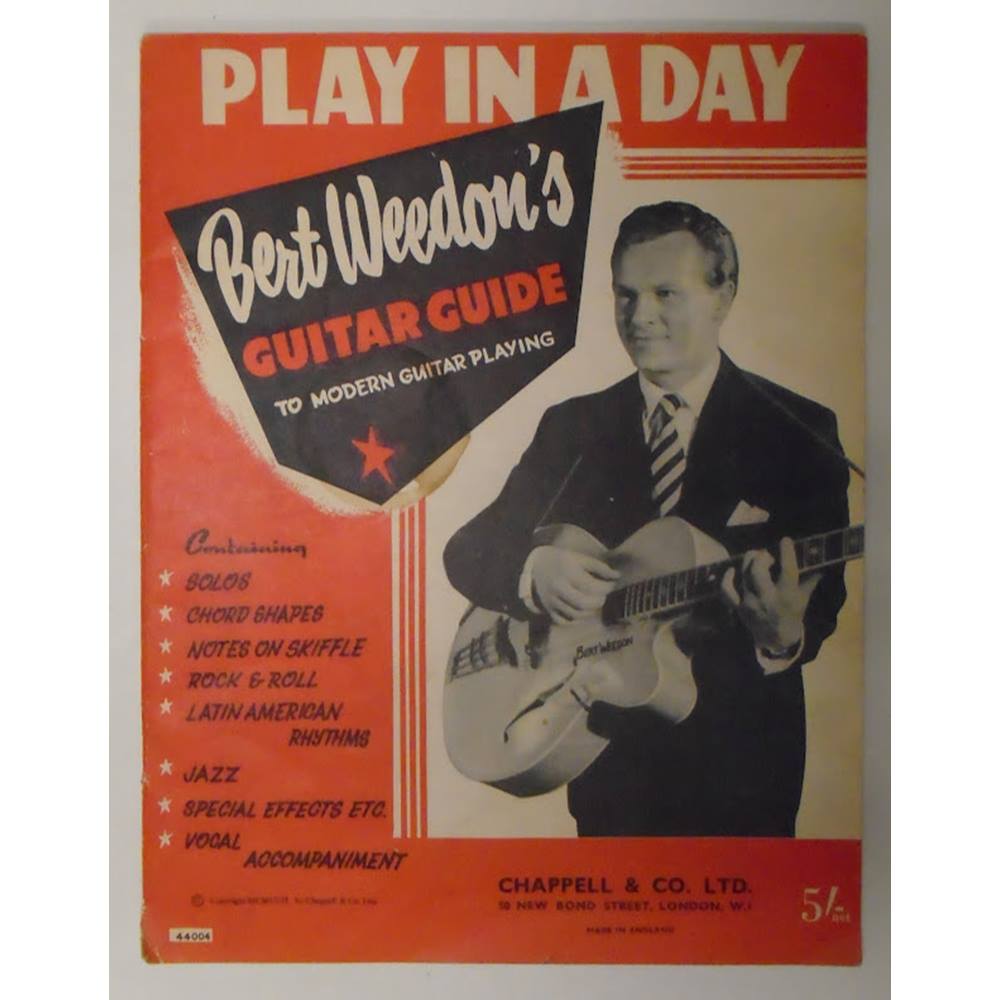
"Guitar Guide to Modern Guitar Playing"
-
Don't knock Bert. That book got Clapton started...on the other hand...
-
For Christian: Originally Posted by AllanAllen
-
Good to see you back. Even if it's with a banjo ?.
-
Lol. It’s an old video. Christian bought a tenor banjo, for which he got the usual negativity. Just reaching out to a fellow tenor player.
Don’t worry. No more banjo!
-
Shush, or I will inflict another 20 page pdf upon you Originally Posted by pamosmusic
Sent from my iPhone using Tapatalk
-
Christmas Tenor Banjo will be bloody happening at casa Miller Originally Posted by Rob MacKillop
Sent from my iPhone using Tapatalk
-
perish the thought Originally Posted by Christian Miller



 Reply With Quote


JJ music sales Ontario canada
Today, 04:01 PM in For Sale