


-
As if you have any idea how Robert Glasper was thinking. Or how I'm thinking. Honestly Kevin, I just argue with you because I don't like you and this is interesting to me.
 Originally Posted by ksjazzguitar
You make so many assumptions, so many that it destroys the debate, you make accusations that we are forced to defend.
Jesus man, listen to the bass solo, or imagine what Rosenwinkle might be thinking when he plays this tune, or what you might think about, when trying to solo over these chords.
I am not, nor have I ever stated that there is anything that cannot be analyzed by or explained with classical theory. My first post was actually saying that it's the other way around, jazz theory is the more incomplete theory. But yeah, I wanted to talk about the Glasper tune because I thought it was interesting.... whatever.
Anyway, I hope all of this time on the internet serves you well Kevin. I will not be buying your record.
-
02-13-2011 04:18 AM

-
yep...it's a joke... all that talk and 'knowledge' to play like this ?!? Originally Posted by czardas
oh, please...
hey czardas, just stay away from his negative energy... :-)
-
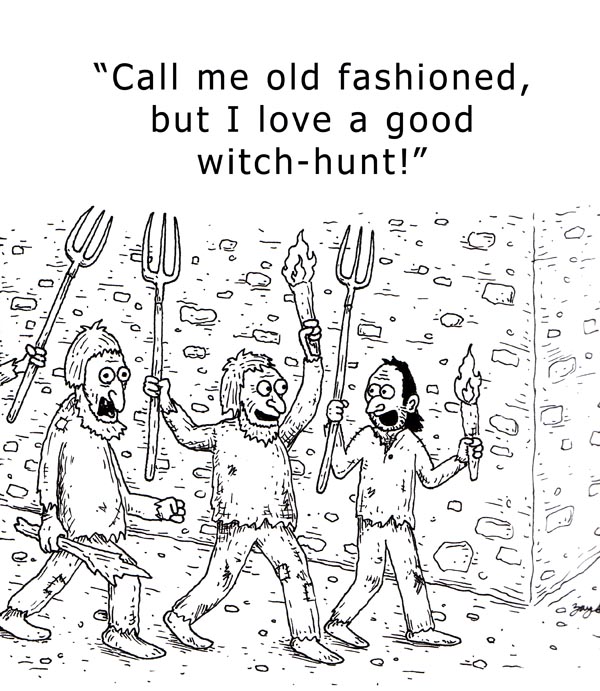
Is is time for this cartoon yet?

-
Kevin?
Reading your replies to my post was enjoyable. Thank you for your time, everyone else here too. This forum is a great resource of learning for me. The knowledge, talent, experience, and generosity of our members is truly remarkable.
Can we back up and define what is "Music Theory"? Common ground may save time and prevent misunderstanding.
I casually assumed that Music Theory is about how intervals of tone are combined and arranged with reference to a root/mode from the circle of fifths, using one of the seven or eight Greek names as the "one". To translate into numerical values.
Blue notes are in there...
I will argue that passing chromatic notes are merely stylistic, not theory. Indian music? More intervals but still music. Moot and irrelevant.
"But a good classical player understands what he is playing. He has studied and analyzed the score. He has read up everything he can about the composer. He has gone through the piece and figured out what aspects of the piece he wants to bring out. He has spent hours and hours figuring out phrasing and articulation. He has read the literature on how this style of music is often interpreted. He has listened to other interpretations to see how it can inform his choices. He listens back to recordings of himself to hear what can be improved."
No theory though. Musicology, technique, accuracy, this is a common story. My girlfriend plays piano, Mozart, etc. But can't hear or play blues at all. Point?
The Mark Levine book has been helpful for me. Very concise explanations with examples of known tunes.
Peace out man
-
 Time to move on guys, there's knowlege out there..L.Attachment 2398
-
Last edited by paynow; 02-13-2011 at 01:14 PM. Reason: Picture Link Not Working
-
Because how he is thinking is revealed in how he wrote and how he plays, if you're willing to ask some question besides "What scale do I play?" Your desire to force some DaVinci code "What scale over what chord?" approach over it is artificial. Apparently I'm the only one who bothered to listen to the recording. People just look at the chords and got out their secret decoder rings and start trying to figure out what scale to use. But they failed to take a second and try to see how the tune was constructed or how the composer approaches it. Originally Posted by timscarey
You listen to that and you hear a bunch of scales? The sections that I transcribed actually have very few non-chord tones. Why don't you guys think that it is important to consider what the composer did? Don't you realize that there are other ways to approach jazz besides "What scale do I play?"
I'm not saying that it is the only way to approach the tune. But I think that it is worthwhile to examine how the composer put it together and how he approaches it. But if all you guys can think about is your shiny secret decoder rings, then go for it. Unfortunately there is a mindless army of jazz guitar robots that can't consider any way to think of jazz other than, "What scale do I play?" They have taken over. Fortunately, Glasper clearly is not thinking that way. You can protest all you want, but that just proves that you didn't listen to his performance.
The problem is that things like "root" and "mode" and "circle of 5ths" are all assumptions. Not all musics have them. Originally Posted by davidblair
Music theory is just a abstract, a posteriori construct to attempt to explain what sounds good to a given culture at a given time. Since aesthetics are subjective and are culturally dependent, different cultures will have different musics and therefore will have different music theories. Western music used to try to explain these with western theory, but gave up on that a century ago. They each should each be understood on their own terms.
Well, I would agree that they are not "structural" they still need a theory to explain them. The notion that "chord tones can be approached from a chromatic step below" is a theory, as are the other chromatic explanations. Originally Posted by davidblair
Uhhh? Indian classical music is a very complex and sophisticated system, much more complicated than "more intervals but still music." I think you need to spend some times understanding it before trivializing it. Originally Posted by davidblair
The point was a refutation of your idea that "Music Theory is universal to all genres of music, encompassing every style of music which pleases the ear." Westerners not exposed to other musical cultures often assume that the other musical cultures can just be thought of as a subset of western theory. No, they are very different musics and must be understood in their own right.
But the point in this thread was that jazz theory comes from classical theory and there is very little in jazz theory that cannot be traced back to it.
Perhaps you misunderstood what I meant by, "He has studied and analyzed the score." What I meant was, "He has studied and analyzed the score." Originally Posted by davidblair
 That involves a deep understanding of theory. On CG, I play a suspension differently than I play it's resolution. I articulate a half cadence differently than a PAC and differently than a deceptive cadence. Analyzing the form is hugely important. To understand one of my pieces better I actually did a Schenkerian analysis of it. Actually, since so many jazz guitarists only think of theory in terms of "What scale do I play?" I could argue that the advanced classical player actually has a deeper understanding of theory.
Advanced players know their theory and analyze their pieces. Once I reached the grad level, this actually became an important part of my CG lessons.
Jazz guys like to paint classical players as mindless robots that don't understand what they are playing. "Does a parrot understand what he speaks?" There are also other understandings besides "theory." They may be beyond the purview of this thread, but it is in contrast to your characterization of classical players as "parrots." That is just based on jazz players' lack of understanding of what classical guys do.
It's a great book. But, Levine sometimes has his own way of seeing things (there are several recent threads on that) and I think that it would be good to balance it out with some other stuff. No education should be based on one book. It's a good place to start though. Originally Posted by davidblair
Peace,
KevinLast edited by ksjazzguitar; 02-13-2011 at 01:34 PM.
-
There you go with your assumptions.
Dude, I transcribed this whole song. Wrote a lead sheet, and play it all the time with my Band.....
I'm done with this, I really don't see the point anymore.
-
And yet you failed to notice the fundamental features of the construction of the tune and the his soling approach was the opposite of scalar. Hmmm.
Because a lot of you guys start with a basic assumption - that everything revolves around scale choice.
And I'm supposed to apologize because you hijacked my thread to analyze your pet tune?
Peace,
Kevin
-
He needs professional help, as far as I can tell. He's pretty smart, but thinks he is brilliant. How many friends (in real life) can one have with these delusions and attitude problems?
-
I'm not really sure which of the various contributors to this thread you're talking about now... Originally Posted by orasnon

-
True dat JonR LOL - well we all have our imperfections. But...many of KS' posts are not healthy contributions to the conversations on here. Too much negative energy and belligerence - though I admit to being amused and even entertained somewhat

For the record, KS has deleted some of his posts on here, I know for a fact
-
-
I don't like being lied to. I never will. I don't like people who don't know their basic theory, presuming to lecture me on more advanced theory. I never will. That doesn't make me a know-it-all, just someone that doesn't like people who lie. Originally Posted by orasnon
The only posts that I've ever deleted have been duplicates. Recently I accidentely copied over a post (I hit edit on the wrong post and copied over it with cut and paste ( Originally Posted by orasnon
) so it became a duplicate and I couldn't figure out how retrieve the original data. It may have been on this thread, but it was one of my rare short posts () and most of the salient points were quoted in the following post so I just deleted the duplicate post top avoid confusion.
But that isn't even close to what czardas does. When (after 20 posts) you finally convince him that what he's said is incompetent, you goes back and deletes those sections so no one can see it. At least twice, he went back and added sentences to make it seem like he was really saying something else and make his detractor look foolish. And of course he recently went back and deleted almost all of his posts claiming that he was taken out of context. I'm not sure how his posts were quoting him out of context, and if he felt that I was quoting him out of context, then deleting his posts (the actual context) was foolish. No, he's just a coward who realized that he was in way over his head, rambling about things that he know nothing about, and wanted to hide it.
But if you guys are really so sick of me attacking these morons, then join me so I won't have to. When czardas was saying that you can build a diminished triad out of a d3 interval by just lowering the 3rd, why was I the only one that called BS? Or claiming that you could make a diminished seventh chord by raising the root of m7 chord? When he was claiming to have spent 6 years in a "prestiegious European conservatory" (where apparently they never learned basic chord construction or studied composers before the 20th century) - where was everyone else.?
If the purpose of a forum is information exchange, then people spreading misinformation should be the enemy. We can tell the difference, but many of the beginners and amateurs who come here may not. If people like czardas goes unchallenged, then the noobs might walk away thinking that C Ebb Gb is a diminished triad. Is it the end of the world? No! But it is contrary to the purpose of the forum.
On many forums that I've been on, misinformation posts get attacked from all sides and the person learns not to spread misinformation. But here they get saluted as individuals. If preponderance of people joined in, with even simple things like, "Sorry dude, but you're wrong." Then these people would learn to get their facts straight. And if I weren't the only one saying it: 1) these things would end much quicker and 2) I wouldn't need to spend 3 pages explaining somethings that we all learned in our first music theory class.
And let's not forget that it was he that was hijacking my thread. His flamenco ramblings, "creative" chord construction, and uninformed ranting about chord notation had nothing to do with the OP. True, I've been known to inadvertently hijack a thread or two - but at least it has something to do with the topic or discussion, even if just tangentially.
Peace,
KevinLast edited by ksjazzguitar; 02-13-2011 at 08:47 PM.
-
I was under the impression that this was a public forum where we could debate, not hurl abuse. The difference between classical and jazz was the topic, and flamenco has a finger in every pie. I'm sorry if you think I hijacked your thread, but this isn't a discussion about music, it is a discussion about me.
You constatly take my words and twist them, misquote and attack me. I will continue to delete my own posts as and whenever I see fit to deprive you of ammunition.Last edited by czardas; 02-13-2011 at 09:18 PM.
-
I, for one, thought you were doing just fine. (If somewhat unforgiving of poor English...) Originally Posted by ksjazzguitar
Sniggering into our sleeves... Originally Posted by ksjazzguitar
Agreed. I'm all for correcting errors - or clarifying ambiguities. Originally Posted by ksjazzguitar
But I do think you go beyond what's absolutely necessary a lot of the time. Not that the splenetic excess is not usually hugely entertaining (thanks to your command of English).
OK, I hereby vow to come in occasionally with a "^ what he said" post underneath yours. Originally Posted by ksjazzguitar
-
Sorry Kevin I was asleep. I won't let it happen again. Originally Posted by ksjazzguitar
-
Yes, I do. But the argument doesn't start that way. If czardas hadn't deleted all the incriminating evidence, perhaps I could show you that it started out gently, with gentle words. The schema of an argument goes like this: Originally Posted by JonR
other: We know this because 2+2=3.
Kevin: I think you made a mistake there, 2+2=4.
other: No, I meant what I said, 2+2=3.
Kevin: It's generally accepted that 2+2=4.
other: Well, I don't care what is "generally accepted" - I know what I know and I know that 2+2=3.
Kevin: Perhaps I can point you to some scholarly works on the subject. It is the concensus of the scholarly community that 2+2=4.
other: I don't care what the "scholarly community" says, I don't care what they say in the universities - they're all just a bunch of elitist snobs. I skimmed the first paragraph of a Wikipedia article on the subject so my opinion is just as valid as your opinion. (Or they claim to have a degree in math at this point.) How dare you imply that I don't know basic math, you elitist snob!
Kevin: With all due respect, you really have no idea what you're talking about.
...
At this point of the argument, everyone starts jumping on the "Kevin has a mean tone" bandwagon. I usually don't get to the "You're an effing moron." point for at least another 10 posts. Again, if other enlightened members who understand that "2+2=3" is utter drivel, and spoke up, then I would never get to the "You're an effing moron." point.
Granted, it's probably that those members are just smart enough to stay out of the mud. Sadly I have yet to muster that much discipline.
When did I say that we don't need a d3? I use them all the time, usually as inversions of Ger6 chords. What I said was that lowering the 3rd of any triad, makes it a different triad. If you lower the third of a diminished chord, it is no longer a diminished chord - you claimed that it still was. Just having a diminished interval somewhere in the chord does not make it a "diminished chord." Saying that C Ebb Gb is not a diminished triad is not the same as saying that it is nothing. The rest of your rambling is just hysterical nonsense that has no relation to anything that I said. Originally Posted by czardas
I'm starting to think that maybe czardas is an elaborate prank. No one with "six years studying theory in a prestigious European conservatory" could be this ignorant of basic chord construction. And no person could honestly expect to fake it with such arrogant confidence in so little knowledge. I'm starting to suspect that he is either a troll, a person of ... er ... how should I say ... diminished mental capacity (no pun intended) or this is all just an elaborate prank. Even a person who truly knew this little about basic chord formation would have at least checked Wikipedia by now. (In all fairness he did quote a badly translated Dutch Wikipedia page, which he actually misunderstood.)
I just don't know what else to think. Every time you open your mouth you just convince me that you understand less and less. You just keep trying to do somersaults to try and make 2+2=3 and refuse to accept that you don't understand basic math.
Being ignorant about something is not a crime. I think Will Rogers said something like, "We're all ignorant, just on different subjects." But being ignorant about something and presuming to lecture on it, that is foolishness.
Peace,
Kevin
-
I probably shouldn't say this, but in jazz (AFAIK), they don't use Gsus2. It's always Dsus4. The idea of a sus2 chord is a rock idea. (Doesn't mean it's not useful of course.) Originally Posted by czardas
The way I see that is that the jazz musician sees no need to omit the 3rd (one of his/her favourite chord tones) just because the chord has a 2 in it. There is no dissonance, as there is with a 4th and a major 3rd together. Even a 2 and b3 sound fine together.
And Mark Levine also states that a sus4 needn't mean the exclusion of the 3rd anyway (it can go on top of the chord).
(Here we may have one of those differences between classical and jazz theory...?)
No it isn't. I don't see how you can read that into kevin's argument. Originally Posted by czardas
-
Cosmic, I think your cartoon says it all.
As someone else pointed out, you seemed to be doing OK for yourself. Honestly, most people aren't as interested in the topic as you are, and there's not necessarily anything wrong with the fact that it's your thing, but sometimes, you just can't make other people care about the things that are important to you. (You definitely can't in politics.) :-) Originally Posted by ksjazzguitar
Outside of a university it's difficult to find people who care enough to have some of these conversations, but that's what I loved about school anyway. I had some other nerdy people like myself to talk about this kind of stuff and who got the jokes.
I don't really care to waste my breath arguing why some idiot on a youtube comment thread thinks Britney Spears is so much better than Ella Fitzgerald. I'm never going to win that argument on that turf even if I'm right. If you feel that's happening (to some lesser extent I'm sure) with certain posters here, don't waste so much time arguing. The more times you argue with something you deem to be illogical, the more validity you give it.
czardas, if you deleted as much text as it looks like you did, that's definitely not kosher. Lurk a little more before you get into a big discussion with someone you don't know on here.
To everyone else: I personally appreciate the fact that Kevin has recently kept things positive in general discussion and brings the topics he is passionate about to his own threads.
To all you folks who are ranting about what he's said in his own thread: Please allow the rest of us to leave topics like this one "out here" where we can view them at our own discretion.
If you can't resist the voyeuristic urge to see what's Kevin's ranting about in theoryville, don't jump in with personal attacks when you haven't contributed anything else to the conversation. Seems kind of weeney.
oneworld, we're all breathlessly awaiting your video-posting of a 4-chorus solo arrangement of anything. I'll be working on that one a little while longer myself, but I've noticed that the respected players on this forum who could post it, don't post childish barbs like yours.Last edited by matt.guitarteacher; 02-14-2011 at 12:43 AM. Reason: grammar
-
----------Short commercial break with an info related post.---------
What the root and function of the notes G A D depends on the context how it used.
When the G resolves to F# or F then it's function seems clear as DSus4 or DSus
When A resolves upwards to B or Bb then G is it's functional root. This is what is sometimes referred to as GSus2.
The chords that precede and follow can verify or disprove that this is an accurate reading of what's going on.
???Question to the knowing ones???
What is the Classical term for a 6-5,7-6, 2-3, etc. chordal resolutions.
I know there are distinctions based on whether they are prepared or unprepared, approached by a leap, etc.
They stick around longer than a passing tone but shorter than a chordal extension.
I just play these things all the time without referring to a name. (very impolite of me)
Remind me if you would.
Thanks,
Bako
If G A D doesn't resolve then we lean on the way it is used to help determine the name.
Played in the middle and upper registers it is a highly ambiguous chord.
These are some possible interpretations:
CMa6/9 or Cm6/9
DSus
EbMa7#11
Em11
FMa6/9
F#7alt
Gadd9 or Gm add9 or GSus2
A7Sus or Am7Sus
BbMa7/6
B7#9/b13 or Bm7#5
3 note chords are dangerous....I mean versatile.
-
I don't understand. I thought that you were putting those words into my mouth. We need different labels for the same set of notes sometimes because of function. Originally Posted by czardas
The definition of a diminished triad is not a theory, it is a definition within the theory. It is (by definition) true within the musics that the theory describes. There are musics of the world that don't have diminished triads - that's OK. But we do, and the definition is clear - C Ebb Gb is not a diminished triad. If the teachers at the Rotterdam Conservatory taught you that, then yes, they are stupid. But I don't believe that they ever taught you that. Originally Posted by czardas
Uh, and the 2-3 suspension (sometimes called "inverted suspension" or "retardation") doesn't have a history? You never read through any Bach? Oh, that's right, by your own admission in the six years you were at this prestigious European conservatory, you guys didn't talk about Bach much. Originally Posted by czardas

Originally Posted by czardas
When did I ever say anything resembling that? What are you talking about, have you lost your mind? If there is a name that better describes it's function, then by all means we should call it that. In your original example that F7 was really a Ger6 (in classical theory.) In jazz we'd just call an F7, as a tri-tone sub. But you can call it a "Watermelon-Anthracite-McGillicutty chord" for all I care, as long as you don't pretend that it is part of classical or jazz theory.
I see, so if I'm understanding you correctly, in your six years of study of theory at this prestigious European university, they taught you that if it is build off the 7th scale degree, it is a diminished chord, no matter what scale it is? I don't know how else to interpret, "The rules of construction build diminished chords on the seventh degree of a scale." So, you think that if you find a scale with a M7 and a m2, that the chord built off the 7th degree (with it's d3) will be a diminished chord? Originally Posted by czardas
Well, suddenly I understand the factoid that your argument up to this point is based on. It's utter poppycock, but at least now I know where the problem lies.
Must ... hold ... back ... must ... not ... give ... in ... to ... childish ... temptation ... to ... state ... obvious ... AAAARGGG!!!! [brain aneurysm] Originally Posted by czardas
But you weren't just discussing theoretical concepts - you were presumably trying to lecture on a subject that you clearly don't have a basic grasp. Originally Posted by czardas
And there is nothing wrong with someone trying to reinvent theory. But it would be nice if they understood what they were trying to change. And the burden of proof for the importance and efficacy of their new system is on them (and an uphill battle that would be.) You haven't even bothered to understand basic chord construction and you're already trying to push your new system of advanced octatonic harmony. And they call me arrogant?
I hear ya. And that probably makes you guys much wiser than me. I'm not asking for carte blanche, but if someone is arguing me about how to construct a triad, or some of the other non-sense, a couple "Kevin's right this time." might help. Otherwise the uninformed poster thinks that it's just me that's saying this. Originally Posted by matt.guitarteacher
There are some more subjective points that I argue, some of them a little controversial - I don't expect people to back me up 100% on those. I even like constructive disagreement. But things like this? Even the tiniest of support from a few respected voices might make it clear to the uninformed poster that I'm not just making up the definition of a diminished triad.
Sigh, yeah, I really do need help. The funny thing is, if you guys met me in real life you wouldn't believe it was me because I'm so laid back. There's just something about running into people like czardas on the internet that gets my heart pumping. I don't often meet them in real life, so I don't know how I'd react. Hmmm.
Peace,
Kevin
-
I guess someone had to be (self) appointed moral arbiter. Originally Posted by matt.guitarteacher
-
Those are suspensions. They are usually prepared, as you said. If they are unprepared, then they can be accented passing tones, accented neighbors, appogiaturas, etc. depending on how they're approached. Sometimes ones that resolve up are called retardations, but that depends on the text. Originally Posted by bako
That depends on the era and country. The history of how to interpret these types of things (which could sometimes be written quite vaguely) is a whole other discussion and there is a lot of argument about it in the field. Originally Posted by bako
Yeah, it doesn't need to be resolved nowadays. It can be it's own stable chord, because our ears perceive it that way. Just because it has the word "sus" in it doesn't mean that it has to function the way that Palestrina interpreted suspension. Originally Posted by bako
The ambiguity, between Csus4 and Fsus2 for example, is determined by function and how it sounds. If we are in the key of C, does it sound like a I chord or a IV chord. The choice of bass note is going to tell us a lot of that. Sometimes the theory can only go so far and you need to listen. We have other chords that are inversions of each other and we do the same thing - we look at function and listen. If it resolves then Bako is right, how it resolves will tell us how to think of it. But it doesn't need to resolve. So we look at function.
But, you nitwit, you still don't seem to get, that it is no longer a diminished triad if you lower the third. The "º" is inappropriate and once again shows a fundamental misunderstanding of how Originally Posted by czardas
But that is another fundamental misunderstanding. The scale is F G A B C D Eb, but the Eb is spelled enharmonically in the chord for resolution purposes. (Or spelled normally if you are a jazzer.) Scales with consecutive m2 are generally non-existent in tonal harmony. Originally Posted by czardas
First of all, I don't care what the Dutch call it, and it's probably just what amateur musicians call it or an historical name. Secondly, it would call it either of those - I'd call it a Ger6 in third inversion if I was talking classical or I'd call it an F/Eb. Again, some classical guys call it a "diminished third chord" but they mean that it is a "chord" with a "dimininished third", not a "diminished chord" with a "third." Originally Posted by czardas
Last I checked, Bach was part of history. What history does the sus4 have that the sus2 not have, except for being more common? Originally Posted by czardas
Really, quote some sources please. Even the badly translated Dutch Wikipedia page contradicted your definition of a "hard diminished seventh" and the "double diminished seventh" is apparently so out of favor that it declined to give a symbol for because it is just "an inversion of a dominant seventh chord." Literally it says, "geen symbool want klinkt als omkering van dominant" which roughly translates as "there isn't a symbol because sounds like an inversion of a dominant [seventh]." Hmmm, that sounds remarkably like what I'm saying! Of the 18 chords that your page lists, that is the only one that isn't assigned a symbol. Why? Because it's not the real name of the chord. Originally Posted by czardas
Originally Posted by czardas
LOL! Thanks czardas, now I'll laugh myself to sleep. You "have a very deep grasp" of theory indeed. Here's some bubble wrap, now go play in the corner while the grown-ups talk about theory.
He's just trying to be a peace maker, cut him some slack. Originally Posted by orasnon
Peace,
KevinLast edited by ksjazzguitar; 02-14-2011 at 04:08 AM.
-
Maybe because I'm in Australia and the weathers good here. But haven't people got better things to do than craft tricky theses and convaluted responses and arguments on what is-let's face it-unimportant. Get out and smell the roses folks!



 Reply With Quote


New LEDs Day
Today, 07:28 PM in Other Styles / Instruments