


-
Perhaps the listener is the judge of whether someone is playing or not.
 Originally Posted by kris
-
11-30-2021 12:07 PM

-
The listener will probably judge that someone is playing. Originally Posted by SoftwareGuy
While the expert will judge how someone is playing.
-
This is why jazz is dying. Only experts can figure out what is good. Originally Posted by kris
-
Is jazz dying? Originally Posted by SoftwareGuy
-
Some people just seem musical regardless of technical level or genre. That is perhaps more important to me as a listener.
-
I'll rephrase that. That is why jazz has fewer and fewer listeners. Originally Posted by Peterson
-
What was it that Zappa said about Jazz?
-
This discussion isn't dead. It just smells funny. Originally Posted by fep
-
Is that a fact? Originally Posted by SoftwareGuy
-
Zappa appreciated jazzmen very much. Originally Posted by John A.
-
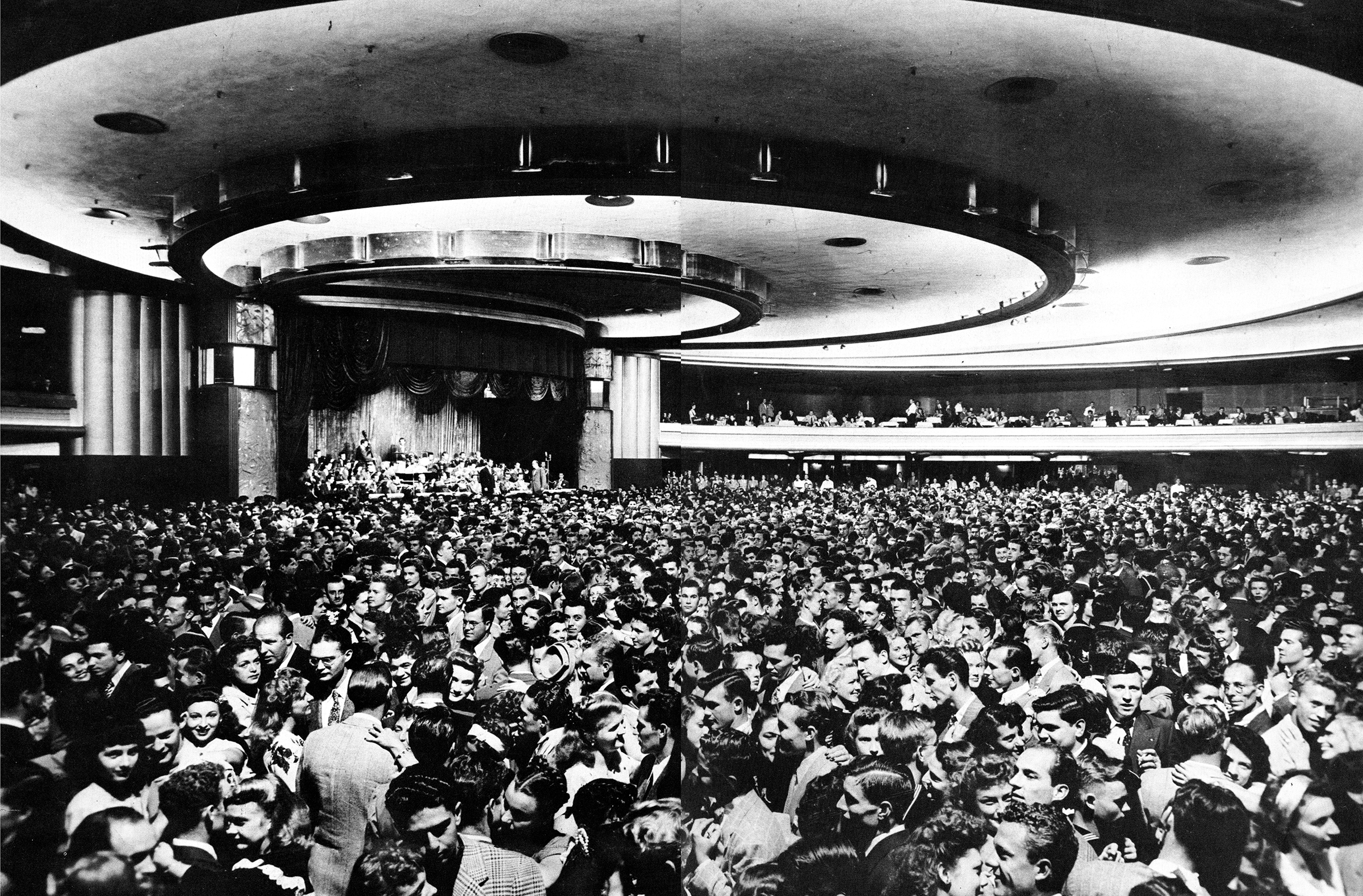
Cool photo and interesting from which year? Originally Posted by Lobomov
-
I believe that he referred to it as "the music of unemployment" Originally Posted by fep
-
I thought you might say that. I know this. Going to Berklee is not the same as learning to play there. Originally Posted by kris
Kurt for instance learned to play jazz in Philly as a teenager. He then when you Berklee and impressed the shit out of everyone. Famously he didn’t graduate, for instance….
Pat learned to play on the Kansas City jazz scene as a teenager.
Which is not to say they didn’t learn anything or that no one learns to play at Berklee. Or that they were fully formed by the time they got there.
These are side points really; pedagogy is a small element of what a music school provides. Community I think is often undervalued because people think it’s about them doing it on their own. There’s an element of that but it’s not the whole story…:
-
You can mention a few names of famous guitarists who had some adventure with Berklee / I hope Mike Stern is also known /. Originally Posted by Christian Miller
I heard that Berklee had the most study guitarists in one year / 800 guitarists /.
Where are they?
But that was a long time ago.
-
Well Berklee was smaller back in the 70s; more a finishing school as David put it. (Finishing - note). These days as you say hundreds of guitarists. But if you are into jazz seriously and can already play well you are going to find people to play with, and no doubt learn a lot. Originally Posted by kris
A common refrain from most students at jazz schools is that you learn as much from the students as the teachers…
I once played with a guy who was in a class with Pat and Mike Stern. He decided to become an arranger haha. (Some of his tunes are in the Real Book.)
-
Note that apart from guitarists, there are also other musicians. Originally Posted by Christian Miller
Gary Burton-major figure in music education from his 30 years at the Berklee College of Music.
-
That's true of undergrad education in the US in general. I mean I majored in [not music] at a highly selective university. I could have read the same books anywhere, written the same papers anywhere, and heard essentially the same lectures anywhere. It's not as if the subject has different facts and intellectual history in different places. The (debatable) value of the institution I went to was that it selected its student body from the upper percentiles of grades and standardized exam results (somewhat adulterated by parental wealth and the other factors that make college admissions in the US something of a farce). The difference between where I went and a "lower" tier (apart from tuition, which in my day was a lot less burdensome) was the quality of peer-to-peer interaction. Originally Posted by Christian Miller
The same is true of conservatories, especially nowadays because higher education is mainly taught by adjunct faculty who teach a course here and a course there. You can study with literally the same instrumental teacher at multiple schools at different tiers of prestige. Just look at your favorite players' web pages -- almost all list affiliations with multiple schools.
I know a bunch of Berklee grads from the early to mid 70s. They all say they got a lot out of the experience. I'm playing with one tonight, and have a gig with another in a couple of weeks. So much for the career value of a Berklee degree ? Originally Posted by Christian Miller
-
It is not a secret that players are supposed to know how to play before entering college, not unlike athletes. One has to apply to college and they have this thing called an "audition".
That said;
Is the bar lowered for improvisation capability? Yes.
Is it likewise lowered for jazz (not classical) guitarists? Yes.
-
The music school will not give you talent as a gift.
If you are very talented, you can finish this school faster.
Of course, when you want to finish school.
Most students fight, and often they end up fighting.
Berklee can also add, I think, prestige.
Maybe it's funny but it's true.
-
Well, music school... I studied a bit in a jazz school, it's good for connection because you belong to something, you live in a little world.
I went several times to jam sessions at a jazz school. Students were playing as if they were doing their home work, same playing or kind, more personal and musical when they played something they learnt on their own but it wasn't so jazzy.
-
Interesting video:
-
I was reading an article in the New Yorker on 'MasterClass'. At one point they were talking about learning curves in general for all disciplines. Reminded me of this thread so I thought I'd share it:
"Studies suggest there is a 'ten year rule': it takes at least a decade of apprenticeship to become world class. You must advance from unconscious incompetence (not knowing how bad you are) to conscious incompetence (being all too aware) to conscious competence (keeping your goals firmly in mind) to unconscious competence (being in the zone or in 'flow')."
I just like how it they laid that out. Not sure how well it lines up with evaluating beginner, intermediate and advanced, but there's something there.
-
The only "level" I'm personally interested in is whether the player (in any genre) makes you want to continue listening after the first few measures: he/she is always going to be engaging in one way or another. Obviously, one's technique has to be up to the task. If you're talking about grading students as a teacher, no idea.
The guy in the video in post #79 says "so that you sound like the jazz heroes that you idolize". This is baffling to me since I never felt the urge even as a teenager to learn any of Jimi's (studio) solos note for note. Cop the vibe, most certainly, but then find your own phrasing. Sine qua non, surely, for an "advanced" player?
Great quote by Pau Casals. In Spain at least, by the way, he is usually referred to by his Catalan name, as against Pablo.
-
Just don’t tell Charlie Christian, Pat Metheny, or Andreas Varady about that 10 year rule. Originally Posted by ccroft
-
Peter, Originally Posted by Peter C
Playing jazz or learning to play jazz is not that easy.It is kind of a long process.The video guy is very right.He confirms the fact that in order to play jazz you have to be passionate about this music.It may be strange, but to this day outstanding jazz musicians analyze and often transcribe the solos of other musicians.
You have to pass certain levels in learning to play jazz.This is to better understand the music and consciously build your own voice.
"The only "level" I'm personally interested in is whether the player (in any genre) makes you want to continue listening after the first few measures: he/she is always going to be engaging in one way or another. Obviously, one's technique has to be up to the task. If you're talking about grading students as a teacher, no idea."
Here I have doubts ...
It means that when a solo starts well, the whole thing is good.
It does not always have to be this way.
It's best to listen to the entire solo.This is my belief.
Everyone can have their own view on this...:-)
Best
Kris


 Reply With Quote



Delete
Today, 03:21 AM in Guitar, Amps & Gizmos