


-
About 10+ years ago, I played my amp sim pedal thru a keyboard player's small PA system, it was a great sound, so I sold my heavy Fender Deluxe Reverb amp and bought a small PA/studio system.
The great thing with a PA system is you can try or buy another pedal with the latest tech and play it thru your existing PA system.
XLR is not my biggest worry, I have plenty of boxes with an XLR DI out.
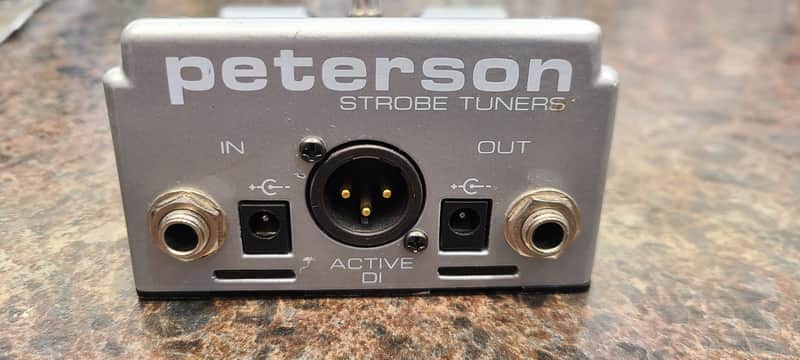
Even my old Peterson Strobe tuner has DI XLR out. (Still working great, if a bit too big.)
-
04-25-2026 07:27 AM

-
Music to my ears
 Originally Posted by 213Cobra
Sent from my iPhone using Tapatalk
-
The thing is someone is going to sell you one unit that should provide with all the sounds you need for any given gig not to mention an integral tuner, I don’t want to be bringing a flipping strobe tuner with me. Or a Di box. Or anything (apart from my guitar.) Originally Posted by GuyBoden
You shouldn’t be making the is argument unless you literally work for Boss or something.
Bass players understand this, because bass players actually have gigs.
And companies like NUX, Blackstar and Mooer are all able to do this.
Tbh I think they do it for the same reason they put crap speakers in the fender reissue amps
Sent from my iPhone using Tapatalk
-
-
I keep forgetting that you're a "Professional Player", not a Hobbyist like most of us on the forum. Originally Posted by Christian Miller
But, when Andy Summers was playing at a local Jazz festival, he brought his own guitar tech to carry his stuff and even tune his guitar. So, you just need to be a multi millionaire.
-
Step 1) become rock star Originally Posted by GuyBoden
Step 2) play jazz
Sent from my iPhone using Tapatalk
-
Another solution is to not use anything at all!
 Just plug direct to the speaker. I often do that, as many speakers sound good, and i have much more fun than when using most digital stuff. My last gigs were a few pedals, with no amp simulation at all. Bose towers for example sound great for clean guitar on their own, and then you just use a booster or light overdrive.
Doesn't work with distortion obviously..
-
FWIW:
Neural Amp Modeler | Highly-accurate free and open-source amp modeling plugin
It appears that this is the software underlying Dime Head and all the other NAM products as listed on their homepage. That suggests to me that they should all sound pretty similar and that you could make a choice based on what hardware needs you have (e.g., an XLR line level output, etc.).
-
The Fractal AM4 has TRS outs. So, still a balanced output but you need either an adapter or a cable constructed with TRS on one end and XLR on the other. Originally Posted by 213Cobra
The Dime Head is cool but not inexpensive. Curious what cheap pedals that do NAM conversions (like the $80 Valeton GP5) sound like but more just to play with. For daily use something nicer like the Dime Head would be more pleasurable to use. Though at that price point it's a trade off against the different tech of the Fractal AM4.
In any case, we should be seeing a greater variety of products that support native NAM files. Seems to be a lot going on in that market.Last edited by Spook410; 04-26-2026 at 04:50 AM.
-
I wonder how this baby would perform? 15 lbs.
Access to this page has been denied
-
Originally Posted by Christian Miller
-
Yeah I would say my ES175 doesn’t really need an amp - sounds great straight into a PA Originally Posted by Alter
Sent from my iPhone using Tapatalk
-
I think there’s a bit of community evolving around uploading NAMs to these very cheap pedals. I’m thinking “massive rabbit hole” Originally Posted by Spook410
Tbh there’s other things I personally want to spend the time on.
Sent from my iPhone using Tapatalk
-
NAM FILE PEDAL: WARNING ONLY FOR HOME HOBBYIST PLAYERS. Originally Posted by Christian Miller
Sonicake Pocket Master supports NAM files. £45
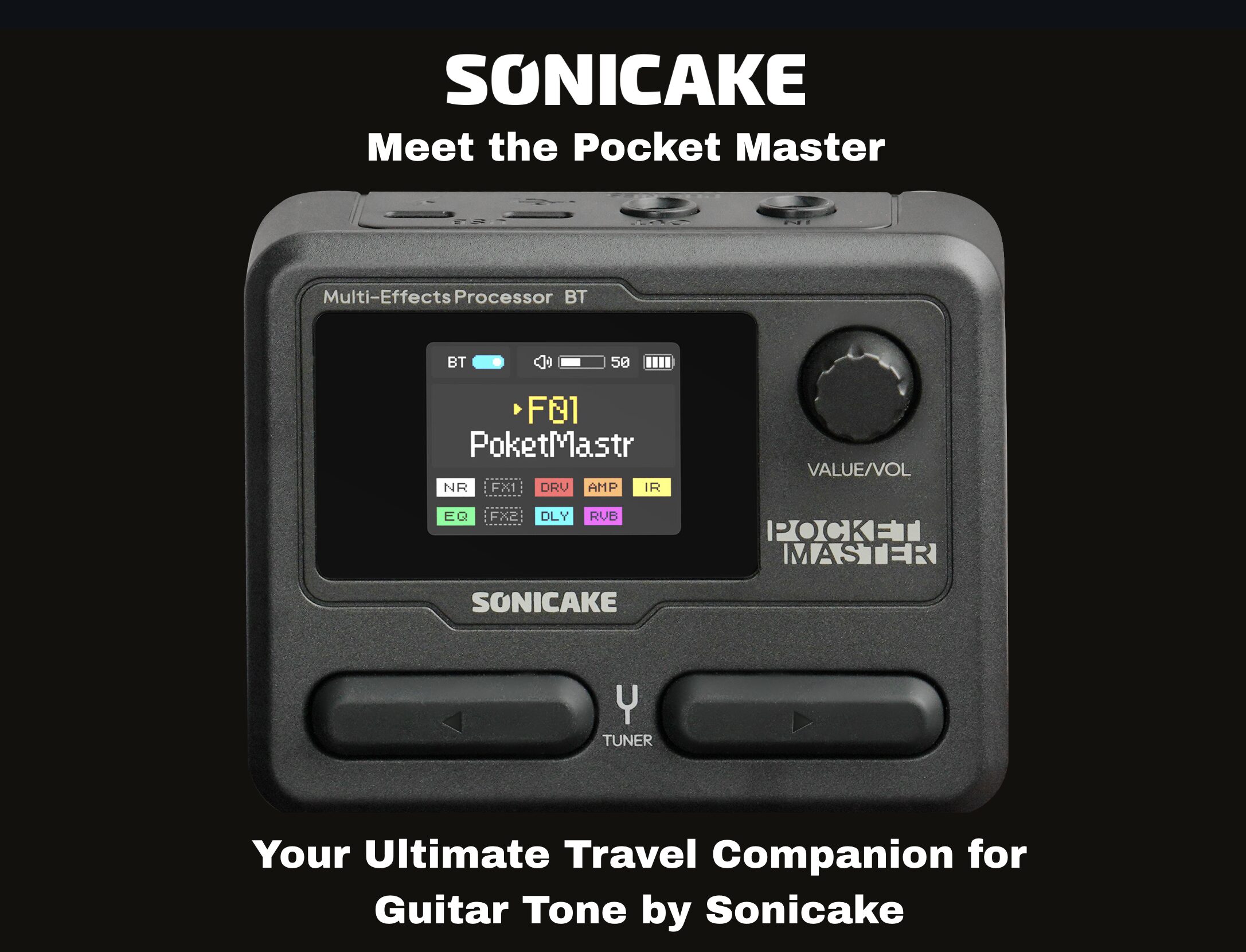
Edit: Finding a very Jazz clean Fender Deluxe NAM file is my main task.
Rock clean is not Jazz clean.
Last edited by GuyBoden; 04-26-2026 at 09:49 AM.
-
Warning: only for Hobbyists and Home users.
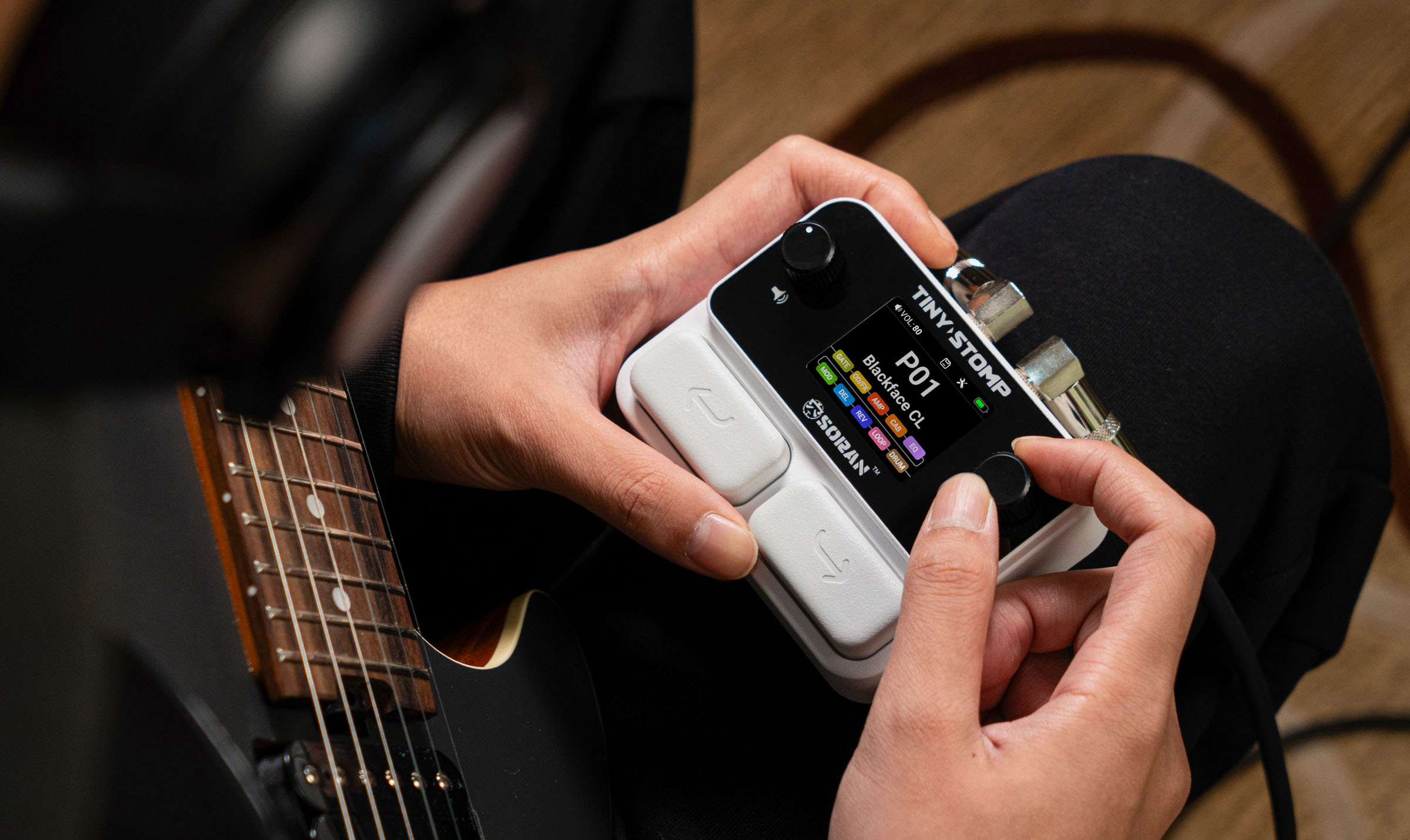
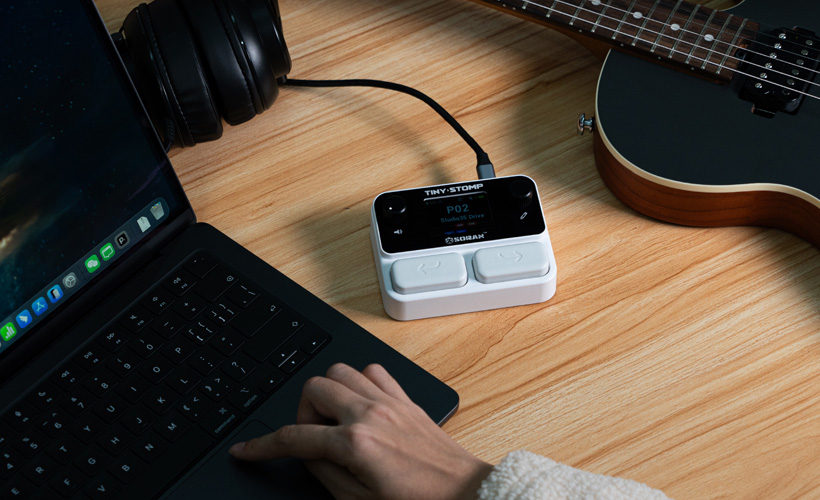
There is a new NAM file pedal on the block. £40
Soran Tiny Stomp.
Tiny Stomp-Tiny Stomp-Soran Audio
-
Resurrecting this thread to describe a recent experience.
Trio (piano, guitar and vocalist who also plays percussion) in a room maybe 100x40. Maybe 40 people (not full). Concert situation, meaning people in straight back chairs all facing us. Nobody talking or drinking.
My rig was, arguably, too complicated, but since I ended up very happy with the sound and it involved a new trick (at least for me) I thought I'd post.
Guitar>ME70>Joyo American>Yamaha MG10XU mixer>JBL Eon One powered speaker. In addition, I ran a line from the monitor out on the Yamaha mixer to my Little Jazz, which I put in front of me, facing me, as a monitor. The JBL was on a stand at head height maybe 10-12 feet to my right.
The new trick was that I brought a tray table (aka TV tray table) and put it to my immediate left. I put the mixer and the Joyo on it. In the past, I've had the Joyo on the floor where it's hard to reach and the mixer on a kind of box, 18 inches high. This time, it was really easy to adjust things. Didn't need to do much. Dropped some mids with the Joyo to clean up a little mud and ran everything else pretty flat. Adjusted the reverb with the Yamaha mixer for the singer's mic and turned off the reverb on mine, so the announcements would be clearer.
I ran the Joyo with voice and drive at 9 o'clock. Level at 3 o'clock. Tone controls started flat and then I dropped the mids to 11 or a little less.
As I played, I think I mostly heard the LJ - the monitor - which was fine because I like that sound. Had plenty of volume on tap and, at one point where I needed more, I just turned up the volume control on the channel strip.
A note on the Joyo. It hisses a bit. That's probably the sound of low price. Wasn't noticeable on the gig. It has also made clicks and pops, but not when it runs on batteries. And, not, apparently, with a better quality power supply. The company very nicely offered a refund past the return date, but I declined. It really does warm up the sound to the point where the powered speaker can substitute for a guitar amp. At least to my taste.
The downside of this is all the cabling. There are power supplies to the LJ, JBL, Joyo, Yamaha and ME70. Two standard power cables, two wall warts, and one proprietary power supply for the Yamaha. 1/4" cables from the guitar, ME70, and Joyo. XLR to the JBL, and to the two mics. One more 1/4" from the Yamaha to the LJ. I lost count. 12?
I could have cut down on gear by leaving out the mixer. The JBL will take two mics and has a separate hi Z input for the guitar (which doesn't seem to be quite as loud). But then, adjusting things would require scrolling on my phone. Could have run the JBL, Joyo and ME70 all on batteries, but that would make me nervous. Maybe a different pedalboard would eliminate the need for the Joyo. Could have tried it without the monitor. But, once it was set up, it sounded good and was really easy to adjust.
For completeness, I should mention two mic stands, a speaker stand and a music stand with an Ipad holder replacing the desk. And, a page turner pedal for the Ipad.
In any case, I did eventually find a way to get a good sound out of the powered speaker for guitar, vocals and announcements. And, I had all kinds of volume on tap, if necessary. First time at this venue and we didn't know exactly what to expect.
A downside was that packing, setting up, tearing down and putting everything back where it belongs was a lot of trouble. It was helpful that the venue had secure parking and good security inside. So, I didn't worry about having to make two trips and I didn't worry about leaving some backup gear in the car. And, it was all level-in.Last edited by rpjazzguitar; 06-12-2026 at 02:10 PM.
-
That sounds like a great idea
I'm going to go to Target and get a TV dinner tray myself!
-
The original Hungry Man trays sounded best. Originally Posted by jim777
-
Similar arrangements are available. Some guitar/bass multieffect processors have aux inputs. So if you utilize that to generate a good jazz guitar tone and then feed the keyboard into the aux input, you could be running both instruments into one channel. Feed that into amp channel one, vox into channel two, and you’re done.
The hi-Z input on the Eon would likely have been much happier with a line level input than with a guitar signal. So a multieffect, or indeed any effect that buffers the signal, would have served perfectly.
Originally Posted by rpjazzguitar
-
Would you explain this? I thought the hi Z input was there specifically to amplify an instrument (guitar) level signal. Originally Posted by coyote-1
If I had gone straight from the Joyo (output impedance 1-2k ohms) to the JBL, the signal level would have been in guitar territory but the impedance would be much lower.
I'm not clear on which input of the JBL is going to be better. The HiZ input works fine, but doesn't go super loud (I'm close to max to keep up with a big band).
The lowZ inputs have a mic/line switch. Since the instrument signal is more volts than a typical mic signal and less than a line level signal, I have a choice as to where to put the mic/line switch. It works fine to use mic and adjust levels accordingly. The guitar will go louder that way.
The JBL has four inputs, so I suppose I could have run the kb into Ch 4, the mics into Ch 1&2. The guitar into Ch 3.
In this case, the kb player would insist on using his own gear and playing in stereo. So, it would be the mics and the guitar. The JBL is perfectly set up for that. Except, adjusting things would require using my phone. And, there wouldn't be any compression available, not that that would be a big deal. I'd rather have the mixer on the TV tray table.
And, the mixer has the monitor-out jack which ran the LJ as a monitor. I think the JBL has an output jack ("pass thru") that can be used similarly, but, again, requiring the phone app for control. Neither one has a monitor mix available, except if you turn off all FX in the mixer. But, that would mean no reverb on the vocal, so I don't do it.
New topic.
Went to a jam the other night where there is a guitar amp. It's a Peavey with a complicated user interface requiring some clever button pushing to get it into EQ mode. But, the bandstand is tight, I can't reach the amp, it's dark, so I'd have to shine a light on it and I can't remember how to get it into EQ mode.
Nobody wants to wait for the guitarist to get set up, so bringing my usual gear didn't make sense. So, instead, I just brought the Joyo, running on battery. I put it where I could reach it, not on the floor. I figured that it would give me some control over volume and EQ. In fact, I just used my usual settings and it was fine. Sure, it's a model of an amp running into an actual amp, but that didn't bother me.
-
Hi-Z inputs can work with many instruments. But on some systems, the hi Z input is designed more for for hi Z mics than for a guitar. Guitars typically have lower signal level than hi Z mics, so they won’t drive that input as satisfactorily.
-
Thanks for this explanation. Originally Posted by coyote-1
JBL's promo materials call the hiZ input a "guitar input".
From what I gather, old fashioned crystal mics tended to be hotter than a typical guitar, but ceramic mics are comparable in signal level.
The Green Bullet harmonica mic is hi Z, apparently with a pretty good output level, so, classically, it could drive a guitar amp pretty hard.
I didn't identify any devices which are particularly set up for hiZ mics, but I didn't investigate things like harmonica amps in any detail.
-
I don’t think that’s correct. Hi-Z mics were designed and sold years ago for use into the unbalanced high impedance inputs used in musical instrument amps, consumer tape recorders, early PA systems, etc. Their output levels are typically 200 to 300 mV into 100kOhms, which is about the same as those of guitars from the same era (i.e. before high output and active pickups). A typical humbucker used for jazz today puts out as much as 500 to 700 mV, and the hot passive HBs can make over a volt. A typical high Z mic puts out the same level signal as a typical Fender single coil pickup. Originally Posted by coyote-1
There are switchable dual impedance mics that can be used into both low Z balanced inputs and high Z unbalanced inputs with the appropriate plugs and wiring. Their output is lower on low Z and higher set to hi-z. But they’re then subject to the same problems that plague guitarists - cable capacitance cuts highs, signal strength is diminished over longer cables, noise susceptibility is increased, etc.
There are very few (if any) modern mixers and amps made today with high impedance mic inputs. Low Z balanced mics are the standard. The only users of high Z mics that I know of are harmonica players who prefer the tone of the old style mics and the way they facilitate the hand motions used to coax their diatonic instruments into semitones, wah, and the mournful wail of the old blues masters.
-
I do it with a Bud 6 (2 channel - one for guitar and the other for vocals). I set the Bud on top of a homemade cabinet with a 12" Peavey Pro speaker - plenty for a small room. If there's a PA available and I need it, the Bud has a dead quiet line out. I also use the same setup for recording solo guitar - just run the direct out to my USB interface then to Reaper. I've tried various powered speakers and, personally, don't think they sound as good as an amp for guitar - too sterile sounding.
-
When I bought the JBL, I appreciated the hiZ input. I could plug a guitar into it and use 6 bands of parametric EQ on the channel and another 8 bands on the Master. I hypothesized, incorrectly, that I could EQ the speaker into good-guitar-tone.
I was not able to get a particularly good tone that way. The ME70 didn't help enough - the preamp models didn't appeal to me and the cabinet modeling is barely noticeable.
The solution, thus far, is the Joyo American. It warms up the sound to the point where the powered speaker sounds about as good as my guitar amps, if not better. It hisses a bit - and so does the ME70. Wouldn't be noticeable on a gig but I can hear it in the practice room.
But, the Joyo does not need to be plugged into a hiZ input. It has 1-2k output impedance (depending who you believe) and a signal level comparable to a guitar. The ME70 has 2k output impedance, so it doesn't need a hiZ input either.
In effect, the hiZ input on the JBL is not useful to me. For it to be useful, you have to like the tone of the guitar plugged directly in.



 Reply With Quote


Interesting Acoustic-Electric 7-String
Today, 06:32 PM in Guitar, Amps & Gizmos