

Nardis is a jazz standard written by Miles Davis for Cannonball Adderley’s album Portrait of Cannonball, which also featured a young Bill Evans. Strangely enough, Miles never recorded it himself, but the song became a signature piece for Bill Evans, who played it regularly with his trio.
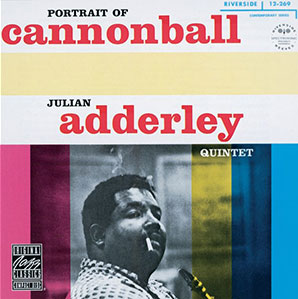
There’s a bit of controversy about who actually wrote Nardis. The tune is officially credited to Miles Davis, but many musicians believe Bill Evans had a hand in writing it or even wrote the bulk of it himself.
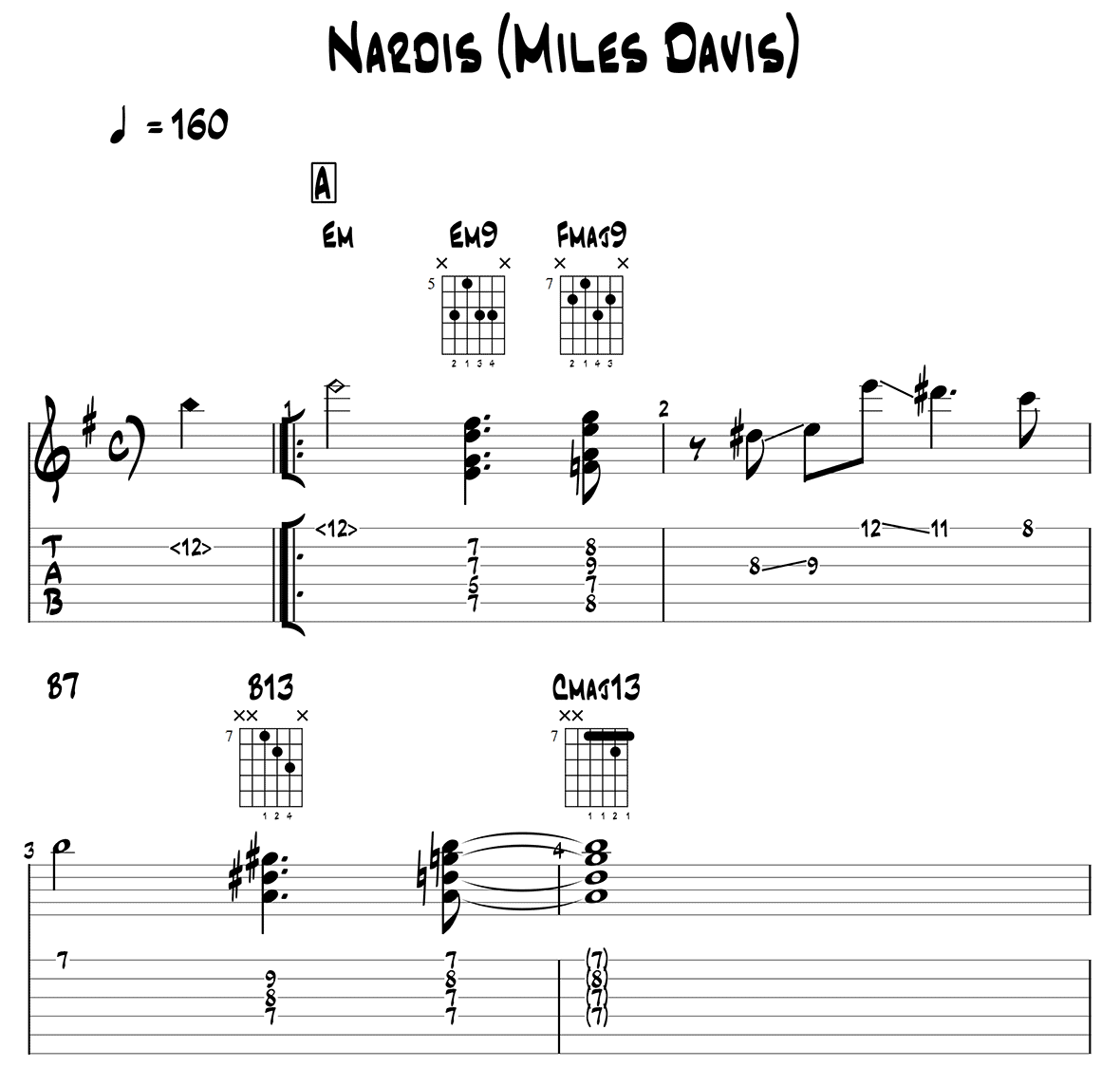
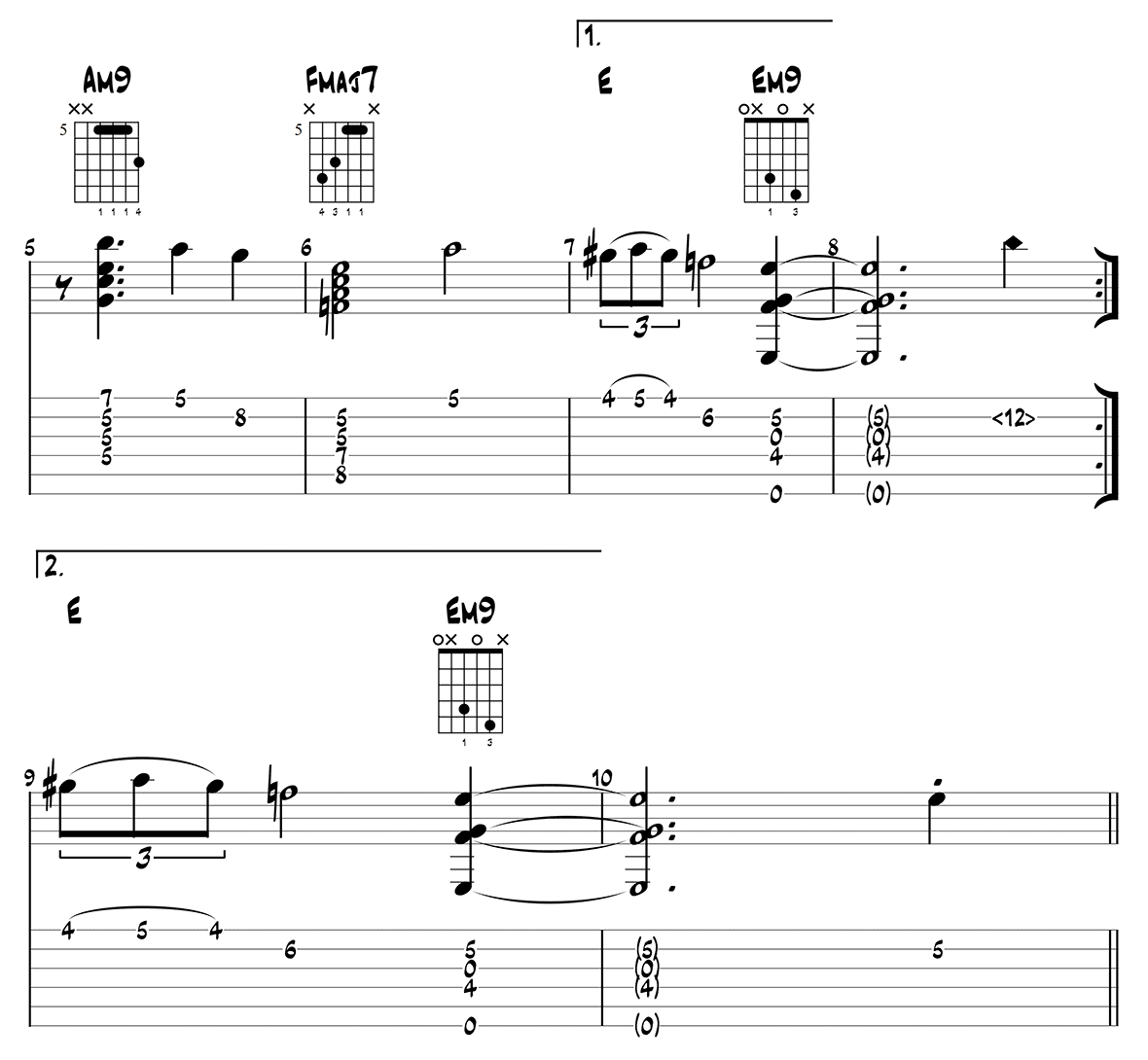
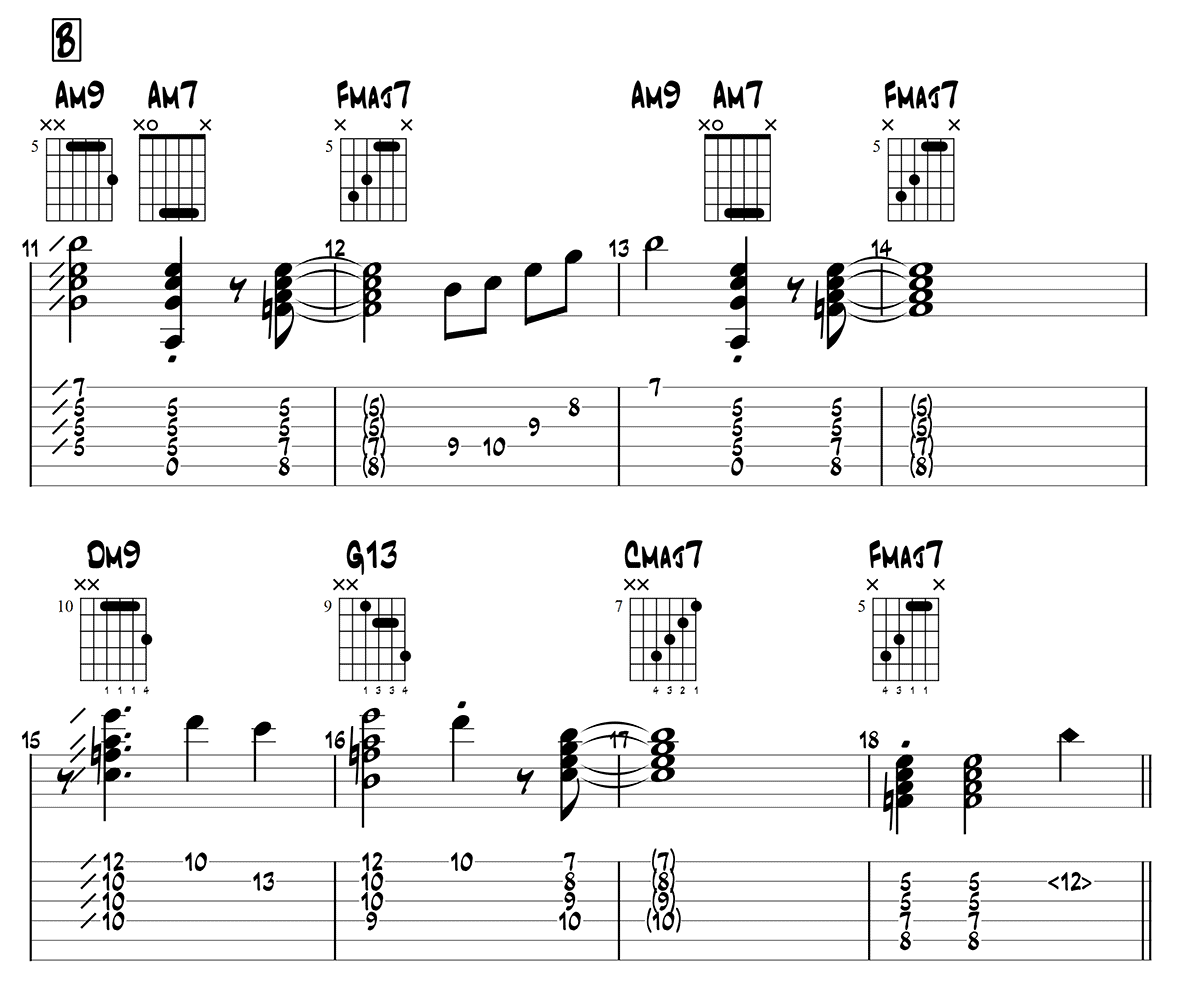
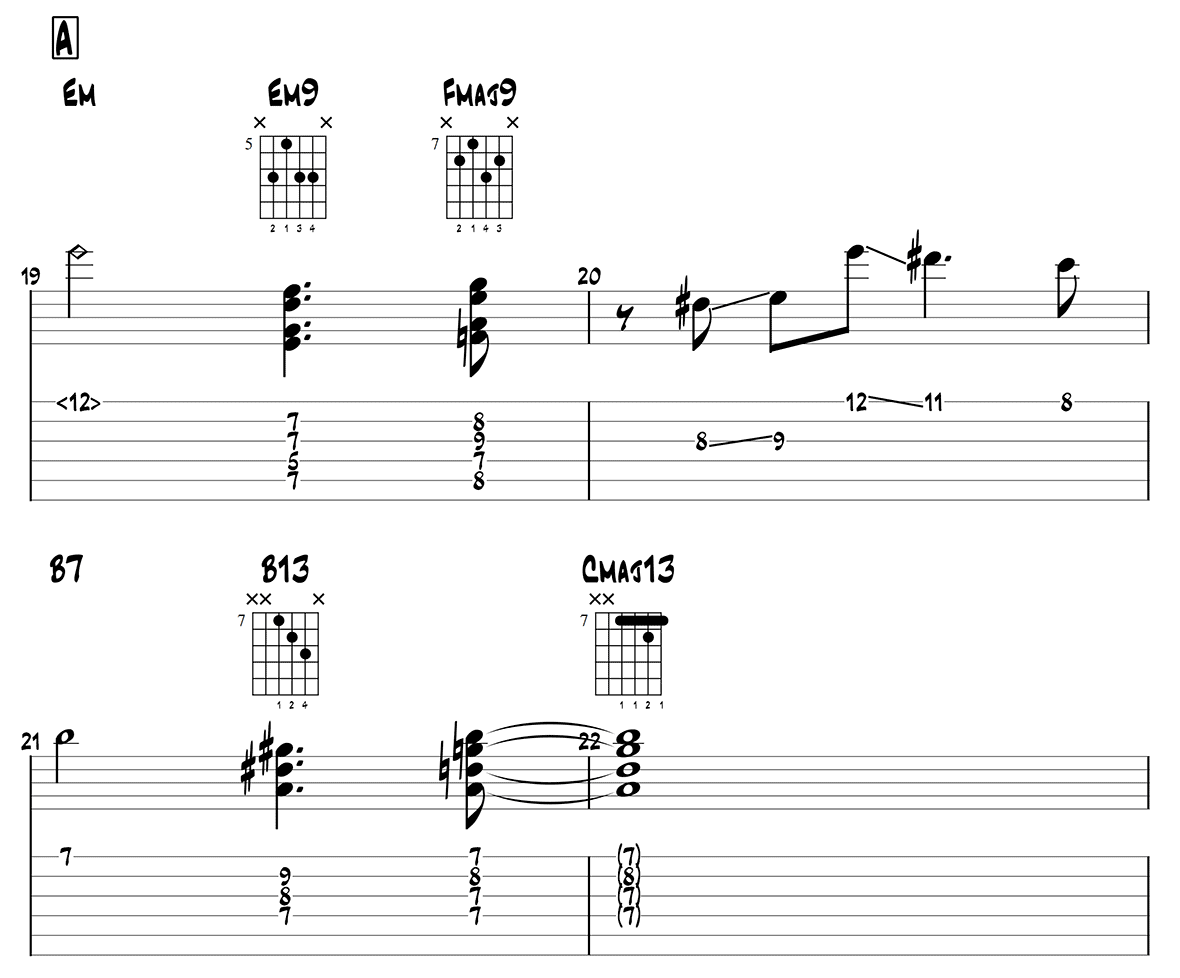
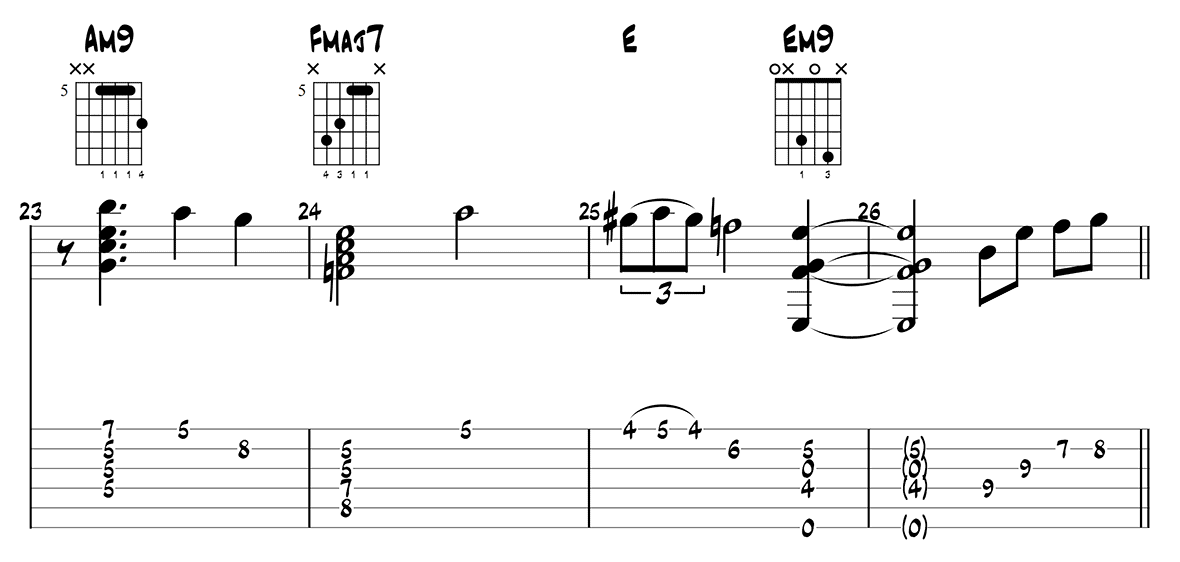
In this lesson, you will learn a chord-melody version of Nardis played over a backing track and a solo over its chord changes.
Recommended listening:
- Julian “Cannonball” Adderley Quintet – Portrait of Cannonball (1958)
- Bill Evans Trio – Explorations (1961)
- Jimmy Raney & Doug Raney – Nardis (1983)
- Chet Baker – Candy (1985)
- Charlie Haden – The Private Collection (1985)
- The Jack Wilkins Trio – Call Him Reckless (1989)
- Philip Catherine Trio (with Chet Baker) – I Remember You (1991)
- Mike Stern – Standards (And Other Songs) (1992)
- Jacky Terrasson – Smile (2002)
- Doug Raney, Dave Stryker, Freddie Bryant – Jam Sessions Vol. 10 (2004)
- John Abercrombie Quartet – Up and Coming (2017)
JGO+ members can download the PDF, Guitar Pro file, audio, and backing track from the download page.

Nardis -Video
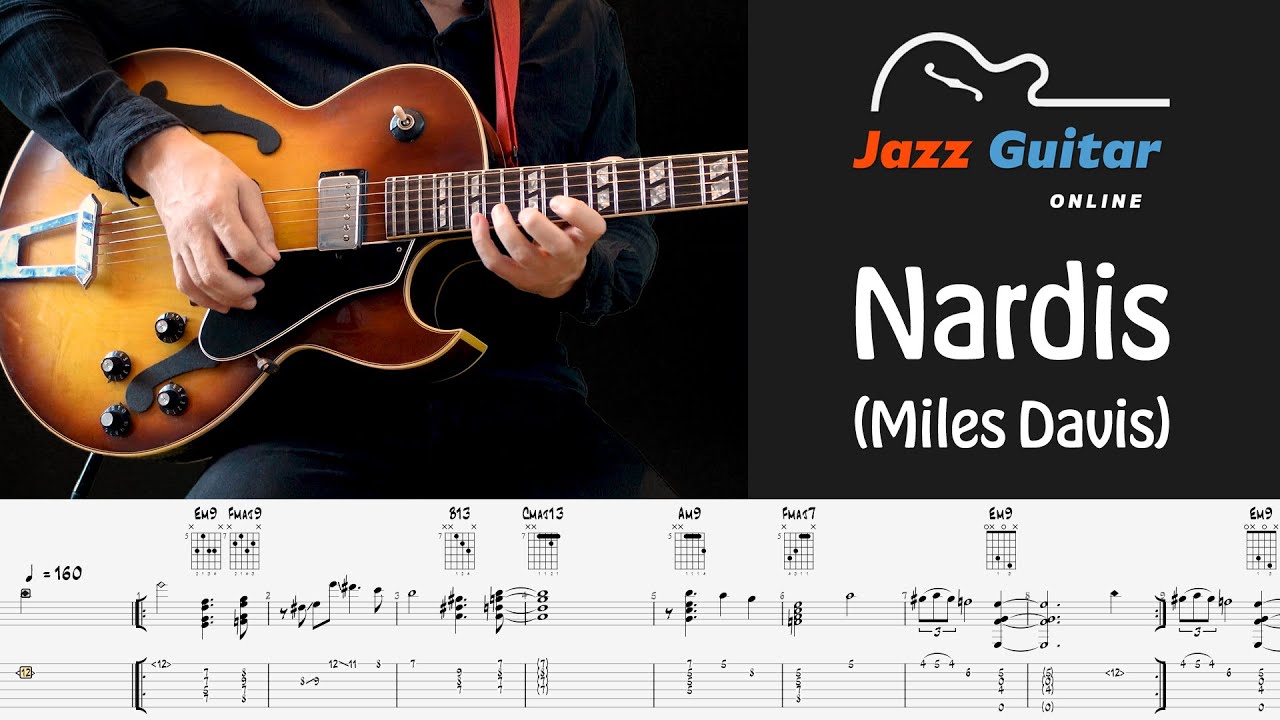
Nardis – Melody
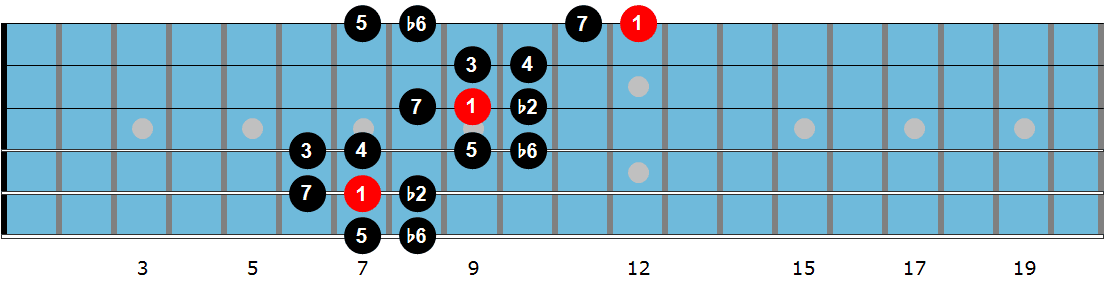
The melody of Nardis draws from the E double harmonic major scale (measures 2 and 6-8).
This scale is the source of the tune’s “Middle Eastern” color: a major scale with a b2 and b6, creating two augmented seconds.
This scale is also known as Gypsy major, Byzantine, Hijaz Kar, and it appears in some Indian ragas (Mayamalavagowla raga, Bhairav raga) as well.
| E Double Harmonic Major Scale | E | F | G# | A | B | C | D# |
|---|---|---|---|---|---|---|---|
| 1 | b2 | 3 | 4 | 5 | b6 | 7 |
Backing Track
Listen & Play-Along
Nardis – Guitar Solo
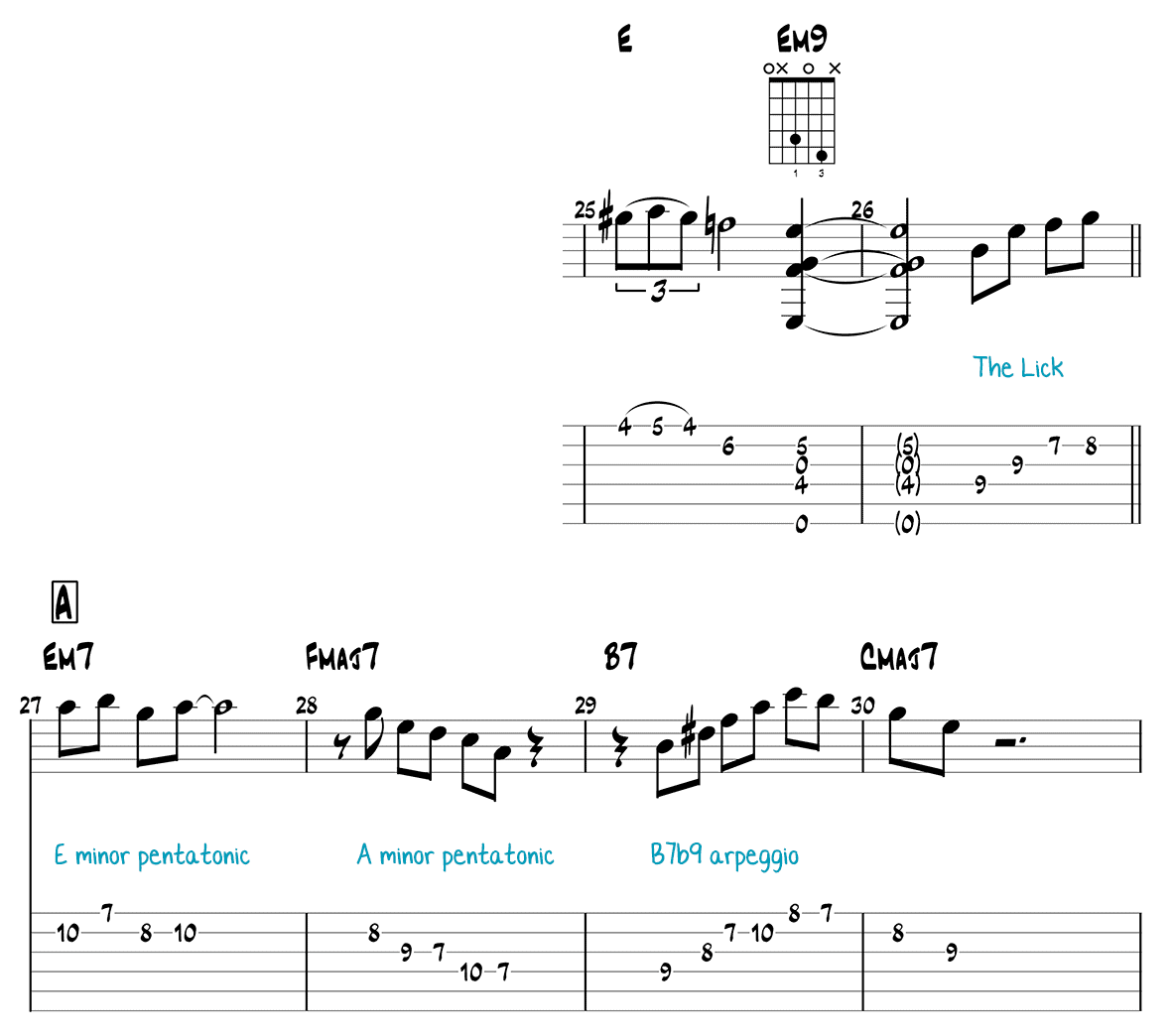
Form: AABA (32 bars)
Key: E minor
There’s an ongoing debate about whether Nardis should be considered a modal tune. It was written during Miles Davis’s modal period, the same era that produced Milestones and Kind of Blue.
The A-sections center around E minor, with a short modulation to E major in bar 8 of the form.
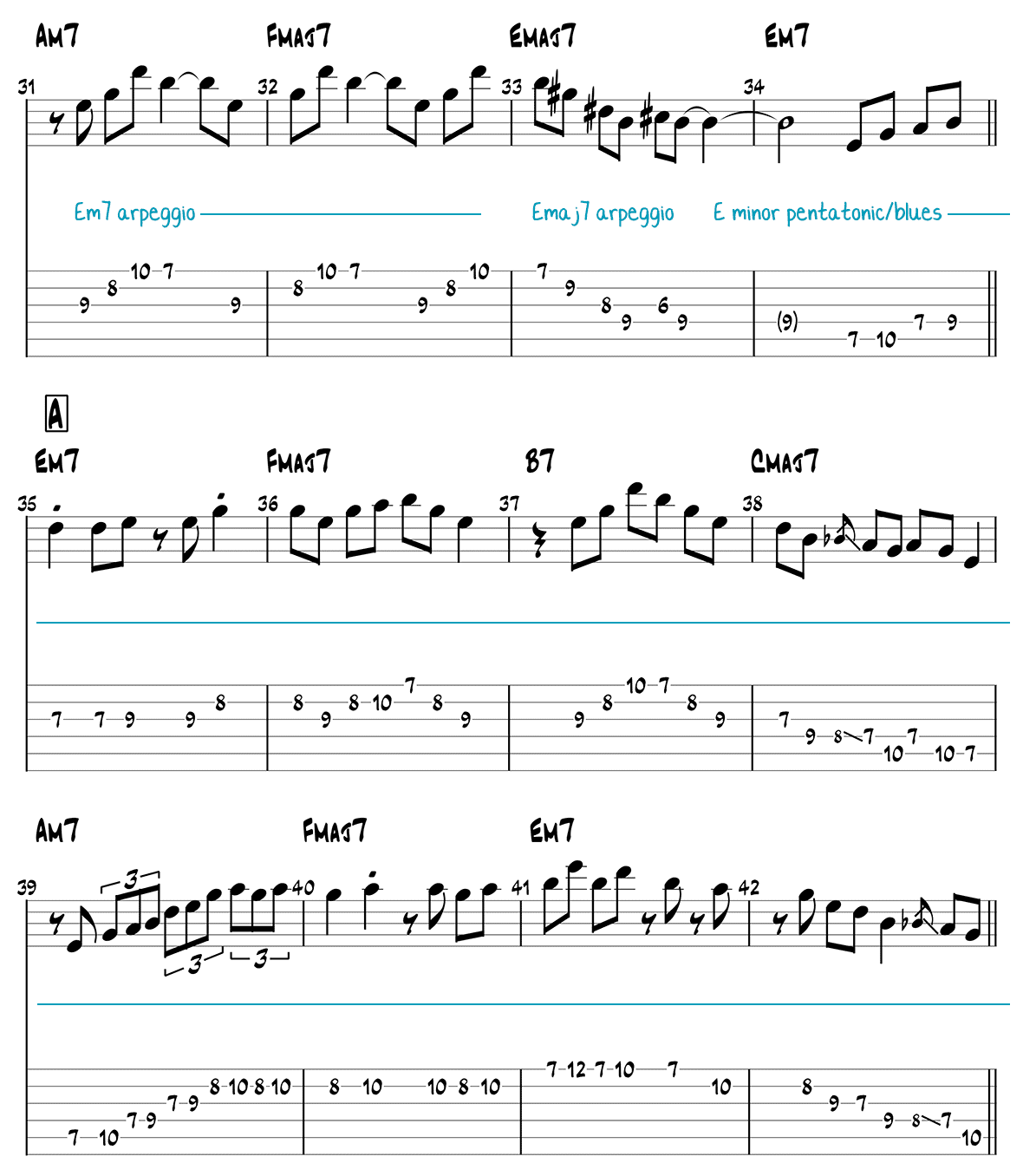
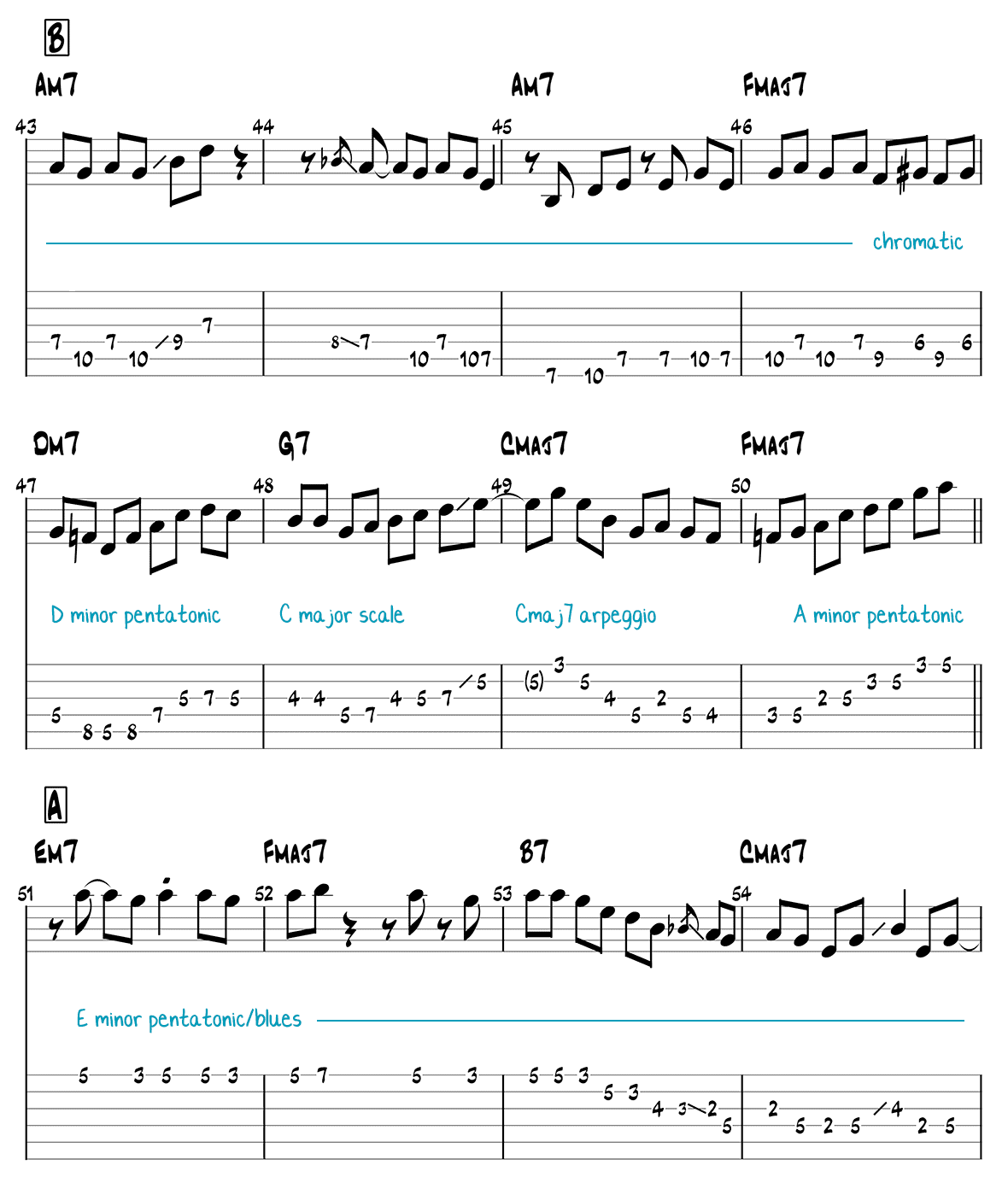
The B-section moves to C major, using more traditional harmonic movement before returning to the modal E minor sound.
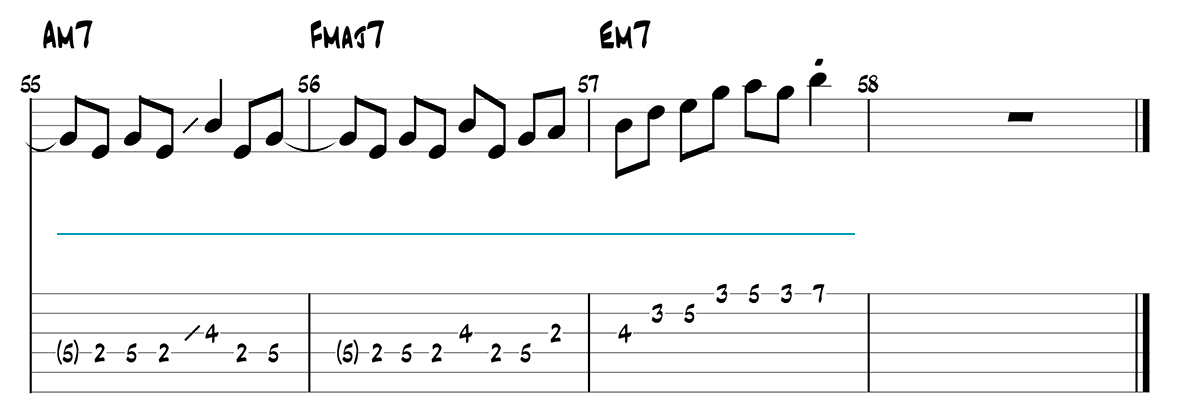
I open the solo with the well-known jazz pattern often referred to as The Lick.
For most of the solo, I use the E minor pentatonic and E minor blues scale, combined with arpeggios to outline the chord tones where the harmony shifts.
Listen & Play-Along
More Miles Davis Lessons:
Simplemente, Gracias.
No la conocia.
Awesome time- I recently played it at the Vt Jazz Ctr. Very timely!
hey Dirk , where is the Bill Evans counter melody {real Book 6 edition)?
eccellente
Everyone please check the solo arrangement of this tune by The Master (aka Ralph Towner), specially in his ECM album “Solo Concert”. A true milestone 😉
let’s not ignore the first version I’d ever heard: Tony Rice (or The Tony Rice Unit?) from the album Mar West and, later, the compilation album Devlin’
GREAT TUNE INDEED !! Seen long time ago in Paris with TRIO Eddie LOUISS Hammond, René THOMAS guitar, and other drummer (not Kenny Clarke, as album)..may be Daniel Humair.
Ja, inderdaad geweldig gedaan!
Noot.
Ik moet nog veel gaan oefenen.
Met vr.gr
Cor
A slight error in the layout of Double HMaj-it shows a b3 but should be b2 and b6-the fretboard example is correct:-)
Thanks Brian, fixed it.
Great stuff, Dirk. Have always been intrigued by this tune and I like the slightly Metheny-esque style of the solo. Best to all, Marc
What a pretty tune, I believe this is the first time I’ve heard it. Your artistry with the guitar…simply amazing.! 👍 Thanks for sharing this piece with me. Love it!!!
Frank M.