


-
I think there's an element of conspicuous consumption in buying expensive guitars (which I think of as more nuanced than snobbery), but I don't think that's the case for everyone who does it. Some people genuinely think there's improvement and value to be had in spending a lot of money, or they're fascinated by the objects, or they're into collecting more as a membership activity, so they spend a lot of money. Regardless, if they can afford it, so what? It's their money and their perception of value. I think most of us are sophisticated enough to realize that the cost of someone else's guitar says nothing about ourselves and do not take it as snobbery or condescension. I'm a bargain hunter, which some might see as another kind of snobbery. Again, so what?
 Originally Posted by Vihar
I don't think the main difference in sound between archtops and most solidbodies is the pickup (especially given how many of both have the same pickups). Acoustic archtops and flattops have different sounds and blend differently with other instruments. Neither eats the other, unless one tries to use one for a situation that suits the other better. That said, great flattops can be had for cheap. Not so for acoustic archtops because carved tops are inherently much more expensive to build than solid flattops. Originally Posted by Vihar
For instance? I don't think this is something that occurs enough to be able to generalize about it. Originally Posted by Vihar
Yes and no. Certainly, most guitars are suitable for many kinds of music. My usual response to the perennial question of "what jazz guitar should I buy?" is "don't buy. Play what you have. Anything with a neck pickup is a jazz guitar" . But colloquially "jazz box" is just another way of saying "archtop guitar", and if I say "jazz box" people know what I mean. No sense in fighting that. Originally Posted by Vihar
Overall, you seem to be getting kind of worked up about this. Doesn't seem worth the cathexis to me.Last edited by John A.; 01-24-2023 at 01:38 PM.
-
01-24-2023 12:18 PM

-
I agree, and moreover that's why the most coveted guitars are from that era, and why modern manufacturers spend most of their time attempting to duplicate those instruments. Has anyone ever surpassed a D'Angellico or D'Acquisto? A 1959 L5 or Les Paul? A prewar Martin? What passes for innovation now is putting hum buckers on a telecaster- I exaggerate only slightly! Originally Posted by nevershouldhavesoldit
And think of the range of tones from that era- everything from Johnnie Smith to Wes to Jim Hall to Albert King and Muddy Waters, great tones still being chased today. To me most of the innovation now is in electronics and the quality of cheap manufacturing- when I was a young teacher it was heartbreaking to see so many quit because their instruments were unplayable. The level of beginner guitars , even intermediate guitars, is much higher today. Although LP Specials were beginner guitars...
The sound of jazz has changed somewhat with current players, as they search for a more identifiable personal sound. I'm thinking Julian Lage with his Collings or telecaster, Bill Frisell with all of his tinkering. Other jazz players use a somewhat brighter sound. Myself I like a brighter sound so long as it's full as well. Modern arch top makers innovate, but a lot of it appears to be cosmetic. The basic form has barely changed, and maybe that's OK. Maybe the guitar has reached a kind of plateau, like violins. And guitarists are a conservative lot, most are only looking to replicate their heroes.
In addition, many jazz guitarists are happy with the older tone, and innovate in their note selections. Can't fault them for that either! There are times when I search for different tones, and other times when I want traditional tones to work on chord/melody, for instance. It's all good!
-
Can we say archtops were designed to produce sounds that are loud but also clear and round (IIRC that was one of Orville Gibson's reasons to start experimenting with designs borrowed from violin and cello making)? Very few flat-tops are made for that, with the notable exception of classical guitars. I know from experience how easily a reasonable quality classical can eat a run-of-the-mill steel-string acoustic but when I hear renowned players like Michael Chapdelaine play classical music on some of the most sophisticated modern acoustic archtops I think those are probably on par with the best classicals. Originally Posted by customxke
-
Though his presence at the Gibson company was sparse, to put it mildly: Originally Posted by RJVB
"On the strength of Gibson's ideas, five Kalamazoo businessmen formed the Gibson Mandolin-Guitar Mfg. Co., Ltd., in 1902. Within a short period after the company was started, the board passed a motion that "Orville H. Gibson be paid only for the actual time he works for the Company." After that time, there is no clear indication whether he worked there full-time, or as a consultant. Julius Bellson states in his 1973 publication, The Gibson Story, that "Orville Gibson had visions and dreams that were considered eccentric." (from: Orville Gibson - Wikipedia)
He was a Freemason (as was Ted McCarty or Paul Bigsby):

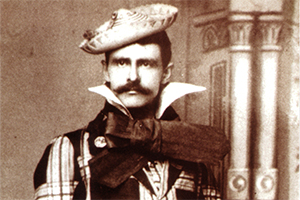

The Occult (Hidden) Origins of the Gibson Les Paul Guitar
Last edited by Vihar; 01-24-2023 at 02:14 PM.
-
The original post is clearly wrong: It can’t be the case that there is NO PROGRESS in guitar making since the 1940s or 1950. Clearly, that is not true.
1. MIDI pickups, Fernandes Sustainers can be transformative in terms of offering possibilities for sustain and different orchestral colors.
2.I think the Brahms guitar idea that incorporates extended range, fanned frets, a cello end pin that allows for much easier and pain free ways of playing is great idea.
3. changes in use of materials that do not have the seasonal setup issues like wood does: the carbon fiber guitars.
4. The change in amplification from tube to sold state to digital makes so many choices available in really small packages.
Are these changes radical? Probably not. But what do you want to do with the guitar and music? Is it radically different than what Charlie Christian or George v Eps or Jimi Hendrix wanted? No it is not.
The guitar remains a very portable mini orchestra that can sub for an acoustic ensemble though amplification and can have the lyrical qualities of monophonic stringed instruments that a piano cannot emulate.
The changes from piano to synthesizer keyboards are even more drastic than anything done to a guitar.
Regarding instrument development, Joe Zawinul said it best: “a synthesizer is not better than a piano, but if it is played like a piano, it becomes a very bad instrument”.
-
That is an utter misrepresentation of what I said. I did not mention dominant jazz guitarists of the last fifty years because they are not relevant, but you insult me my claiming, weirdly, that I am denigrating them by not mentioning them. I observed that guitarists on this forum often wish to have a retro sound. I could find numerous examples to support this argument but, frankly, your insult is not worth the effort. Originally Posted by Jim Soloway
-
I presented it as an observation, nothing more. I think you are right that is hard to imagine improvement, because that sound has become the standard for jazz guitar. That is what I meant about Hawaiian noises – the alternatives are absurd (the phrase comes from Money for Nothing by Dire Straits, incidentally). Originally Posted by nevershouldhavesoldit
No doubt similar observations could be made about the sound of Flamenco or Gypsy guitars, or of orchestral instruments. After experimentation and diversity, a standard emerges and becomes established.
-
Apparently one of us is misunderstanding the other and if indeed I am the guilty party, then you have my sincere apology. And with that, I will show myself the door for a while. Originally Posted by Litterick
-
Yeah, I think I'll join you in leaving this thread. Apparently the Revolution wasn't televised... Originally Posted by Jim Soloway

-
Been watching a lot of his videos recently. I personally think the F-hole is an outdated requirement in archtops. Ken seems to have the same approach. My belief is probably from ignorance however. Originally Posted by Oscar67
Jazz is an art form that essentially died 60+ years ago. That's why the Jazz community mostly lives in the past.
The biggest buying demographic are like my friend and his old Wadkins. There are better modern machines that are lighter and more accurate but he didn't grow up with them so they don't mean anything, for the most part.
The majority of manufacturing wants nothing more than to purchase and use state of the art machinery. Staying ahead of competition through evolution, is not a requirement in Jazz; yet!
-
It's probably safe to say that soundholes in general have long stopped being a requirement in guitars used for playing jazz. Originally Posted by ArchtopHeaven
As to them being required in archtops ... it depends on what kind of sound you're looking for, and how much of it (or rather, how well it projects). Placement, size and shape of the soundhole(s) can have a big influence here.
A pair of f-holes at their usual position on opposite sides of the saddle allows for bridge hill resonance, something that also occurs in the violin and viol families and is important for their sound character. Whatever it is that this phenomenon does to the sound of an archtop guitar, if you're after that kind of sound (or simply the sound of an early L5) you'll probably need f-holes or some comparable pair of long & narrow soundholes on opposite sides of the saddle.
Make a flat-top acoustic with f-holes and it'll sound archtoppy, just like a round-hole archtop sounds flat-toppy.
I love the sound of Ken's guitars, but I honestly have no idea how easy it would be to tell one apart from one of Ben Wilborn's Comma series, of comparable size, strung with the same strings and played by the same person.
-
CNC, compound radius necks, long life fret materials, roasted maple, torrified tops, advanced glues, stable tuning pegs, better finishes, eco friendly wood alternatives, feedback resistance in tone bars and top construction, cnc rough carving of solid tops, carbon fibre support strips to stabilise necks, double acting truss rods, construction consistency and tolerance in pickup windings & magnets, pleck machines to fine tune intonation…..
heaps has changed in guitar building over the last 80 years. Just look how cheap a guitar you can buy these days for the features you get! Thing is other than speed to construct (<$$) there are not many problems to fix anymore other than stability of tops exposed to humidity changes and demand increase for the instrument genre. Look how cheap the entry level Ibanez Archies now are. A squire classic vibe costs more!!
Emike.
-
Instead builders like Ken and others are putting holes in silly places. The Parker in Vihar's thread looks like someone took a jigsaw to the guitar cause not enough sound was coming out. I don't call that progress, even though the guitar sounded fine, but not notably better than any other good archtop. Then there are the guys cutting oval holes out of the bass side of the guitar, I'm guessing so the player can hear themselves better? All of a sudden it's a problem needing to be addressed after decades? No, just someone trying to do something different. It looks corny too, but I suppose that's my opinion. A lot of the post modernist designs just look like cold, uninviting, silly shit. I don't know many people who want a house that looks like a concrete prison complex without the concertina wire or a new office building. To be honest, post modernism is shit in general but that's a different discussion. It's not innovation, nor development, it's a dead end. Originally Posted by ArchtopHeaven
There is no real progress in any guitar construction, just small refinements here and there. All the best designs are just copied, are blatant ripoffs, or they are copied and altered, partly because it will actually sell and the small alterations might appeal to certain players. Few guys want a guitar with swiss cheese soundholes or a neck that looks like it was set by someone whose true love is designing piers or suspension bridges. Those are alterations, not innovations. Many of them are novelty at best, dust collectors at worst. Show me the progress, it's not there.
-
Progress towards what? Is progress sorely lacking in a specific currently unsolvable area that you can think of? I think if you can get the same deep resonant response of an L5 out out something the depth of a thinline then sure I guess. But there is no crying demand as far as I can tell. Changing shapes and tweaks as you point out may be small and incremental but they all count in the end. Also consider this- Guitarists in general hate adopting change if it means you loose access to the standard as well. Imagine the outcry if Gibson radically changes the body of the LP to make it more ergonomic to hold and ceases production of the current design? If fender put a Strat out with a bucker only layout and ceased the SSS format? Or the Tele got rid of the design flaw edges of the ashtray. We don’t actually give the makers the space to move very far beyond a design 70 years old. Heck people even bitch about the colours being too non-traditional.
I love the blue guitar collection and how Scott gave those luthiers the freedom to experiment without the threat of market backlash. It meant the truely talented designers and makers could see how far they could take their design ideas and actually turn the designs to reality. Who knows maybe some of those ideas will stick.
As for F holes, that shape has been gradually refined through trial and error for centuries. Perhaps it is not truely fully utilised on an archtop (acoustic or otherwise) as a bowed instrument can but its shape, location and dimension does have a very functional purpose on those instruments at least.
cheers
Emike
-
I disagree. Despite the many forces that operate to the detriment of jazz, it continues to thrive as a musical form. It has, for the most part, moved away from the crass glare of commercial reality. It has not been a popular music for a few decades, but the internet has enabled the creation of a global community of practitioners as well as fans, across a broad variety of jazz styles. Originally Posted by ArchtopHeaven
As far as the archtop guitar goes, I think Eastwood Mike has summarized some of the production advances nicely, which apply to all sorts of things, guitars in general, and jazz guitars in particular. "CNC, compound radius necks, long life fret materials, roasted maple, torrified tops, advanced glues, stable tuning pegs, better finishes, eco friendly wood alternatives, feedback resistance in tone bars and top construction, cnc rough carving of solid tops, carbon fibre support strips to stabilise necks, double acting truss rods, construction consistency and tolerance in pickup windings & magnets, pleck machines to fine tune intonation….."
-
Well, I like a man who's not afraid to state an opinion, even if I disagree with most of it. What are your thoughts about Modernism as opposed to Post-Modernism? Originally Posted by DawgBone
-
Yeah but does it sound better?
-
Does what sound better? Originally Posted by DawgBone
-
Jazz amps have made great progress and my back appreciates that very much.

-
I fully side with EastwoodMike's summary. The progress has been "democratic" in resulting better components and better guitars of more even quality at a fraction of the real prices of iconic benchmark instruments of yore. It's a common observation among guitar vendors that affordable instruments are getting better and better, while premium factory-built models with multiple price tags impress less and less.
The aging factor is still a bit of a question mark regarding more recent, inexpensive but well-built Asian archtops. My Korean Emperor Regent from 1999, although not played very much, just keeps getting better. A MIC Ibanez AFJ-91 from around 2014 has been my main go-to axe most of the time. Improving as well. Both have a laminated top with spruce veneer on the outside. Think of the ES-125, an entry-level student model now hailed for its sound. Who lives will see if Godin's 5th Ave boxes have a similar career progression.
-
My response was mostly aimed at Eastwood Mike's post but when I posted it you had beaten me to the punch with your reply. I thought that my response also suited your question about modernism vs post modernism close enough that I didn't feel like adding to it so I just went to bed, lol. The mid century modern houses seem to be much more of a "Home" than post modern designs but I would bet people still build more country cabins because they feel more like a home than modernistic stuff. Just like there will be more L-5's and their clones sold than swiss cheese soundhole guitars because they also feel more like home and the swiss cheese guitars don't sound any better. Materials, design, etc might be better but they haven't resulted in superior tone or notably increased playability. Originally Posted by Hammertone
Which of these houses do you prefer? My best to you this morning.
-
I know which one I like best....
-
Good post. Originally Posted by RJVB
-
Yeh sorry I was being a little blunt. I meant to say that the audience has gone from 10million down to 4million. In genre terms that's considered a death but we're all here keeping it alive. Originally Posted by Hammertone
Some even go out and play the stuff. Can you imagine?
On a side note, when I was studying we used to play live at a hall in Chichester. It was full of what we call 'blue rinse'. It was a bit depressing but I appreciated them coming out to listen to a bunch of students try to play jazz. Without them we wouldn't of had an audience at all.
-
They are not so different. They are both Modern, but the Neutra was designed when Modernism was still modern, and the Maltzan was designed after Postmodernism. The differences are of size and amenities, which is hardly surprising, since Neutra made his design for his secretary and her husband in the 1950s, while Maltzan designed for a rock star in 2009. The Maltzan in many respects pays homage to Neutra's designs. Originally Posted by DawgBone
I prefer the Neutra, because it is a compact and integral design. Neutra has become very popular in recent years, because he designed houses that people wish they could own, in places people imagine themselves living. But his houses work because he thought about how people could live with nature. Neutra scholar Barbara Lamprecht says his philosophy of “biorealism” sought to use biological sciences in architecture “so that design exploited, with great sophistication, the realm of the senses and an interconnectedness to nature that he believed fundamental and requisite to human well-being”. I doubt Maltzan is as sophisticated in his thinking.


 Reply With Quote


What is it?!? Why am I still at it?!?
Today, 04:53 AM in Everything Else