


-
I Was reading somewhere on the forum that some people fight feedback on their archtops with cotton.
I was wondering if they stuffed it with cotton balls or was it another type of cotton.
Since this is a cheap option I wanted to try this first before going down the plug route.
-
12-20-2011 09:48 AM

-
I think you can use any type of cotton - or any other fluffy material like Rockwool isolation bats or whatever you can get across. However, stay away from glass wool as it wil itch like crazy if you get it on your skin. And don't expect the acoustic virtues of the instrument to be just as strong after such a treament ......
Bob Benedetto once told a story in the "Just Jazz Guitar" magazine about Jack Wilkins' Benedetto Fratello guitar which gave Wilkins severe feed back problems. Wilkins took it to Bobs shop, and after trying everything else in vain, they ended up "throwing in the towell" - litterally. Bob went upstairs to the family bathroom, picked up a towell which they managed to stuff into the guitar through one of the F-holes. That did the trick. The story didn't mention how they would remove the towell if they should want to later, but I guess they could pull it out in small increments and cut them off little by little.
-
Ahh Thanks for that am going to try use some cotton wool balls like this
 Originally Posted by oldane
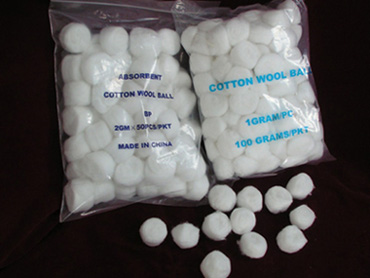
if that doesn't do the job I will try the insulation bats
-
I've often wondered about this. Does that affect the acoustic properties of the guitar? Does that defeat the purpose of having a hollow-body guitar?
-
I Don't think it takes away the natural bounce or air that an archtop has since the vibrations are still going through the body but they are hitting many objects such as cotton. Originally Posted by fep
Since cotton wool is hollow it's self the vibrations still resonate through the body however since cotton wool still has mass some of the energy for the vibrations are lost. But in a solid body there is no air to pass through thus no acoustic properties.
-
Henry Johnson does something that I don't recommend, but since he has his own signature model Heritage, I guess it works for him.
His organ quartet plays pretty loud...hard hitting drummer, sax and B-3. He covers his f holes with clear plastic packing tape. I don't imagine that it's helping the finish on his guitars, but they still sound pretty acoustic to my ears.
You can see the reflection of the tape on his guitar right as he finishes his solo:
-
Kenny Burell had black tape covering the bass F-hole of his Super400 for years - neatly cut to the shape of the hole so you had to look close to notice it. Originally Posted by Flyin' Brian
-
when i was playing with a salsa band, i balled up and stuffed a couple of long, plastic bags from the dry cleaners in my guitar's f-holes.
-
I've used a static cling clear Mylar in the past and it worked ok.
I used it on a Guild Artist Award that was the worst feeding back guitar I've ever had, and it did help.
When I got my custom Heritage Eagle I prematurely decided to use it on that as well, and it did work. but when I took it off the finish in that area had melted, and I subsequently found out I didn't need it. Some people recommend using a sound post to cut down on feedback issues.
-
For every jazz group that plays too softly for the venues they appear in, there is another 100 that are consistently TOO LOUD.
If people want to hear you, they'll listen. If they don't want to hear you, and you're just background noise, they'll adjust their location within a club and their conversational (drunken shrieking) volume to be heard over you no matter how loud you get.
I have observed this frequently...we'll deliberately cut the dynamics back, and start playing more quietly...and within a few minutes, people begin paying attention again.
If that doesn't work to gain their attention, then there is no need to play loud anyway. They aren't listening.
If there are horn players and drummers who won't cooperate, take them into the alley behind the club and deal out a good thrashing. A fat lip will cause any horn player to tone it down and a drummer with several broken fingers will agree to use brushes.
Play quiet...play plywood. Then you don't have to worry about plugs or stuffing the sound box full of wet garbage.
-
I'm wondering if blue "painter's tape" or "gaffer's tape", both of which are designed to be removable without leaving any residue, might be better choices than packing tape? The Saran Wrap someone mentioned sounds like a better choice, too.
-
I have seen one player use foam that was cut slightly bigger than the F hole , so it expanded a bit and filled the F hole perfectley .
-
So which type of cling film or plastic wrap doesn't damage the finish? Originally Posted by Pat Clare
-
I use foam the spongy stuff inside the guitar
then some black vinyl like on chairs inside to seal the
f holes from the inside
the vinyl is pressed up against the inside of the f holes by the foamm
works great ,
the guitar is a lam spruce top and used to feedback a bit
it is now about half as accoustic as it used to be
It still has all the warmth and weight of the archtop sound
I don't play very loud .......
-
Two suggestions (neither of which I have tried):
- Wrap the cotton balls in cheesecloth. This will allow you to compress them slightly and make it easier to get them in and out without "losing" a cotton ball or two in your sound box. The compression may help reduce feedback too, as AZanshin explained, and it may better approximate a permanent plug.
- You might want to try Doug's Plugs. If you do, please let us know how well they work for you.
Last edited by HighSpeedSpoon; 12-21-2011 at 01:07 AM.
-
I agree you shouldn't play loud just because everyone is talking in the audience - but I disagree with the rest (again). I don't think jazz bands play too loud (here at least) and I tend not to like soft music, it tends to became hotel ambient music to me. And I love loud interactive drummers... Not hard rok loud but loud still. And if you play with two horns you will have to play loud for sure and feedback problems will come. Playing softly because of feedback is not a good solution... Dynamics are a very important part of music and it's obviously annoying if you play everything loud but it's probably even more annoying if you play everything soft. Just as an example I think most bands became too quiet in double bass solos, you have to come down but not that much usually. Originally Posted by cjm
I have made wood and foam plugs some days ago and it kills feedback at home with a little tone change. Let's see on the gig... You can always take the plugs - not so easy with the cotton...
-
There is one solution I've seen used but I will only convey it with the comment that it worked pretty well for the person that used it. Personally, I use a laminate thin body instrument for situations involving competition with a drummer.
The main problems were in dampening the free vibrations of the top (and supportive back) and keeping the resonant frequency of the body quiet. The first issue was addressed by placing a wood post, fitted and carefully set at an antinode spot. It's fitted so it doesn't actually deform the top and but is wedged in there much in the way a violin's soundpost is set. A wide post, 1/2 inch diameter should distribute the force. This WILL dampen the acoustic sound of the guitar too, so expect that your D'Angelico is going to suffer a change in sound. It's reversible so don't worry.
Now for the air resonance issue, you can use any of the solutions offered in this thread. This person cut F Hole foam plugs, painted them black and placed them in the F holes.
It was a solution that worked for this player. It helps if you know the frequency you get the most feedback on, sometimes it's a string frequency, sometimes it's a top resonance frequency, and if you can figure out the eigenmode pattern at that frequency peak, place the soundpost at that antinode.
It's kinda the nature of the beast. If it sounds good acoustically, it's gonna hear well too. Notch filters and equalizers are also good tools when working in a feedback prone amplified situation.
Just one possibility to murky the waters with.
David
-
From the other thread about plugs and stuff:
 Originally Posted by Little Jay
-
Gibson introduced the plywood ES-175 back in 1949 and suddenly jazz players began to get by without significant feedback problems until the rock influence began to push up volume levels. Originally Posted by jorgemg1984
There is plenty of room for dynamics without causing ripples in every glass of beer.
-
Well I don't think jazz has to be quiet and rock has to be loud. Even if you are talking about a jazz trio playing standards... I played in a gig recently with lots of sound issues due to bad organization and the drummer had to keep it quiet - and no one liked it, things were too soft!
I really don't know if jazz players started to play louder due to rock influence, it might be true, but that doesn´t really bother me since my calendar says 2011, not 1949. I even like overdrive with an archtop so feedback is a issue...
-
Artistic decisions based on the calendar rather than aesthetics? Originally Posted by jorgemg1984
It then becomes fashion rather than style.
-
It's impossible for someone 30 years old these days not to be influenced by rock. So that changes the way jazz is played I guess. Things changed a lot with rock music I guess and some people didn't liked it (when bebop came out swingers said they killed jazz so it started pretty soon).
It makes no sense to me trying to play like people played before rock appeared these days but everyone is free to do as they want.
-
It has been my privilege to play both bass and guitar with young people -- some too young to legally be in the club unless they were on the bandstand -- and so I don't think your opinion that "it makes no sense" is universally shared by the under 30 demographic. Originally Posted by jorgemg1984
The transition to bebop that was decried by some of the jazz greats of the 1920s and 1930s differed considerably from what we're talking about here -- so much so that it doesn't serve as a good analogy.
Bebop was about technique, tempos, rhythms and new harmonic ideas.
Here, we're talking about cranking up the volume and laying on electronic effects to such an extent that the discussion is about a need for additional measures for amplifier feedback management with guitars already purposely designed to minimize and/or eliminate feedback at volume levels that won't cause hearing damage.
-
To me is a good analogy and it is actually something that happens in other areas - new things being ignored because old ones were better. In the 1800s people said printed books were the work of the devil and were going to ruin young people - now parents pray for their sons to read a book.
In jazz happened all the time and still happens. This doesn't mean everything is perfect these days. I think you have a lot to learn from the masters of the past (in my case mainly Jim Hall and Wes Montgomery) but you also have to be aware of what is happening these days.
In my case I think people are playing too may pop music or odd metters because of guys like Mehldau that do it in a brilliant way. Drummers and double bass players these days tend to play better even eights beats than swing beats and I think that's a bad thing. People stopped learning standards or wantd to play them in 5 / 4 despite the fact they can't swing properly on 4 / 4. I go to a lot of concerts and after two hours no one played somethiing blues related or a walking bass line.
But there are some amazing stuff going on these days - one of them is precisely dynamics. Rhythm section used to be all about the tempo and now they interact a lot with the soloist - one of the reasons for people playing louder. Amongst may others - new harmonic ideas, great compostions, etc.. everything that makes music goes forward. The fact that these day's players play loud and use a lot of effects doesn't mean they haven't worked on technique, tempos, rhythms, harmonies etc... Some of them were really revolutionary on that.
On the OP, even in archtop trought amp situation in some unmiced concerts it's tought to compete with three horns without getting to a volume level that will give you feedback. It has happened to me sometimes. And you can't tell the horns to play everything pianissimo...
-
Holy shit man!!! Eigenmode pattern at frequency peak?? Antinode spots in the box?? WOW!! I don't know what any of that stuff is. I just play man. As said earlier, by yourself and others . . . if you're going to need high volume, play a semi hollow, or a semi solid or a plywood guitar (hi cjm). Originally Posted by TruthHertz
I've seen George Benson play a 5000 seat venue with his hollow body. He got some low tac clear tape covering the F holes and he has no problem. George has had so much negative flack from the jazz purists about "selling out" because he decided to start making some money doing pop stuff. (good for you George!!) If he were to ever show up at a gig with a semi hollow all hell would break loose . . . even though he did quite a few recordings with his beloved Guild semi hollow way back in the day. "Blue Benson" comes to mind immediately. If using a full hollow body in a setting that requires higher volumes, is lower settings on the guitar and the amp . . . then mic'ing the amp an option?
My comments are definitely not based upon an abundance of practical experience on this matter. I have never even attempted to use a full hollow body carved arch top on stage at loud volumes. So, I guess with that in mind . . . why the hell am I even commenting on this matter??? Oh well . . . I'll just sit back, shut up, listen and learn.



 Reply With Quote




Interesting Acoustic-Electric 7-String
Yesterday, 06:32 PM in Guitar, Amps & Gizmos