


-
I own a nice Polytone Mini Brute, which was given to me by a family member. I do not know the history of the amp. Somewhere along the way the power switch has been replaced by a standard on/off switch, and the main fuse has been bypassed.
The amplifier works fine except for a loud bang when turning the power off, making me fear for the health of the speaker.
Is it possible to obtain a replacement power switch that resembles the original Polytone power switch? There are many competent audio technicians where I live, so if I find the correct part, I am sure I can get the amp repaired.
-
12-15-2025 04:42 AM

-
-
Most '80s polytones like this make a loud sound when switching off. One solution is to fit a special capacitor to the switch, which mutes the noise. In Europe and the UK ( don't know about the US) there are strict regulations about what part to use, and the capacitor has to be rated for the AC ( not DC) input voltage of the amp. A qualified technician will know this. Bypassing the mains fuse is obviously dangerous, and the fuse holder should be re-installed asap to avoid possible damage. Fuses blow for a reason, and it's probably best to get your amp checked over as soon as possible. It also looks as if the mains input cable needs replacing to current safety standards.
As you may know, there is also a 7 amp speaker fuse fitted to the the power chassis inside the amp, which acts as overload protection. If the amp is silent but for no obvious reason, check this fuse first by disconnecting power and taking the back off. Not everyone knows this; it was "unusual " electrical practice even in the 80's..
Once you get it working safely, these quirky amps still have a lot of fans .
-
Thank you Franz for very valuable information! I have used the Polytone very sparingly due to the missing main fuse. With background in the things you mention I will stop using it altogether until I have sorted out the different issues.
 Originally Posted by Franz 1997
The original power switch has the "reverse" function, is it worth looking for a replacement "three-way" switch?
-
The purpose of the original 3 way switch was to change polarity of the mains to reduce hum, but this " deathcap" system is 50+ years old and dangerous. If you are on a grounded, 3 wire electrical system - which I assume you are- then the 3 way switch is unnecessary, and a normal on-off switch is fine. If it were mine, I'd ask the tech to install an IEC grounded power socket instead of the existing mains cable, and you might consider getting the capacitors checked for ESR or leakage. If they are the large grey coloured caps in the power amp, they are around 50+ years old
-
Thank you for your help! Now I have to search for a good technician to repair my amp. Originally Posted by Franz 1997
-
I've had Polytones for decades and this is the first time I've heard the switch is dangerous. The amp guys I've used are/were great technicians and they have never mentioned it to me. Originally Posted by Franz 1997
-
If you are using an amp which has an active polarity switch you are acting at your own peril. Originally Posted by garybaldy
But don't take my word for it.
Check out Rob Robinette
Or watch the Australian Accent Version:
https://www.youtube.com/shorts/M-Be_RzTvn4
-
The article implies that this switch is a danger if the amp has an ungrounded 2 prong plug, my Polytone 102 amp does not. It does make a thumping noise when I turn it off but it's not very loud. Originally Posted by Sam Sherry
-
Mick, the article states: Originally Posted by Mick-7
Personally, I have never carried an outlet-ground tester to a gig. I do remove the polarity / cap rig. Originally Posted by Rob Robinette
We now return you to JG.be as we know it: "Which Charlie Christian Blade Pickup For A Modern Sound?"
-
I am not an electrician and didn't read all the fine print in that article so I'm not exactly sure what the "death cap" is and if my Polytone amp has one. Originally Posted by Sam Sherry
Does this mean that it does?
-
No sweat, brother! The fact that you take the moment to say that plainly a) speaks well of you and b) underscores why this is a topic worth re-emphasizing. Originally Posted by Mick-7
Originally Posted by Mick-7
Almost all the time, if your amp has a working polarity switch it has a 'death cap' too.
Is it going to actually kill you? Statistically, nooooo.
But if you've ever had a taste of 120V you know why you don't want another one.
And if you are exceptionally unlucky with your cardiac health let's multiply that.
Bottom line: Leaving the vacuum-cleaner cord and the polarity switch in usually doesn't hurt anybody. Installing a three prong plug with fixed polarity never hurt anybody.
And with that, you will be shocked to hear me say that I am done!
-
Oh my God, you were right, I opened up the amp and found these growing inside! Originally Posted by Sam Sherry

Death Cap Mushrooms
-
That’s where the toan comes from, don’t take them out Originally Posted by Mick-7
Sent from my iPhone using Tapatalk
-
I guess "You Go To My Head" or maybe also "Fly Me To The Moon" would sound great on your amp Originally Posted by Mick-7

-
I actually started doing exactly that, ever since a gig at a venue where the AC quad boxes that lined the rear of the stage were in fact not AC power outlets for the musicians, but rather some part of the stage lighting rig! I suspect they were on dimmers (Variacs) because, while nothing was permanently damaged, my amp did sound like a moose's death-fart. Originally Posted by Sam Sherry
Now I have one of these in my gig bag, and every outlet gets checked before I'll plug any gear in.
-
Does anyone know that if I have one of these and it displays 'correct' when connected to a socket and then I use one of my polytones I'll likely not die? Originally Posted by Bob_Ross
-
For a fact?!?! Originally Posted by garybaldy
Sounds like a litigious setup, I'm not answering that on advice of council!
-
There are quiet a few videos on YouTube about electrical outlet testers, they're not fool-proof.
-
So, to recap (no pun intended):
1. The thump after turning off the amp with the switch is normal. Startling until you know that, but normal in Polytones. It's always bugged me with mine.
2. The two-prong plug and the three-way switch with a capacitor between the wire and ground has the potential to be dangerous. Rob Robinette's discussion of this is very good. This is also a very fixable problem and perhaps has already been fixed on your amp, since it has an on-off switch and a three prong plug.
3. The amp is 50 years old and should be looked over by a good tech to see if any caps or other components need to be replaced. Polytones have some unique features (quirks) but are pretty easy to work on, being point-to-point wired.
-
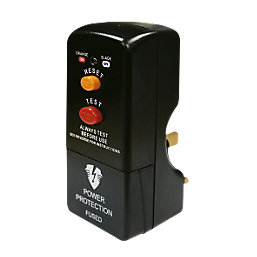
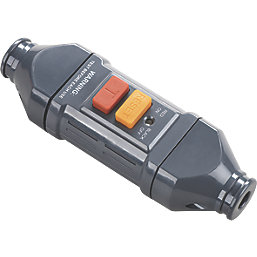
Maybe, get a RCD plug from Screwfix for £12-14, it'll keep your mind happy at least, but RCD are usually built into modern electrical consumer units. Originally Posted by garybaldy
Masterplug 13A Fused Hard-Wired Active In-Line RCD - Screwfix
Masterplug 13A Fused Plug-In Active RCD Plug - Screwfix
-
I opened up my Polytone today and it seems like I have underestimated the competence of the technician who worked on this amp a long time ago. It looks like the main fuse is not "bypassed", but moved inside the amp. I believe (hope) the double 500 milliamperes fuses is the redesigned main fuse? Hopefully I will not be electrocuted if I happen to play a wrong chord on my guitar through the Polytone Originally Posted by Franz 1997
Anyhow, I will still track down a technician to check the large grey capacitors, like you suggest.
-
It looks like the filter caps on the main circuit board have already been updated. The large grey caps by the reverb tank in the bottom of the cab might be OK.
-
Thank you for studying the photos of my Polytone! That is good news. It seems the amp has gone through a rather comprehensive rehabilitation/restoration. Maybe I just can continue to use the Polytone as my domestic practising amp, and adhere to the proverb "If it ain’t broke, don’t fix it"? Originally Posted by Cunamara
-
Those caps look very like the original caps to me -although I suppose it's possible they have been replaced by the same make. You can tell, because the original caps have a screw fitting underneath that is unusual these days.
I'm admittedly biased, as I had one cap explode and damage several other components, which was expensive to fix - but it's quite possible yours might still be OK.
I see it as insurance! You could see if the caps get warm after 20 minutes or so; if they do, comsider changing them. Or, if the amp hums at audible volume.Last edited by Franz 1997; 12-19-2025 at 08:11 AM.


 Reply With Quote




Got some picking exercises?
Today, 01:17 PM in Guitar Technique