


-
Hey everyone! This is my first thread here—hope I’m posting in the right section.
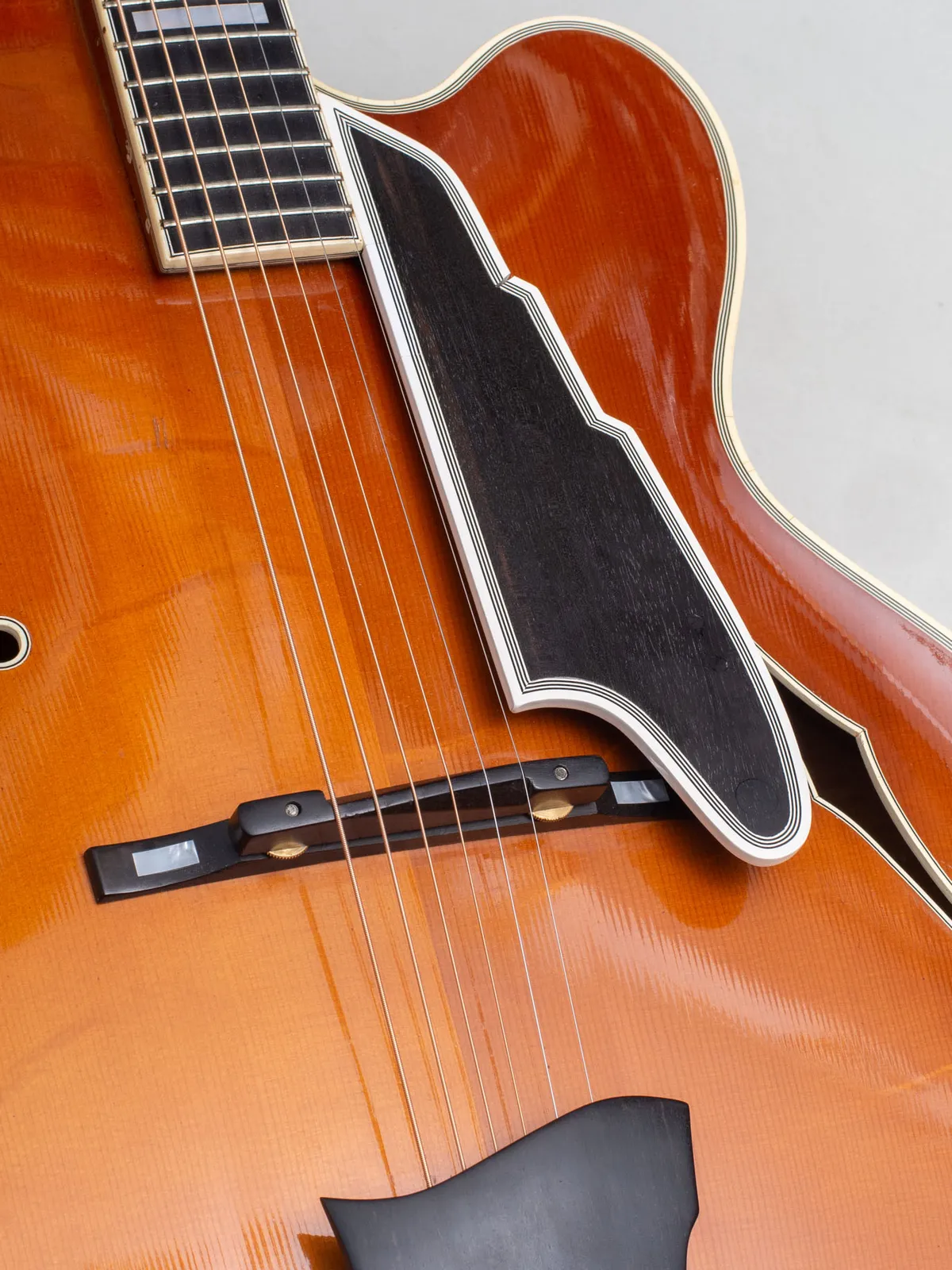
I’m trying to install a pickguard on my Loar LH-700 archtop, and while doing a bit of research, I came across some pickguards attached to the neck of the guitar instead of the top, often using a small block of wood.
I tried to include pictures but apparently im too new tothe forum to do that. I haven’t been able to find detailed info on how to do it properly for this specific model, or any clear close-up shots of the installation.
One thing I’m unsure about is whether that little wooden block should be resting on the top of the guitar or if it should be floating, attached only to the neck. Has anyone here done this kind of install on an LH-700, or something similar? I’d love to hear your experience or see how it looks up close.
Thanks in advance!
-
06-08-2025 08:15 PM

-
Usually the small block doesn't touch the top, only the side of the neck. There is usually a small block on the other end, underneath the pickguard, that does touch the top. It's usually made of hard foam, felt, or something similar, and just rests lightly on the top to provide support when pressure is placed on that part of the pickguard from the top.
Another method is what Benedetto does. The pickguard is held in place entirely by the mounting screws for the pickup ring(s). There is a shallow rout in the underside of the pickguard which matches the mounting rings, and a small cutout into the pickguard to allow access to the height adjustment screw on the treble side of the pickup ring. With this method there are no additional holes in the guitar, and the pickguard can easily be removed/replaced. I like this method a lot, but it does require some woodworking skill to make the routs and mounting holes. I suppose it could be used without the routs, but the thickness of the pickguard might be an issue, depending on its makeup. A thinner plastic pickguard probably wouldn't require it. A block at the bridge end under the pickguard is still used to provide some support, and I think that's necessary unless there is a metal bracket such as Gibson uses. I don't like those much.
-
I've done a bunch. Ideally, it should float just above the top, but at that area of the top, I doubt you'd hear any difference. One consideration is that you don't want to leave a mark on the top. You'll need an extra long drill bit of the appropriate diameter get to the side of the neck. At least 6".
Amazon.com
Last edited by Woody Sound; 06-09-2025 at 11:32 AM.
-
ICBW, but I think the OP is asking for a guitar without rings.
 Originally Posted by sgosnell
-
A great Jimmy D'Aquisto design uses a longer pickguard that is attached to the side of the neck and onto the bridge with a piece of foam underneath for added support, so that he pickguard is truly floating. No pickguard on an acoustic archtop sounds very good IMO.
-
Sadowsky does (did?) the same thing. I'll take a detailed pic when I can.
ps - The good folks over on the Builders subforum should be able to offer advice..
-
ps - Another consideration is that it's just easier to line up the angle of one surface (the neck) instead of two that are perpendicular. Originally Posted by Woody Sound
-
You can use a neck block with two screws. For the support at the bridge end of the pickguard, I use a cut down wine cork with a felt furniture pad adhered to that for any contact with the top.
-
Nice touch using that little bracket to support it. It looks almost like a chainsaw link. Originally Posted by Cunamara
Last edited by Woody Sound; 06-09-2025 at 01:04 PM.
-
That's the way it's done on mine, and the others I've seen which use the block, except that most have the screws recessed into the block, with the holes enlarged about halfway through the block, just enough to accept the screw heads. The screws should be fairly long, 1.5" or so, for sufficient strength and stability. Using a link from a bicycle or chainsaw chain, or whatever, seems fine as well.
-
This is the pickguard on my Loar 700. I didn't have the work done. The connection at the neck has one pin and one screw. The block doesn't touch thr body. Sorry about the quality of the photos.
-
Thanks so much everyone for the prompt and detailed replies, now I’m glad I started this thread. This level of detail was difficult to found online.
Here are pics of my instrument and materials that I'm planning to use, as well as an instrument with my desired result. My goal was to achieve something similar to the Gibson L-5 style setup, with the bracket mounted to the side of the guitar. but since I rely quite a bit on anchoring my fingers on the pickguard when playing, I've putting a lot of thought into finding a mounting method that’s sturdy enough in the neck side, and doesn't require having to drill into the top.
Now, these are a few diagrams I found of mounting systems with the block. I was initially going to try something like that, but now I’m wondering if the felt block is even necessary since the bracket is already anchored to side. I guess I’ll figure out whether I need that extra support once I get to try it out in practice.
I’ll get to work on it this week and will be sure to share the results and what I learn along the way. Thanks again and all the best to everyone!
-
thank you so much! That photo is exactly the kind of reference I needed, now I definitely feel more confident about drilling into the neck. Originally Posted by Cunamara
-
I see you and I both use the electrical grommets!! Originally Posted by Adelafuente
-
If you use a mounting bracket, a felt block is superfluous.
-
Yikes. Maybe go through the process on a dummy model first. Originally Posted by Adelafuente
-
Bicycle chain outer link, probably a SRAM chain, basically there as a washer. The holes in the plate are 1/2" apart and I noted that the luthier drilled the holes in the neck and pickguard mounting block 1/2" apart. That's what gave me the idea. BTW, those are machine screws rather than wood screws; the luthier put threaded brass receivers in the side of the neck for the screws. Originally Posted by Woody Sound
-
That's the *serious* way to do it. Originally Posted by Cunamara
-
Now that’s a slick move! Wood screws are wedges that are prone to splitting the wood if the pilot hole is too small or the screw is too tight. Originally Posted by Cunamara
The one thing I question is how someone with no shop, no formal way to secure the guitar against movement, no drill guides or jigs, and (presumably) only a hand held drill could safely and accurately drill holes with a 6+” long bit across the upper treble bout. This strikes me as a recipe for disaster.
-
Yeah, the guitar was made by the late Matt Cushman who put a lot of thought into such things (as is often the case with luthiers). Originally Posted by Woody Sound
-
One could end up, dare I say, screwed. Originally Posted by nevershouldhavesoldit
-
That's right at home here - it's just another thread gone wrong...... Originally Posted by Cunamara
-
There's an angle to everything.
-
Fo starters, cover the entire surrounding surface. Originally Posted by nevershouldhavesoldit
-


 Reply With Quote


What is it?!? Why am I still at it?!?
Today, 04:53 AM in Everything Else