

Take Five is known for its famous alto saxophone solo, played by Paul Desmond on the 1959 recording with the Dave Brubeck Quartet. Desmond’s playing is melodic and relaxed, relying on strong phrasing and repetition rather than flashy technique. This makes his solo a great example for anyone who wants to learn how to develop melodic ideas in jazz improvisation.
In this lesson, you’ll learn five licks that form most of Paul Desmond’s solo, as well as the Eb Dorian scale shapes you’ll use to play them on guitar.
Instead of sharing a full transcription of the solo, I broke it down into five licks that cover almost the whole improvisation.
The solo stays in the Eb Dorian mode the entire time, showing how much you can do with simple material by using phrasing, rhythm, and melodic changes.
Also check out our lesson on Take Five chords and the 5/4 groove.
Take Five Scales
Paul Desmond’s solo is played over the A section of Take Five and uses just one scale: Eb Dorian.
Eb Dorian is the second mode of Db major. It uses the same notes as the Db major scale, but starts on Eb instead of Db.
The main difference is not the notes themselves, but which note sounds like home. In Db major, Db is the tonal center. In Eb Dorian, Eb becomes the tonal center.
Here’s how the notes line up:
| Db Major Scale | Db | Eb | F | Gb | Ab | Bb | C |
|---|---|---|---|---|---|---|---|
| 1 | 2 | 3 | 4 | 5 | 6 | 7 | |
| Eb Dorian Scale | Eb | F | Gb | Ab | Bb | C | Db |
| 1 | 2 | b3 | 4 | 5 | 6 | b7 |
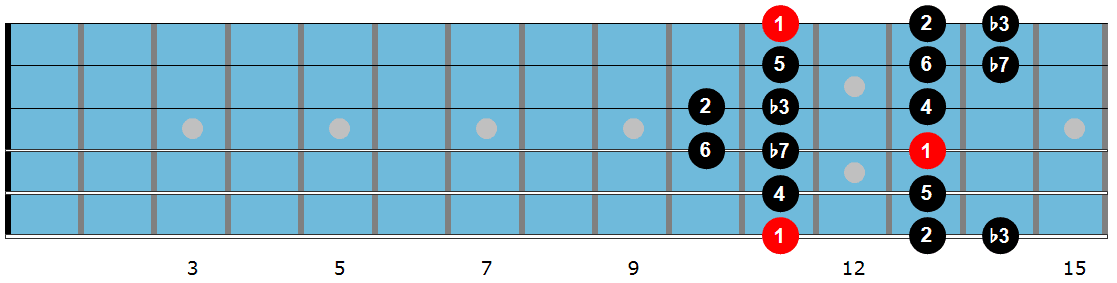
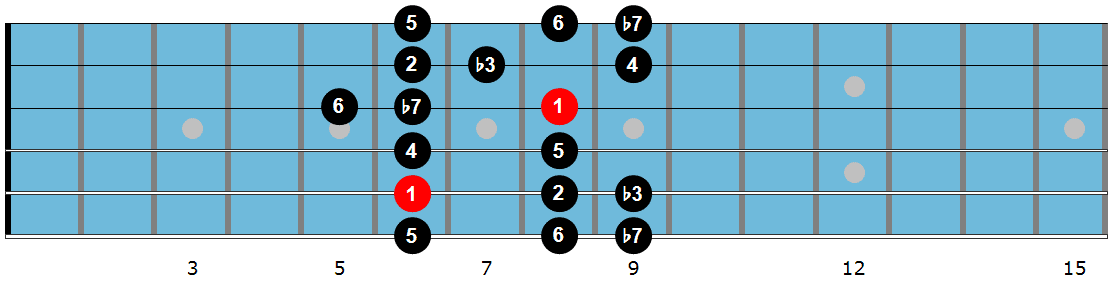
Here are two common fingerings for Eb Dorian that you should learn on the guitar, one from the 6th string root and one from the 5th string root:
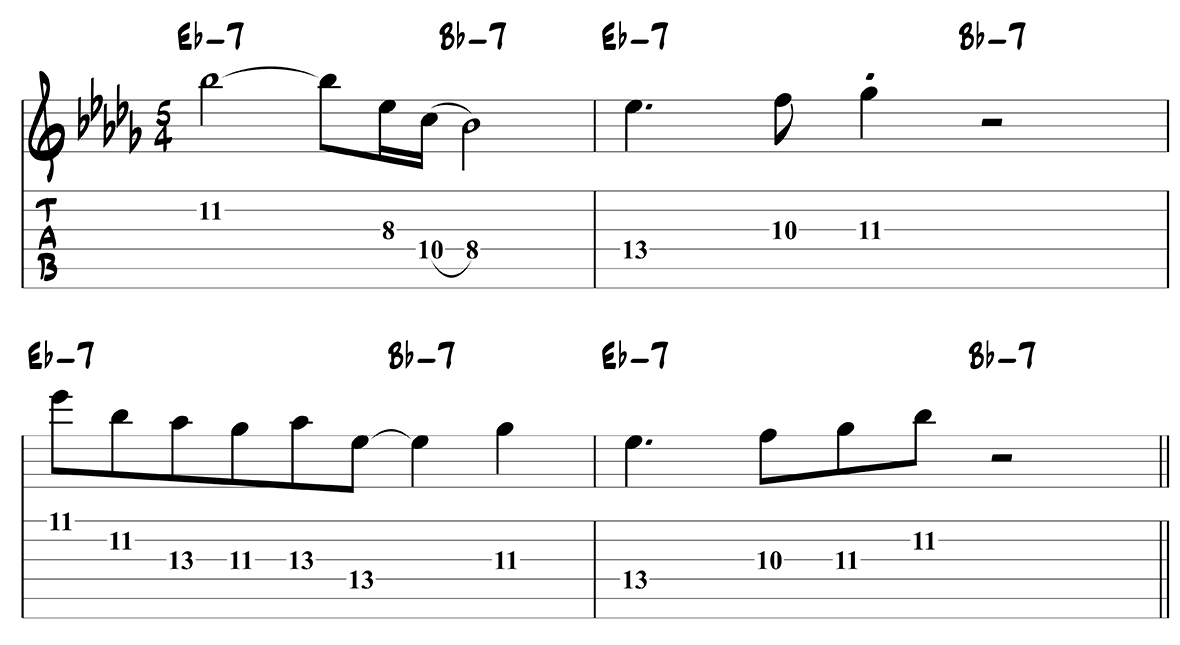
Take Five – Lick 1 (starts at 1:05 in the video)
The opening lick of the solo features a nice octave leap (Bb to Bb) in the first bar, as well as Paul Desmond’s characteristic use of space in the line.
Leaving space is a key part of Desmond’s relaxed sound and is closely linked to the Cool Jazz style. Rather than playing complicated lines, he lets his ideas breathe, making simple phrases sound melodic and conversational.
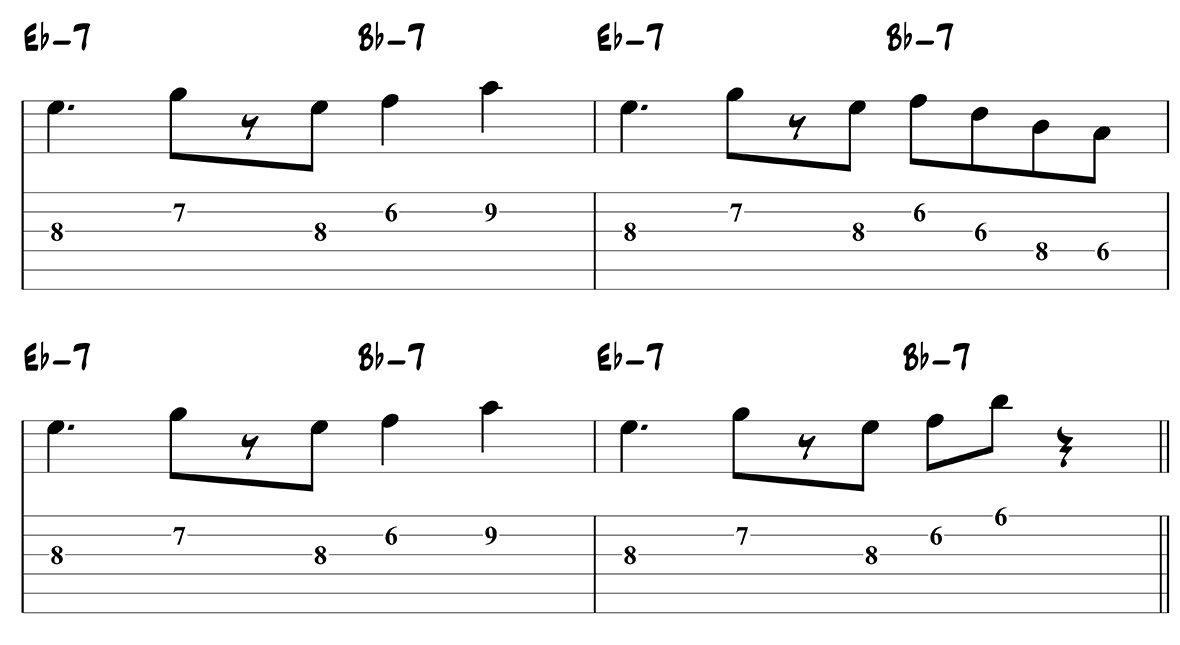
Take Five – Lick 2 (starts at 1:12 in the video)
In this lick, Desmond repeats a phrase, but changes the ending.
This shows how melodic development works. Rather than repeating the idea exactly, he changes the ending a little to keep things interesting.
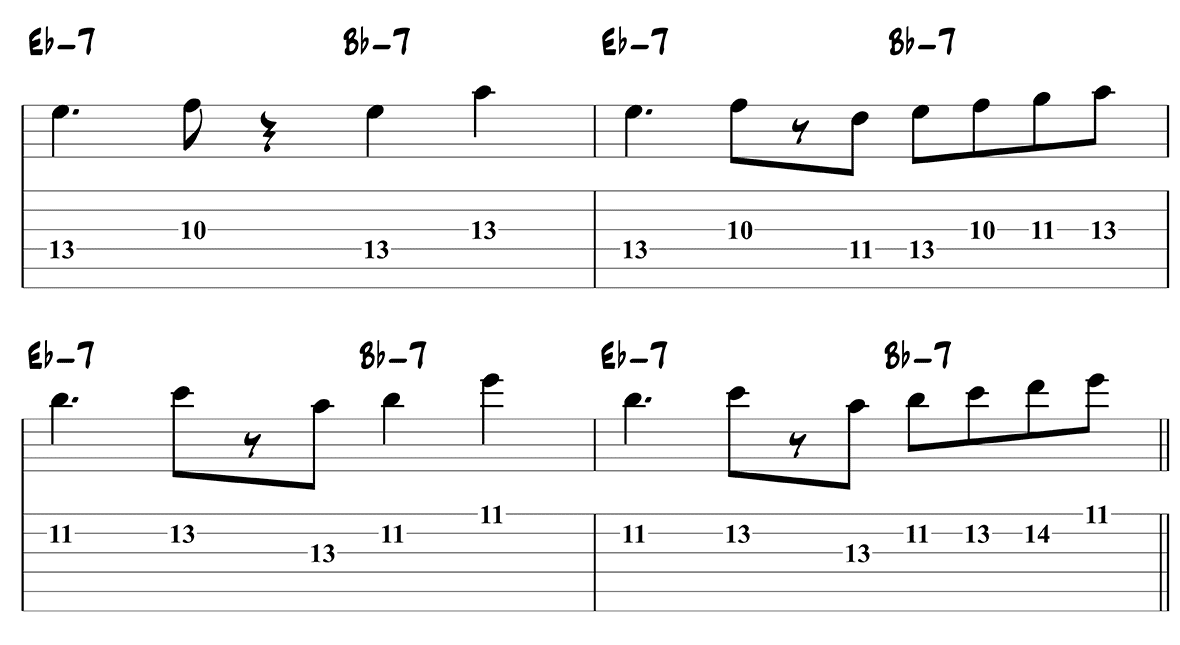
Take Five – Lick 3 (starts at 1:26 in the video)
Desmond highlights the 9th of Ebm7 (F) in the first two bars of this phrase.
In bars 3 and 4, he shifts the focus to the 6th of Ebm7 (C).
Targeting specific notes like this is an easy way to add direction in a modal tune.
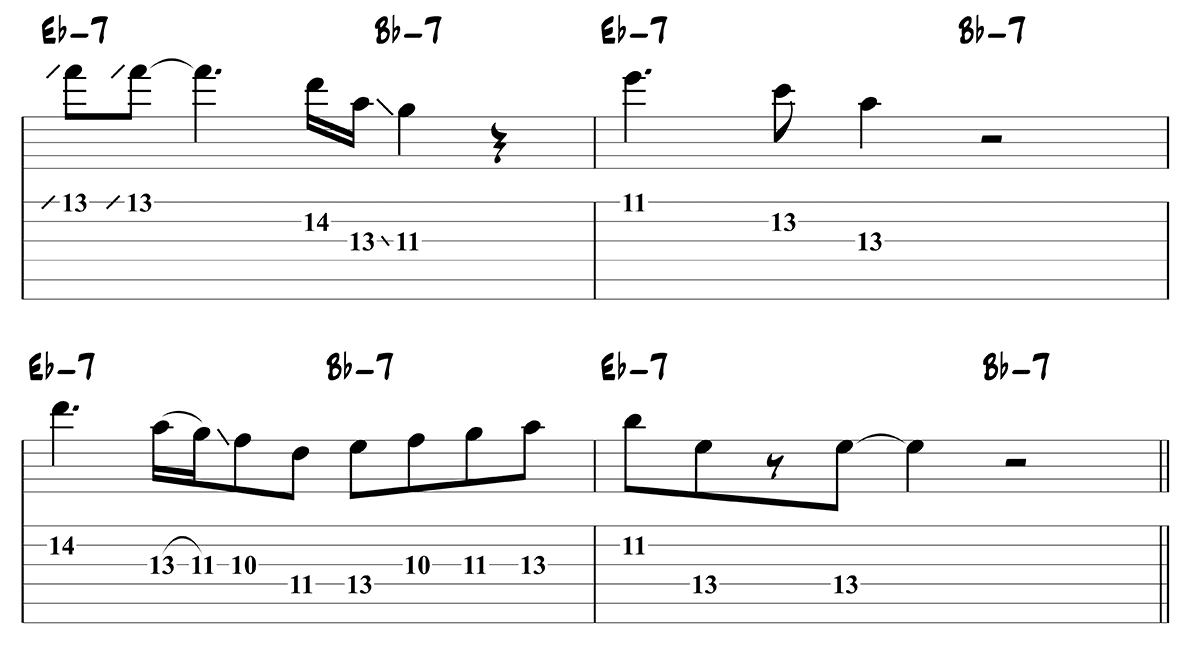
Take Five – Lick 4 (starts at 1:34 in the video)
This next lick is built on triads.
Paul Desmond uses a Db major triad in the first measure, an Ab major triad in the second, and returns to Db major in the third. He then finishes the phrase with a Dorian scale run.
Using triads like this is an easy way to add melodic structure in a modal setting.
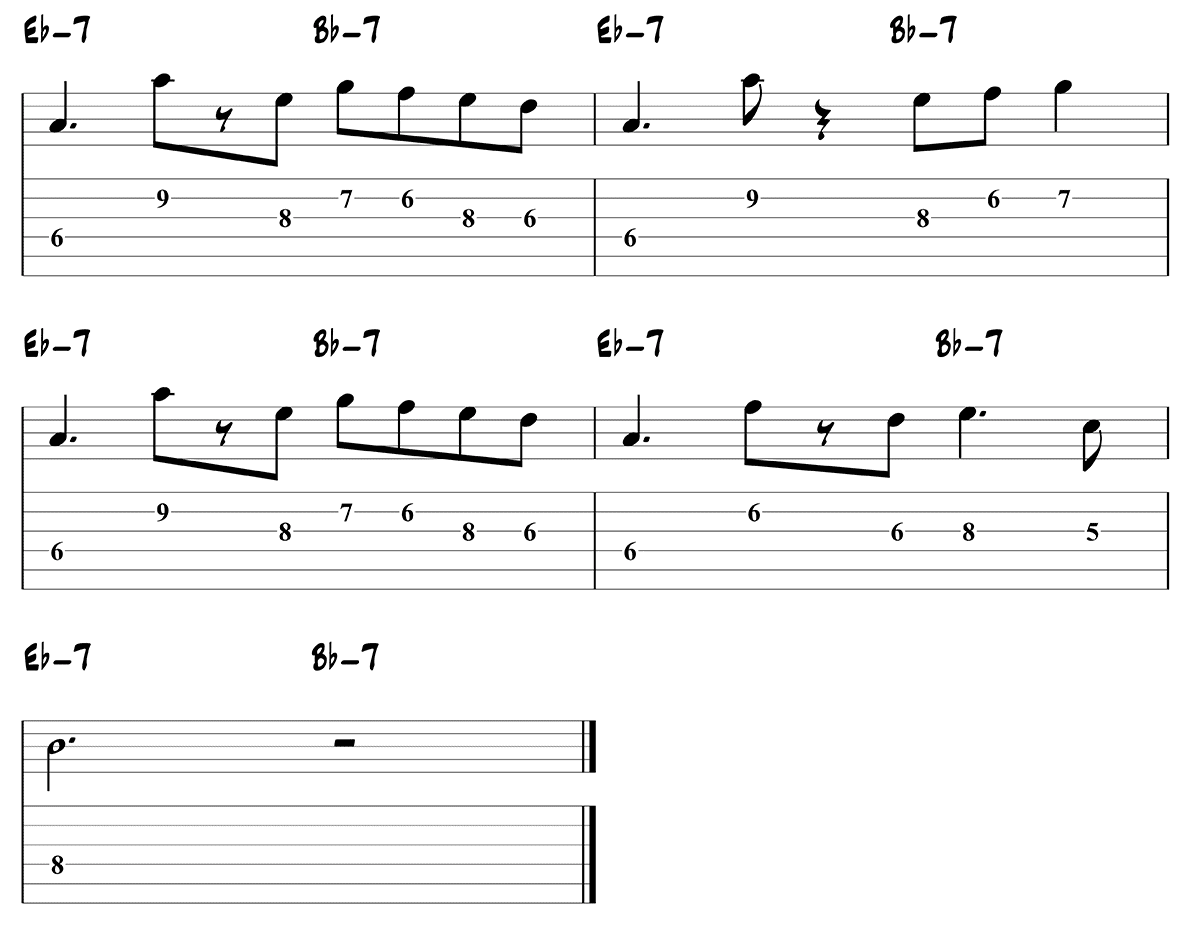
Take Five – Lick 5 (starts at 1:41 in the video)
In this last lick, Desmond starts each bar with the same melody, but changes the second half of the phrase. Each bar begins with an octave leap, which connects the ideas.
Like lick 2, this is a good example of developing a melody by making small changes.
obrigado pela trencriçao ,pois eu acho uma musica bem dificil pois e 5\4 tempo
Love your short and to the point videos on various jazz-blues lessons. Been following for a while and enjoying the music. Thank you from Canada.
Thank you for the great transcription and especially the explanation of the what and why of the solo.
One minor correction: The text and example for “lick 3” and “Lick 4” are interchanged. That is, Lick 4 actually starts at 1:26 and Lick 3 at 1:34. (I noticed this while playing along on guitar with the original)
Again thanks for such a thorough lesson.
There are also a few Eb minor pentatonic licks,e.g. the theme!
If Take 5 is in Eb Dorian (2nd mode of Db) then why is the key sig in all the Real Books six flats (Gb) instead of 5 flats (Db)? That would be Eb natural minor, not Dorian. I’m confused.
Because the key of Eb dorian doesn’t exist. With six flats you have only two solutions : Gb maj or Eb min. Take five is in Eb min. But there is a lot of minor scales (harmonic, melodic, phrygian, dorian, natural minor…) In this modal way (and take five is a modal cadence) you give the “colour” of the dorian scale with a pure sixth (not flat like in Eb minor natural). Eb dorian is not a relative of a major scale. It’s only the sames intervals of a Ab major scale from its second degree. It’s only a question of fingering. But they are totally different scales.
I mean “it’s only the same intervals of a Db scales from the second degree (not Ab)
Yeah I thought the same. But with anything jazz I suppose the idea is that while you are in the Eb- Bb- vamp The dorian will work. its still minor and it gives you a Major 6th interval on the Eb- chord and a Maj 9th on the Bb- chord. The Cb (B) of the natural minor kind of clashes with both of these chords if you land on it and its better as a passing note whereas the C sounds cool.
Fantastic, Thanks
Every time I run into a jazz group doing their thing, I request this song. Always sounds different and no solos are alike. That’s what makes this tune so unique. Thanks
Where’s that confounded bridge? This song has more than two chords. The bridge is fairly tricky (timing) and to me is the essence of the song. So is the melody that is not that easy to play in Ebm position but lots of fun to get down.
Thanks for the work, it is much appreciated.
Hey Pat, the solo in the original recording is on only the Ebm/Bbm7 part…
Is this key signature G flat? Thanks!
Hi Phil, Take Five is in Eb minor (the relative minor of Gb major).
This is really helpful. I am struggling with jazz guitar in general and this gives me a really solid basis to work on. Thanks very much.
Thanks Dirk. This is an old favourite of mine, and a very useful article from you. I think that Paul Desmond is somewhat underrated by many. For me, I know of no other alto sax player that produces such a sweet and mellow tone. Many great sax players, to my mind, err on the side of sounding a little too brash!
You have a great site. I get so involved with all other things in life, I forget about things. I plan to get going on my guitar once again, and offer more support! thanks Kevin c
Thank you. This is one of my favorite tunes.
Great lesson!
I’ve been playing this song for close to 30 years. It’s just one of those songs that never gets stale.
Thanks!