


-
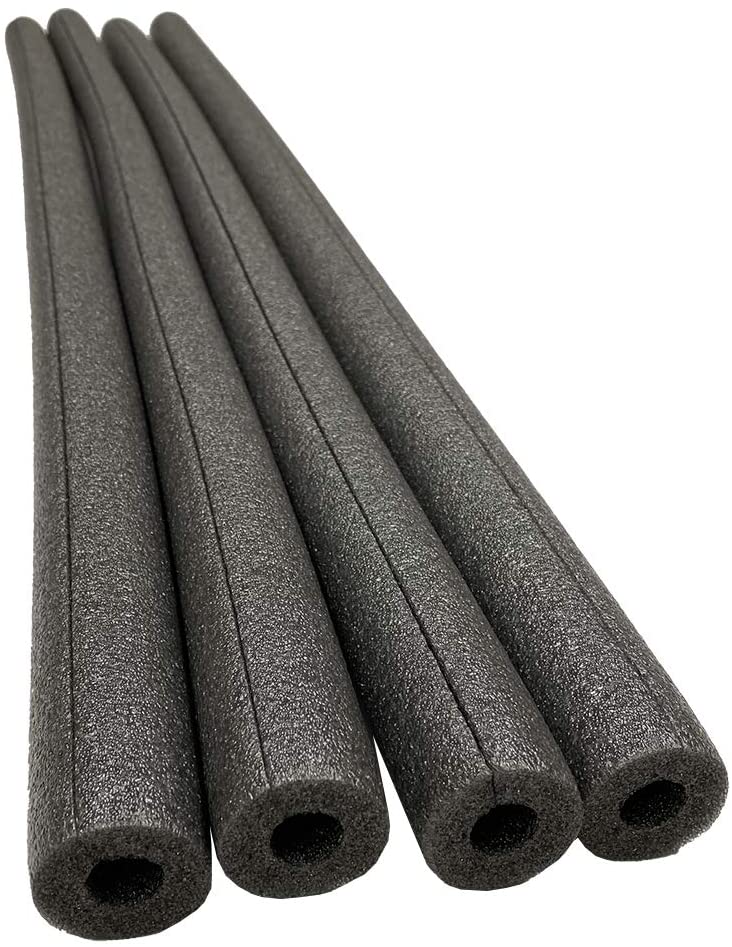
Interesting idea about the foam pipe, though I'd still be a little nervous about reaction with nitro - the one time I had bubble wrap imprint a finish was because the guitar got pretty hot, having been shipped in Summer time - I wonder if the foam pipe might present a similar problem under certain conditions - guess you could always isolate the foam from the finish with paper towels -
 Originally Posted by GuyBoden
-
06-13-2024 10:11 AM

-
Probably no harm in putting a cushion beneath the pickguard - I just figure the main objective is to fill the void between the top of the guitar and the inside of the case lid - that's what the two pads at the lower bout are for - if they do their job, then the pickguard should be prevented from taking any impact. Originally Posted by RJVB
-
Nitro is super fragile lacquer. I was playing my guitar once with a T-shirt on with a decal on it. The T-shirt stuck to the guitar and deformed the lacquer. Luckily I was able to compound off the mark.
It’s a miracle Gibson doesn’t have more headstock breaks.
They ship their archtops tuned to pitch with just a pillow on the headstock. Inside the box they just put cardboard blocks to keep the case from moving left or right.
Maybe when UPS or FedEx sees Gibson on the box they are instructed to be more careful.
-
I wrap the cut ends of the foam “noodles” with blue painters’ tape.. Originally Posted by MCampellone
-
That's weird because I had painter's tape leave a blue impression in a nice archtop. Aaron Cowles buffed it out. Originally Posted by mauibob
-
re painters tape. Sorry, wasn’t clear. I use the tape that has a paper backing, not the regular back.
-
Agreed! If the headstock can't move but the body can, it can be a problem. Originally Posted by wintermoon
-
Awesome headstock repair

-
Originally Posted by vinnyv1k
Love the new tuning peg design - beat that, art-deco headstocks!
-
Hi guys - got the crack in the top repaired - there's a cross brace in there (between the two main braces) that became partially detached - got that glued back in place. which will support the cracked area. You can see on the fingerboard the little piece of thin bent aluminum - made that to work the glue under the brace.
In the second pic, the mirror laid on the back of the guitar give you an inside view of the clamping set-up
-
Is that another crack running along the fingerboard and down to the PU hole? Originally Posted by vinnyv1k
On flattops and CGs in particular such cracks are often the result of drying out but I guess the dynamics of carved plates are so different they'd split elsewhere under those conditions. OTOH, what happens if the metal casing of a set PU expands faster than the surrounding wood because of rapid temperature fluctuations?
-
Vinny’s experience is painful testimony of the risk of shipping guitars(the repairs are simply remarkable!). I have shipped several guitars always using fedx without problems. But be aware that fedx does not offer or sell insurance of any kind and their liability for guitars 20years old or older, custom or personalized guitars is limited to $1000. So if your shipping a 25 year old L5 and it gets damaged or stolen, Fedx liability is limited to $1000! I have no idea what they consider custom or personalized guitars. Check with your insurer to confirm that newly acquired instruments are covered and your guitars in transit are covered.
-
Short crack running about 3/8" off the pickup rout - but from there, the top thickness quickly increases to about 1/2", and at that point the fracture is in the finish only. Originally Posted by RJVB
I don't know that a metal PU cover would react much, if at all, to environmental changes - of course the wood will, but there's typically enough of gap around the pickup to accommodate some movement.
-
Meanwhile, I found another problem (fortunately, fairly minor) - I checked the braces and discovered that the treble side brace was detached from the pickup rout almost down to where the bridge sits (you can see in the pics where I could insert the aluminum strips between the top and the brace) so I've re-glued the brace, too.
-
Fascinating work! Do you (some how) sand away the old glue? And how do you apply the new glue? Thanks. Originally Posted by vinnyv1k
-
Luckily Mark caught all those loose braces. They would have buzzed like a bumble bee, far worse than the usual Gibson humbucker rattle.
-
A little honey colored Mohawk pro pen marker on the top cracks and an overspray on the top and she will look brand new again.
It's nice to see that there are still a few great craftsmen still around in this world.
I was always a Gibson guy. I have QAman (Steve L.) to thank for turning me on to Mark Campellone. Wish it was 30 years ago.
At 70 I am hoping for another 10 years with my Campy's.
-
Most of the old glue has been absorbed by the wood so there's hardly any residue - you can try to clean it up a little by sliding those aluminum strips around in the gap. The same aluminum strips are also used to apply the new glue - I just put some glue on the strip and try to work it into the gaps as best you can. Obviously, access is difficult, so it can get a little messy as some glue will get on the surrounding area - but short of having a flexible hypodermic injector, this is the only way I know how to do it. Originally Posted by garybaldy
-
Remove the back? Originally Posted by MCampellone
FWIW, I once tried to use a clear vinyl hose (I have a bunch that came with a maple tree tapping kit) to run some water soluble woodglue to a comparably inaccessible location. Worked more or less but it wasn't exactly clean and tidy...
-
I imagine you'd have to put some kind of very thin nozzle on the end of the hose to inject the glue into such a small gap? Originally Posted by RJVB
-
HUGE job to remove and replace the back - fortunately it wasn't necessary in this case since I was able to access the repair areas through the pickup rout and f-holes. Originally Posted by RJVB
-
Also, on that top crack, I glued some cross-grain cleats on the inside for reinforcement -
-
When this done structurally it will be as good as new and possibly even better.
-
Mark - I bet you have spent a small fortune on tools of the trade.
-
Yes, I suppose so too, and that would probably not be trivial at all seeing how thick wood glue usually is. In my case the gap was wide enough that I could just put a ribbon of glue along the gap and trust enough would flow in (I actually needed a lot of glue so it would fill enough of the gap to stabilise it; I had no way to clamp it, and no real need either as it didn't seem to be load-bearing at that point). Originally Posted by MCampellone
Re: removing the back: I know that's a lot of work in guitars; much more a routine operation in the violin family. Still amazed that Gibson didn't take that page out of the violin book too!


 Reply With Quote


Interesting Acoustic-Electric 7-String
Today, 06:32 PM in Guitar, Amps & Gizmos