


-
Thank you. I'm afraid though, I'm not getting excited. That's my problem.
 Originally Posted by GuyBoden

-
06-14-2026 06:10 AM

-
Originally Posted by Skip Ellis
I sound like "ME" regardless of what gear I use. It's MY note choice, MY time, MY understanding of music.
-
Ya gotta give credit where credit is due…. Originally Posted by Stringswinger
But seriously folks, there just seem to be a lot more female than male singers in the jazz clubs, bars, and wedding bands of the US. They’re more visible, so their clams are more often encountered by more musicians. Men at the mic are more common in rock and blues, but their mistakes are more easily buried there.
-
NAM will win, but not without a fight! Originally Posted by Spook410

Seriously, the new tech is amazing. I have it in its pre-NAM iteration in my Boss Katana (Mk2 50w), and it works very well. Once you access the ‘hidden’ amps, you have great Fender and Marshall tones available. Using one of the Fender models, I’ve sculpted a jazz tone that I would not hesitate to use in any jazz-ish context. And fed into a good 2x12 the Marshall tone has much of the character of an old plexi.
It doesn’t exactly get the ‘magic’ with that Marshall tone, but it is more than suitable for most any of my playing circumstances. And it’s far lighter in weight, which for us aging players has obvious benefits.
And I’m getting a great jazz guitar sound from my Boss GT-1B, which is an older multieffect pedal. Again, running thru the Ibanez Wholetone aux in I would not be ashamed to use it in a jazz context.
But… having now gotten a pair of great preamp tubes for my Princeton Reverb II, there’s a certain thing that happens in the touch that does not happen with the aforementioned configurations. It is simply more sensitive, as are my Marshall tube amps.
The newest tech is supposed to nail that sensitivity. I am eager to try it once it hits local stores.
-
These are mostly rock tones, but I thought this was helpful in understanding what NAM is, and whether or not (it isn't) something related to the Neural DSP Quad Cortex company, etc.
-
I Get PTSD Just Looking At That Thing Called NAM!
-
I use the Valeton GP-5 everyday, it's a NAM pedal. I mostly use the Polytone NAM file on the pedal.
Polytone Mini Brute III 15" (Jazz Only) NAM Profiles
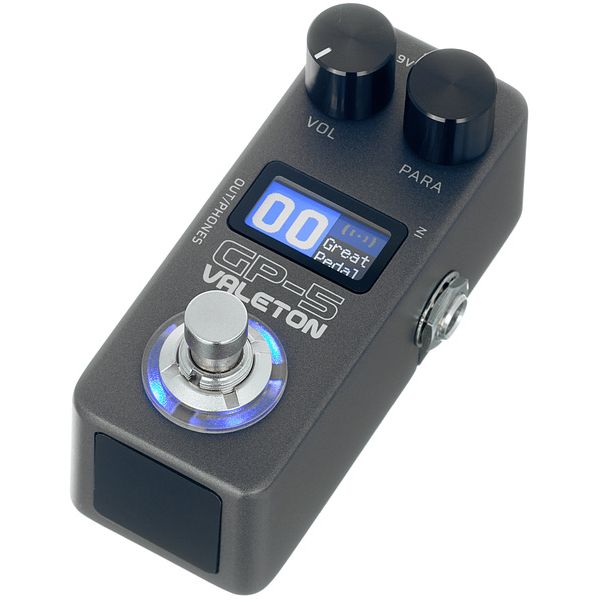
I've used NAM files on my DAW for many years, but these inexpensive Pedals that can run NAM files are great.Last edited by GuyBoden; 06-20-2026 at 06:26 AM.
-
My understanding of digital amp modelling, from a few years ago, was this:
Products such as the Kemper Profiler would have a process where a subset of every possible input into an amp was mapped to an output. This is a gargantuan amount of data, so there's some sort of compression scheme involved. After that, you play something into the digital amp, and it produces the sound you expect from the mapping it's pre-generated. If what you play is outside the training set, it will interpolate or, worse and more error-prone, extrapolate the input to match as best it can the map it already has. The capture is made with the amp having particular settings for gain, tone controls etc. So any variation that you apply to these after the fact doesn't make the model respond in the way you might expect the real amp to do. This may or may not be important.
Neural networks are just a different form of compression technology. I may be wrong, and will be happy to be corrected, but I assume they suffer from the same limitations I've just described.
Fractal, with the Axe FX series, have take a different approach, where they seek to digitally simulate the circuits of amps and the responses of the components. Provided the simulation is accurate, you can expect that, for example, modifying the gain on the amp is going to have the same effect as if you were to do so on the real thing.
-
It seems that the Lava Studio Amp is essentially an all in one computer with touch screen, speakers and runs a rather robust amp sim software. The ability to have so many features/capabilities in one tool may be the marketing and manufacturing of the future... or not. Either way, at a core it is a computer with a touch screen and speakers. While, it is not for me I can definitely seeing other players thinking this is great. Originally Posted by 213Cobra
Phil's post hit several great points of pretty much any new tech / computer based guitar amp sim tools. I quoted a few that I think highlight my thoughts (which really just add on to Phil's)...
-- All this tech, even newer low cost amps, will have a shelf life. Many people cycle through computers, ipads, smartphones with no real concern and to many, these computer based amp sims are the same. Great to enjoy and do the job at the time.
-- Let those who enjoy the technology enjoy it. Overdriven tones aren't for me (though I do like some light edge of break up tone), but these tools do much more than just metal. There are so many flavors of "clean jazz tone" that some could consider tools like these as very useful, especially for the vast majority of guitar players who never see a stage and only play at home or with friends.
-- The cost is quite a bit for most folks, but there are a lot of bedroom players that drop hundreds on boutique pedals to get "that" reverb, delay, etc. Over the years, I've gone through many trends of pedals myself that later became yesterday's fad when the new boutique pedal came out (yes, there are exceptions that last).
Anyway, play what you enjoy playing. As a home player these days, I rarely plug into an amp... almost always use a computer based Neural DSP amp sim. Works for me.
Cheers,
Steve
-
Or, referred to as White box and Black box modelling. Originally Posted by CliffR
-
Neural network models are not a different form of compression and they do not have the limitations you mentioned. They are accurate and predictable. If playing in your living room most will have to get used to a different speaker setup (FRFR's vs open back combo's is a different discussion) but that's about it. Originally Posted by CliffR
The description of Fractal was about right though..
---------------------------------------------------------
This isn't another fad, or gizmo, or gadget because now, for the first time, we have a standard.
There are black box and white box modelers. Like Fractal and Fender Tonemasters. There are neural net captures in different formats. ToneX and Quad Cortex are proprietary formats made to run on their hardware. The captures from NAM are open source. The original NAM (A1) requires a lot of processing power so it is often used on computers with a DAW. There are a few fairly expensive pedals supporting native format NAM and others supported a process where you convert to a simpler, but slightly less accurate, format. However, that is changing. With NAM version 2 (A2) that conversion won't be necessary and you can get full accuracy with a lot less processing opening up NAM open source to even inexpensive devices.
So what happens now? Because the open source NAM approach has already taken off, there will be tens of thousands of free captures to download for NAM A2 like there currently is for NAM A1. This is an approach all manufacturers will have to live with. Quite soon we will have devices costing $100 that fully replicate any amp you want. Kemper, Quad Cortex, Tonex, even modelers like Fractal, will have to support NAM or not sell modelers. The distinction won't be model or capture or format, but the other features offered like I/O flexibility, transformer quality, et al.
Having a standard is a big deal in any tech, any industry. It will take a few years to shake out but, IMHO, this is less gizmo, more watershed.Last edited by Spook410; 06-16-2026 at 03:33 PM.
-
I can't say for certain whether they suffer from the limitations I mentioned, but a neural network absolutely is a form of compression. Originally Posted by Spook410
-
I can see where you might make that assumption but it's actually not a type of compression. It's a method of modeling and machine learning where you capture the dynamic response of an amp based on specific inputs then use those responses to model the amp. No compression involved. And the only limitation I've read about for NAM A1 is some aliasing that appears to only impact the high gain metal crowd in specific circumstances. Originally Posted by CliffR
It's also interesting how the accuracy is tested. You take an input, say some guitar recorded into your DAW using both the actual amp and a profile (model) of that amp. You then invert the phase of one of them and play them together. If the model is perfect, the sounds will cancel each other out. That's how you compare approaches like Tonex, Quad Cortex, and NAM. NAM (both A1 and A2) is getting over 99% accuracy which is within the limits of the test approach. So, very accurate.Last edited by Spook410; 06-17-2026 at 03:38 PM.
-
I use NAM (lately Gateway + Fender Deluxe Reverb Reissue Iconic Clean A2) for recording with my DAW, and I find it useful. So far, however, when just playing, I've always noticed the latency of modelers more with my fingers than with my ears. I still like the responsiveness of a simple analog amp (I use a Little Jazz, which I'm very comfortable with). The ever-increasing speed of processors will probably reduce latency, which is lower today than it was yesterday, but for now...
-
I agree with the direct-to-analog amp part, but then again I experience no latency with NAM processing on the Dimehead NAM pedal. Originally Posted by StefanoGhirardo
Phil
-
Right, but machine learning is of itself a form of compression. The network is trained on a vast amount of data - much more than it can possibly store, and it infers weights for nodes in the network to recall the correct response. The number of weights stored is far less than the training set. Also, you see the picture of that pedal that Guy posted earlier, there's no way you can fit a Fender Princeton in a box that size without compression Originally Posted by Spook410
 .
.
-
Yes, and the much bigger "Fender Twin" much have been even more difficult to fit into the pedal without compression. Originally Posted by CliffR
Very funny, Cliff. I like it.
-
It’s not data compression. Most machine learning, AI, and modeling programs do not use their training data once they’re in unrestricted use. But no data are compressed in the way that 7-Zip, mp3, etc compress it. There is no compressed dataset that can be re-expanded into its original form. AI and modeling programs store summarized and stratified data (which are just complex number sets generated from real world input like sound waves, rates of occurrence, indexed information, etc) in hierarchical lists. But these are not compressed files of the original data. If you’re interested, here’s what I hope is a simple explanation that will make sense. Ignore the rest if you have no interest or bore easily Originally Posted by CliffR
_____________________________________
Machine learning and AI use data schemes in which all of the data on which they base their “intelligence” are sorted, stratified, and prioritized by the contributions of each bit of data to the accuracy of the program’s output (the “weight” of each individual parameter in the data set). An initial set of algorithms is defined based on deep analysis of those data using forms of regression, recursive analysis etc to organize, arborize, and make sense of the data. During training, the computer constantly compares its output to the training data and adjusts its algorithms on the fly. Reassessing its accuracy after each run helps it to prioritize (ie “weight”) the strongest contributing data most highly and reduce the weight of those that correlated less strongly with accuracy.
Once most machine learning models are trained, they are put into production and their training data are no longer accessed. So technically, they’re no longer learning once they become the kind of AI we use in smart phones, digital assistants, etc. They store algorithms and the volume of highest weighted parameters needed to achieve their target accuracy rates (as determined by their designers and engineers). Some models (eg KNN) do retain their training data and search it directly to answer queries. Most such programs do not.
Picture an AI program to create a fake book on the fly that’s to be used by X% (target TBD by the designers, based on their business model and practical reality) of gigging guitarists. Jazz groups, wedding bands, country players, Latin bands, studio pros, etc. Subscribers could have it create custom books to be displayed on tablets for any given gig in any location, eg a trio playing a second wedding at a Napa winery, a 9 piece commercial band playing a white shoe law firm’s Christmas party in Manhattan, or a country band playing a retirement party for the owner of the oldest grocery store in a small town in Oklahoma, etc. Accuracy would be measured by the percentage of tunes used by subscribers on actual gigs, along with the number of tunes omitted but requested by subscribers. Since the output would be a digital fakebook accessed over the internet, actual usage and all kinds of feedback would be incorporated into the evolution of the model.
Training data might include set lists for wedding bands, night club shows, etc plus DJ request lists, lists of gigs by band / type / region, online reviews of bands across the country (with detailed likes & dislikes) etc. The computer might first sort the data into what songs were most played, then most popular, best liked, most disliked, most requested by brides-to-be, etc and then place them in different gig settings in multiple geographic areas.
It would then identify discrepancies such as a song that’s played often but not requested often or a song that’s almost always played at small high end weddings but almost never at fire hall wedding receptions. The creators, designers and software engineers would have to decide what’s important and in what order these all appear in the algorithms. Will they consider ethnicity, total cost of the affair, etc? How finely will they stratify for geography - by region? state? city? neighborhood?
The data tables are then arranged by the program to reflect the initial priorities (“weights”) of all of these bits of information. A decision has to be made - how big will the book be: 100 tunes, 500 tunes, or a floating parameter based on variables like top X% of tunes for a given gig, location, etc? The designers, engineers etc then have to decide how deeply the program will go into each category, eg do they use the top 10% or 50% or all the data? Then the model trains by spitting out its first set of fakebooks and comparing them to all the categories for accuracy and consistency.
If that first book contains songs played by fewer than 15% of bands but often requested, and the bands that play it have 50+% more gigs in the same area and kind of gig than those that don’t, the machine may increase the weight of band popularity and decrease the weight of how often that song is played. This kind of analysis is applied to each and every parameter in the database until the output is consistent with the designers’ goals for it. That consistency includes the rate of accuracy they want.
There will still be errors, which in this example means tunes that bomb for some bands, omitted tunes that should have been included, etc. So the model will need real time feedback and periodic retraining both to improve accuracy and to incorporate changes like new hits, fads, resurgence of interest etc. Users could request a missing song from the stand. Models like KNN that retain the full training set can retrain at will, but the data may have to be augmented and readjusted offline for those changes to maximize utility.
The same kind of process is followed to create models of sound etc. The data set includes far more parameters that I can detail here, but they’re all collected and archived from digital representations of the entity to be modeled. IR yields data. The audio output signal from a preamp yields data. Then there’s the issue of variable parameters like EQ, which is often digitized by capturing the output of the preamp at all combinations are permutations of the EQ settings. There are even robotic devices that turn the EQ knobs on the actual source device infinitesimally to permit capture of the full EQ spectrum with hundreds or even thousands of takes of the same material
Once the first training set is collected, those data are categorized, collated, and prioritized by letting the program develop algorithms from which to build the modeled output. Outputs are compared to the original captured sound and everything is tweaked to improve accuracy. In this case, the goal is fidelity to the original sound. If a complete amp model is being created, the controls have to work just as they do on the real thing. Etc etc etc.
-
It was recently reported that one of the LLMs (I think ChatGTP) can reproduce 95% of the text of the first Harry Potter novel given the right prompt. While it's not using any of the traditional computer science compression algorithms, I don't see how that could be described as anything else but compression and subsequent inflation. The situation we're dealing with here is a little more complex, since we're talking about a mapping from audio input to output, and then compressing that mapping, not the input data itself. But it amounts to the same thing. It's a new lossy compression scheme.
-
I think I just figured out what you mean, Cliff. The process used in these huge programs is more along the lines of Cliff's Notes (no pun intended) than it is 7-Zip or WinZip. Data deemed not to be useful by the program are disgarded, not compressed. For example, most AI does not store images per se. Rather, it pieces together the characteristics that define an object from the multiple images in the training database. Then it stores the mathematical representation of that object in one representative image. So most AI models will create a composite image of a car, a dog, a tree etc and store that image in digital form, rather than preserving multiple images of cars, dogs, trees etc. How detailed the images get depends on the designer's criteria. There may be images of all kinds of cars - sports car, sedan, station wagon, SUV etc. There may be brand specific images. And the best AI models can now go out to the internet and find even more specific images if their algorithms don't contain what's asked for and they're trained to gather new info. Originally Posted by CliffR
Instead of a table of everything Hemingway wrote, there may be a composite representative distillation that includes the perceived hallmarks of his style, favorite subject matter, etc. Complex data are reduced to representations and conceptual summaries, which is why so many AI generated images have so much content that doesn't really fit. This also explains things like weird poems composed by AI "in the style of" a given poet.
AI programs themselves are "compessed" in ways we don't usually consider. For example, the math is often done up front with 32 bit floating point numbers. But to save storage, those huge numbers are truncated as 8 bit integers when stored and used. Audacity does the same thing. It records as 32 bit floating point files and automatically converts imported audio in any format to 32 bit float. But when the files are saved and exported, they're downcoded to 16 bit or 24 bit as set in your preferences. You could save and work with 32 bit files, but they're huge and serve no purpose for us.
The "weights" in many high precision AI models are stored as 16 bit integers, because this level of accuracy can be needed to achieve faithful outputs. But where accuracy does not require that level of precision, the 16 bit weight values are downcoded to 8 or even 4 bit integers to save storage space and speed processing. This is not compression - it's simply removing data that do not affect the output enough to compromise its intended accuracy.
Another method of reducing Ai file size is what's called pruning. I used the term arborization in my last post because the data structures in AI start with a huge number of data points and determine relationships among them as though they were trees with many branches. One of my favorite ways of relating seemingly disparate data is called the "random forest plot", which finds the most dramatic dichotomies between pairs of data in a huge set. Once the first pass separates all the data into two portions based on big differences, it then goes through each one to find the next level of dichotomy. After going through all the data, you end up with huge data trees and a list of the major parameters that define each branch. Once AI defines its forest, those limbs that do not affect achieving the desired level of accuracy are removed. But unlike compressed files that can be reconstituted into their original forms, none of the disgarded data is recoverable. Once a 16 bit number is downcoded into a 4 bit number, it's always going to be a 4 bit number and you can't get the missing significant digits back again.
For comparison, the way 7-Zip et al work is to identify recurring pieces of data in the content and create "placeholders" for them. So a small digital identifier is used where the same numbers, words, phrases etc would be repeated every time they appear. This is truly lossless compression, and the unzipped file is identical to the source. But for example, mp3 loses data permanently because it uses multiple methods some of which are lossy. It does identify recurrent blocks of data and substitute placeholders. like 7-Zip, WinZip etc. But there's also permanent data loss - the mp3 process starts by disgarding everything over 16 to 20 kHZ (depending on the bit rate) and quiet sounds that are present along with loud ones. It also recodes some frequencies and rounds off some numbers in the mathematical representation of the waveform using a proprietary algorithm.
-
And it would still be missing those 4 bars of Desafinado. Originally Posted by nevershouldhavesoldit
-
And have the wrong chords. Originally Posted by John A.
-
It's not compression in any sense of what that term means to sound reproduction. And there is no perceptible loss. I suggest people do a simple search on how neural nets are used to model guitar amps. There are some very good explanations out there including how the tech is tested and what the results are.
-
No worries. Chordless is the way to go now. Originally Posted by Stringswinger
-
I remember seeing Ornette Coleman and Don Cherry back in the 70's. They were going Chordless back then. Originally Posted by nevershouldhavesoldit



 Reply With Quote


Interesting Acoustic-Electric 7-String
Today, 06:32 PM in Guitar, Amps & Gizmos