


-
Can I replace an xlr jack with a xlr-1/4" combo jack in an acoustic amp? Or will there be an impedance problem using a 1/4" guitar cable into it? Right now, when I use a passive DI into it for guitar, it works fine. I'm just wondering if I can ditch the DI box for convenience.
-
03-28-2026 04:21 PM

-
That depends on the specific input. If it's a balanced low impedance mic input, the answer is no - you need the DI to match the impedance of the source to the input. If it's an unbalanced high impedance guitar input, the answer is yes. I suspect it's the former, both because it works fine with a DI and because I know of no guitar amps that have an XLR jack on a high impedance instrument level input. Amps for acoustic guitars often have a low impedance balanced XLR mic input as well as a high impedance unbalanced 1/4" guitar input.
If you have a combination input that's switchable from low impedance to high and has a "mic - instrument" switch, the answer is maybe. You'll need the wiring diagram for the amp to be sure, and I'd let a tech make the call. You'd have to bridge pins 1 and 3 (ground and shield on the unbalanced cable) to connect a standard guitar cable via a TS 1/4" plug. As I've never seen a dual purpose input that didn't have a combo XLR jack, I suspect you don't have one. I also assume you tried to plug a 1/4” plug into the center hole and it wouldn’t go in.
The correct wiring for an XLR plug on an unbalanced line is signal lead to pin 2 and both the ground lead and the shield to pins 1 and 3. I think you could damage the amp if it has phantom power for the mic and you accidentally turn or leave it on with pins 1 and 3 connected together.Last edited by nevershouldhavesoldit; 03-28-2026 at 10:24 PM.
-
For example, Quilter has them on Ch 2 on Their MicroPro. You can plug in an xlr mic, or a 1/4" guitar.
-
That’s a dual input, which is why it says “mic / line”. IIRC, the 1/4” center jack is only for line level and the XLR only for mic level. That channel is also “foot switchable” as a second channel for the guitar input. But the combo input is only for a low impedance mic via XLR or a line level signal via 1/4”.
 Originally Posted by Woody Sound
A guitar will not be loud enough when plugged into the 1/4” combo jack because the input sensitivity is too low. An active pickup might be hot enough to drive it to more audible levels, but it won’t come close to its rated output.
-
Ah, that's what you'd think, but I often plug a guitar (regular passive Gibson/Fender/Archtop, etc) into that jack and it's plenty loud, believe me, pretty much the same as Ch 1, just clean. I've used the 2 jacks for two guitars for music theater pit work. Originally Posted by nevershouldhavesoldit
-
Likely that the Quiter, being a dedicated guitar amp, has special switching and preamp input circuitry to deal with the differences between hiZ level/impedance l and line level/impedance. A standard XLR input does not work that way. Line level is much hotter than the raw output of a guitar pickup, and the impedances are different; it's a total mismatch (i.e. just doesn't work) to plug hiZ guitar output into a line-in jack.
-
That's what I thought. (My guitar won't work through my friend's 1/4 line in on his Mackie PA.) But on the Quilter it works. Originally Posted by starjasmine
-
Interesting - there must be a lot of gain in that stage. But I assume you’re talking about adding a combo jack to another amp, not a Mach 2. Originally Posted by Woody Sound
Most of the combo inputs automatically switch to the correct gain and impedance when the right plug is inserted. I don’t think you can do that in amps that are not designed for it.
-
That is my thinking exactly, I'm just trying to tap into the collective wisdom here. Originally Posted by nevershouldhavesoldit
BTW, our Henriksens have the combo jacks for mic or guitar on both channels.
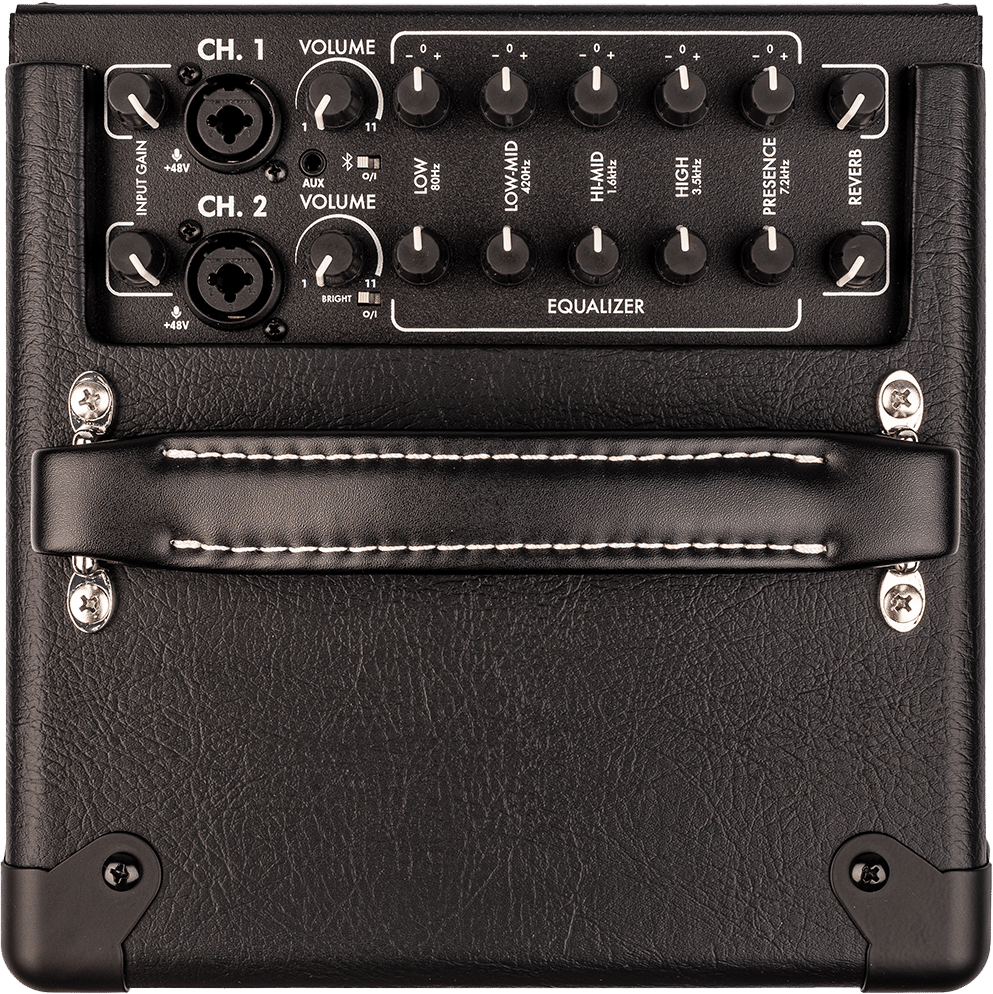
Last edited by Woody Sound; 03-29-2026 at 11:49 AM.
-
At least on the Blu, that combo jack is actually wired as two separate jacks. There are two pairs of contacts. The 1/4" jack is wired to 1+ and 1-, and the XRL uses 2+, 2-, and 1- for a common ground between the two. So you can't run your guitar into the XLR because it's for a low impedance balanced mic level signal. Originally Posted by Woody Sound
I don't know how the Bud is wired. The front end gain control is an added complexity, and I can't find a schematic for the Bud.
[edit] I don’t have a schematic for the Blu either. But the above is the only practical way I know of to wire it so that there’s unswitched 48V phantom power to the XLR for mics but not to the unbalanced guitar input. There has to be a separate low impedance gain stage for mics.Last edited by nevershouldhavesoldit; 03-29-2026 at 12:07 PM.
-
This is the amp on which I want to make the swap. Jeff Genzler is very accessible, maybe I'll ask him what he thinks.

-
That’s exactly what I’d do. These are all very sophisticated devices, and it’s all too easy to screw one up badly with a poorly conceived DIY effort. Originally Posted by Woody Sound
Back when I still thought boom was bass, I bought one of the first Genz-Benz bass combos - the one carpeted in black with the removable front cover panel over one 12 (or maybe 15 - I don’t remember). Jeff was great to talk to, and he eagerly answered all my questions.
Looking at that amp, I suspect that the XLR and 1/4" are totally separate except for a common ground. If that's the case, you could probably substitute a combo jack for the XLR with the wiring I described in post #10 if it's mechanically possible. Of course, the other question is how those jacks are wired. If they're wired point to point and there's enough access and working room, it'd probably be fairly easy. But if they're connected directly to a PCB, it's probably difficult because the connecting points for the instrument input won't be in the right place. You might be able to run jumper wires from the PCB to the pins used for the 1/4" jack in the Speakon combo.
It will be interesting to see if Jeff agrees. Obviously, you'd void any remaining warranty if you do this.Last edited by nevershouldhavesoldit; 03-29-2026 at 12:41 PM.
-
From Jeff:
"We do not recommend this plan.
Here are the comments from our engineer:
I would not advise this for multiple reasons:
1. The input impedance would be too low for many acoustic guitars.
2. There is phantom power on that input so that would need to be blocked on the new 1/4" input.
3. The gain structure on that input is set up for mic level and may overload and distort quickly with an instrument level signal.
4. It would not have the proper high pass filtering on the low end that the other instrument channel has.
The easiest work around for most of this is to use a direct box or impedance matching transformer that has a high enough input impedance depending on what instruments he would like to use. This would go between the instrument and the front of the amp and would take care of the first three issues above, but it would still not have the HPF that the main instrument channel has.
I hope this information is helpful.
Best Regards,
Jeff Genzler
Founder
Tel: 917-246-8763
"
I've bee using a passive DI box, I just thought I might be able to carry one less thing. I guess not, not a big deal.



 Reply With Quote


Interesting Acoustic-Electric 7-String
Today, 06:32 PM in Guitar, Amps & Gizmos