


-
I used that hum canceling P90 because it was available in Halifax where i was living at the time. Had I been in the US, I would have ordered a hum canceling Mustang pickup from Fralin. It's available in a variety of output levels and unlike the P90 for factor, it's a drop-in replacement with very little effort involved.
 Originally Posted by PaJaC
Split Blades For Mustang: Boutique Innovative Pickups by Lindy Fralin
-
01-05-2026 09:17 PM

-
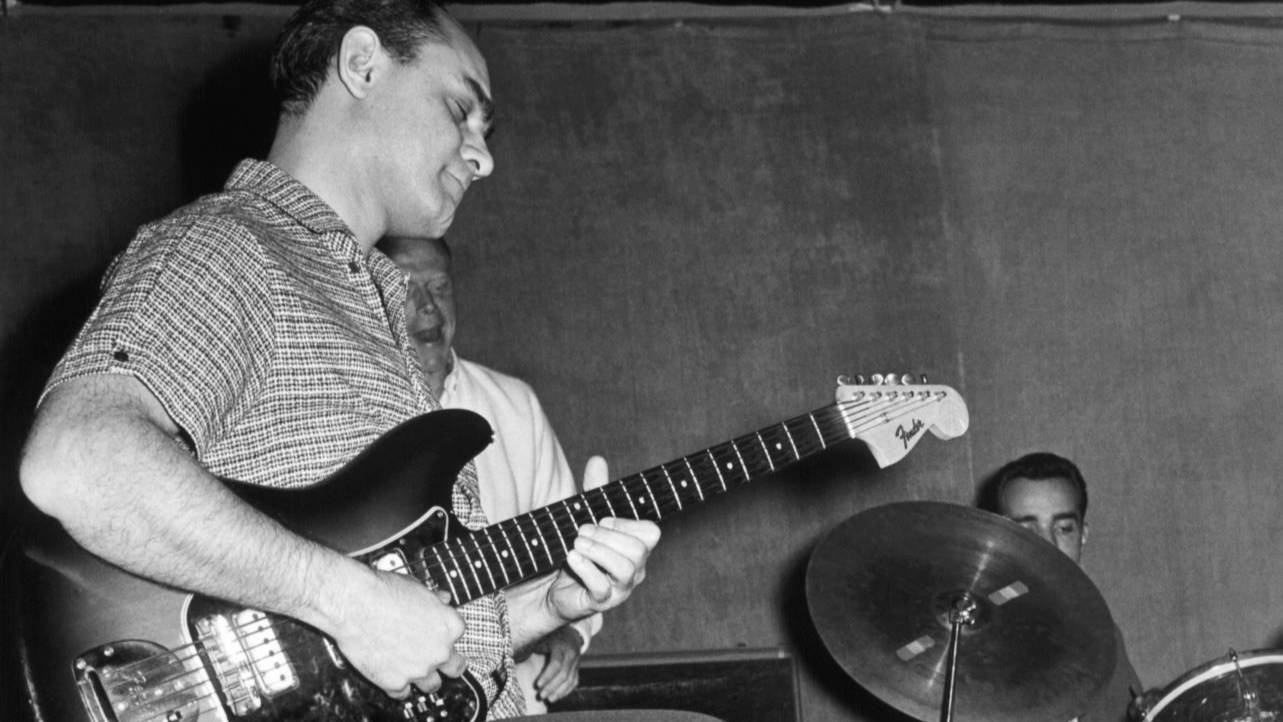
He's pictured with a Bass VI in this image, but also played a Fender guitar there's a YouTube clip of him with a surf guitar.
-
I have a Mustang partscaster with a SD Seth Lover in the neck position and no bridge position pickup. It sounds great, IMHO. Jim inspired me to make one. Also, I think hand size is mischaracterized most times. It's more about what you can do with your wrist, and thumb and hand positions, than about finger length. And after you have played for decades upon decades, as I have, there should be no issues with moving between scale lengths. I have at least different scale lengths at my disposal and can play them all without any drawbacks.
-
As I mentioned earlier, I never saw a Bass VI with only 3 switches. Originally Posted by AllanAllen
-
Originally Posted by Woody Sound
Problem solved, PaJaC should look for a guitar with these specs -- Donald J. Trump Black Electric Guitar – GetTrumpGuitars.com
-
Looks like they had to change the headstock to a comb-over shape to keep the Gibson hounds away. Originally Posted by Mick-7
-
Definitely get a Mustang or Jaguar. It's not an arm and a leg and you can mod them.
When I was playing guitar, I actually had a Strat mini which was 22.75". I would mess with it and swap in SD antiquity single coils because it was like a classic Duo Sonic which were 22.5" lol. It had the tone.
-
Originally Posted by Woody Sound
Originally Posted by entresz
It's not a bass 6. Look at the distance between the frets. It's a Jaguar. Originally Posted by AllanAllen
This is a bass 6:
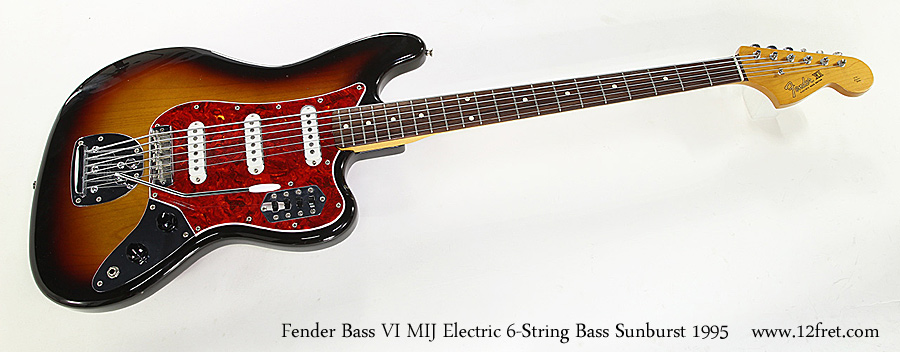
-
Few things: If you’re big on the Fender solid body style, Warmouth makes replacement necks for most of them in a 24.75” scale. Second, as others have noted, it’s not just the scale length that may make playing tougher for those with small hands, but also fretboard width and neck depth and profile. There’s something out there, even very reasonably priced that will work for you. Third, jazz by its very nature isn’t only about learning all the theory, the riffs, etc. and then parroting them back. In fact, some notable players made contributions we now think of standard, due to their physical limitations. There is no actual bible here, just rules to bend and break. Django figured it out. Finally, even Frank Vignola has a video/lesson about getting into jazz with the chord voicings you may already know, maybe even some cowboy chords. The goals here are to learn, express your musical ideas and have fun.
-
Just a reminder: I'm left-handed. I don’t have 3,627,194 hollow/semi-hollow guitars to choose from.
For now, I’ve settled on a Grote semi-hollow (ES-style). I’ll let you know once it arrives.
The plan is:
• Grote •
* If the Grote turns out to be a flop, I’m sending it back and ordering an Epiphone ES-335.
* If it’s decent, I’ll go through with a complete overhaul (Alnico II humbuckers, locking tuners, roller bridge, new electronics, and all that other stuff).
• Epiphone ES-335 •
* If the Grote fails, I’ll have enough saved for the Epiphone by the time I get my refund.
* I’d modify this one too—at least the pickups, bridge, and probably the tuners.
Both of these are just "transitional junk" until I save up for a more solid, professional rig. That’s why I want to start with the Grote (it’s half the price of the Epi).
• Eastman T486 •
The ultimate goal. The cheapest of the "top tier" options. I don’t expect more than that. Gibson’s price-to-quality ratio is a joke, and until I finish my degree, I’m not buying a €4,500 custom luthier guitar just on a whim. I doubt I’ll do that this decade anyway. I’m no snob.
By the way, I’m really digging the Eastman Archtop AR503CE. Might pick one up down the road.
Anyway: What strings should I put on an ES? Should I go straight for Thomastik flatwounds, or stick with roundwounds for a bit? If so, what gauge? 11-49 seems like the sweet spot (affordable and decent), but I’m tempted to try a 12-50/52 set—though those are more expensive. Let me know what you think!
-
Im about to piss a lot of people off, there is no such thing as the "jazz" sound you can play jazz on any box if you can play jazz. Which jazz!? Goodman, Armstrong, Blakey, Charlie Byrd, Bucky, trio, combo, Bigband, Brubeck, shall I keep going? before you can play anything you need to learn to play the guitar! You want to blow like Parker or Christian you do the same amount of work to build your skill level as you would in any genre or instrument. You can make noise with a mustang and a pedal you can also make music, the guitar and hand concerns will work themselves out as you play (Django...) How much time have you put into listening? Did you listen deep? Have you studied the work of the for mentioned players in depth? Buy an inexpensive Chinese guitar that looks good to you, get a couple standards under your belt your taste and needs will change as you develop playing. Check out F Vignola's lessons on truefire and best of all Dirk has given you everything you need to get started with his FREE lessons!!! stay with 24/3/4 Originally Posted by PaJaC
-
If you're just starting out in jazz, I wouldn't get too bothered with upgrading guitars etc - especially cheaper ones. You won't be able to turn a Grote into an Eastman even with the best pickups etc. A nice set of flat wounds on basically any guitar with a neck pickup is a great place to start. Originally Posted by PaJaC
-
Thanks. Don't get me wrong; those cheapest guitars have horrible hardware. Not bad; HORRIBLE. Before I started law school, I learned guitar servicing from a luthier. For the upgrade, I plan to use good quality Chinese hardware (meaning neither exquisite Japanese/German nor fatal bottom-of-the-barrel stuff). In short: I know what I'm doing Originally Posted by entresz
 For practice, I'll buy some cheap junk like a Katana 100, and in the meantime, I'll save up for a nice jazz tube amp (somehow in Europe, those solid-state amps have been pushed out of the market and cost as much as hand-made tube amps built by engineers here in my country).
As for the post from the guy above:
Forgive me for not being specific. I’m not a good guitarist. In reality, I’m a guitar owner with extensive experience in guitar servicing. As soon as I started law school 4 years ago, any free time I had vanished and I had to put the instrument down. I live alone with my girlfriend, so put it all together: 1. studies, 2. work, 3. household chores, 4. studying.
Every day I study sheet music, notes on the fretboard, and music theory basics; I have a textbook and a workbook for Music Theory. Those blocks together are over 800 pages. Besides that, I have an ebook from our forum and one from a certain jazz YouTuber. Both are wonderful, but they require actual playing skills and a fluent command of music theory.
And I know—you don't learn jazz from books. But what can I do? It’s the only option until I become a legal counsel and can blow every second paycheck on some Benedetto or Collings (that was a joke, obviously ).
-
My advice would be to spend your time and money on a good setup of the Grote, and not to worry about the pickups and other electronics until you're absolutely sure you need to. Learn to play first, and don't waste good money on non-essentials. Further down the road you can decide whether to upgrade the Grote or buy another instrument. But a good setup makes learning easier and more pleasant. You will not likely spend as much time practicing as you should if the guitar is hard to play. A great sound isn't really necessary.
String choice is really a subjective, personal topic. I don't like flatwound strings much, and my current choice is DR Pure Blues, .012-.052 or so, all of $5USD for a set in the US. But manufacturers offer many string choices for a reason - different people like different strings, and there is money to be made selling all of them. Don't be afraid to try different string types and brands, as well as different sets. Also experiment with picks, which make a definite difference in the sound.
-
The early ones, with the larger pu surrounds had 3 switches. Originally Posted by Woody Sound
-
I don’t know how to say this delicately, but you’re just wrong. Look at a pic of a Jaguar, and note the distance between the tremolo plate, and the bridge. And a Jaguar has a control plate by the bass horn. And you can see a middle pickup peeking out from under Joe’s hand….and Jaguar’s don’t have a middle pickup. And those are early Bass VI pickups, not Jaguar pickups. If you google Bass VI Joe Pass…..this pic pops up. It’s a Bass VI. Originally Posted by Strat-itis
-
One of best things I did that has made all the difference was beginning with a $29 solid body electric with no amplifier, for the first six years.
-
I found that short scale guitars (24inch scale and below) have floppy low tension strings, so larger gauge strings were needed for more string tension.
This was my conclusion, when I bought a 23.5inch scale carbon Fibre short scale.
Here I am trying to play the short scale carbon fibre guitar.
-
Musicians play everything from mandolins with a 14' scale length to the Fender bass with its 34" scale. It's all doable, but of course choose whatever makes you most comfortable.
-
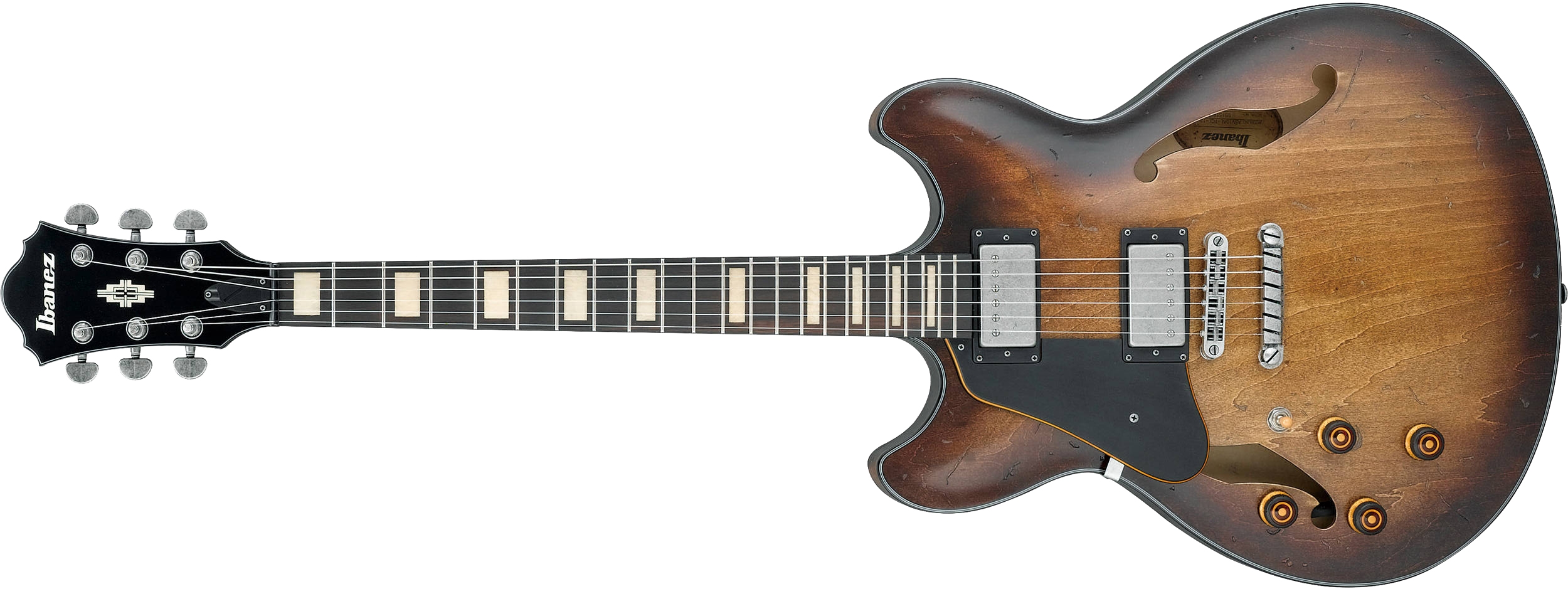
I ordered a used Ibanez Artcore ASV10 guitar. I paid 360€ for it. I chose it because I liked the feel of Ibanez necks at my local guitar shop. It has a maple body, a mahogany neck, and a rosewood fingerboard. I couldn’t be happier.



 Reply With Quote




Interesting Acoustic-Electric 7-String
Yesterday, 06:32 PM in Guitar, Amps & Gizmos