


-
So.. a couple of questions before I start drilling holes.
Going to install a reproduction RC 1100 on a '97 Guild Artist Award.
- How far back from the end of the fretboard?
- Distance from strings to poles?
- I've seen that some of these (earlier?) had 1M pots. Thinking I'm going to have a pickguard mounted tone and volume. Was considering 500K audio taper but not sure what others are using.
-
01-03-2026 09:07 PM

-
Using the side-mount short stick? Factor in raising/lowering the poles as needed.
-
Where to put the holes depends on how much adjustability you want. The closer to the end of the neck, the further you can adjust the pickup toward the bridge. That's not something I care much about, but I'm not you. I tend to put the pickup somewhere in the general vicinity of 1/8" below the strings, but it's not a hard and fast thing. The mounting rod can be bent slightly to raise or lower the pickup. This is a little easier if the screws are placed so that the end of the rod is closer to the end of the neck. Be aware that bending the rod is somewhat dangerous, because the rod can break. There is a little more leeway when bending up and down than in and out, because the screw holes are a weak point, and that's where it almost always breaks. One way to get the rod oriented correctly is to use something like Blu-Tack putty to hold the pickup in place at the height and position you desire, and then carefully insert the rod into the pickup and fiddle with it until you think it's right, then mark the hole positions. I usually leave putty under the pickup to hold it in place and couple it to the guitar top to some degree. That may not be so necessary if a pickguard is in place, but I don't like having them on the guitar. I put my thumbwheel controls in the treble-side f hole. That's just a personal preference, not necessarily a recommendation. I use Schatten controls, which are 500Kohm pots. I think those sound good with the DeArmond pickups, which aren't as bright as some other single-coil pickups. On my main guitar I don't even have a tone control, because the Schatten pot sounds so good to me. I tend to run the tone control on every guitar I have fully open anyway.
-
The metal they use for that rod is made of one of the MOST BRITTLE metals I've EVER encountered. Be warned, it does NOT like to be bent.
 Originally Posted by sgosnell
I've found that the magnetic attraction is pretty low and the zone between really sensitive and very low output is ridiculously narrow.
This won't be much help, but the optimum setting you're looking for is hard to nail down because it depends so much on how warm, your strings, your playing style, heavy pick/fingerstyle spectrum, amp, etc.
I'm a fingerstyle player and I set it a little below the level of the plane of the fingerboard and I use a gain booster before the signal is amped. I have come to use brass tubing that I press about .75" in a vice to create a flat which I drill the screw holes into. This allows me to mount it farther down the neck overhang, and affords me way more flexibility than the provided mount. I also glue a block/channel on the pick guard that the tab fits into. This keeps the height of the pickup off the top of the guitar and can be adjusted to the height of the mount.
I love these pickups but yeah, they're a bit touchy when set up and it took me a bit of trial error to find the sound and output volume balance I wanted.
I'll add that I play 7 string and the field of magnetism is wide enough that I can use the D'Armond on 7 strings; the 7th string bass has a strong magnetic attraction.
-
Can confirm this, I just snapped mine. Originally Posted by Jimmy blue note
-
If it were my guitar, I’d take it to a luthier. Won’t cost much relative to the cost of the guitar. When in doubt, I leave it to a professional. And the guitar is worth doing it right.
-
You are right. But only in the case of having someone local who is likely to do a good job, I would take it in. Unfortunately there isn't someone local. Originally Posted by 2bornot2bop
One of these days I'll load up a bunch of guitars and my tube amp and take them to the best I can find in either Portland (going north) or the bay area (going south). But this job just requires a bit of placement, soldering, and patience and the only thing I'll be doing that can't be easily undone is a couple of screw holes in the side of the neck.
-
The screw holes are easy really. You just set it up as you want the pickup and then mark and drill. Use a proper size drill bit for the screw size. Mease the screw and then use AI to get the pilot hole size. I recommend a hand drill be used much less possibility of danger of guitar during process. To me the hard part is the soldering for many people. I can solder and have to, but I can also tell you it is not one of my favorite jobs. You need patience and proper setup to get the right soldered joint and be clean about it. In fact, I call it an art. Originally Posted by Spook410
-
I know you've already go the RC1100, but why didn't you get a pickguard with floater and replace what it used to have? After all, the hole is already there for a pickguard.
-
The thinking behind the RC 1100: Originally Posted by AllanAllen
- While missing in this case, factory original would be the Guild humbucker. Many seem to think this pickup to be kind of mediocre so not looking to replicate.
- RC 1100 is classic choice for this guitar
- Sound is good match for the tone based on: Long scale. Acoustic leaning. Not Gibson/humbucker (which I like but not looking for that sound).
- Looks good on this guitar. Tailpiece and headstock are kind of fancy and deco. My favorite Armstrong's are kind of austere in flat black.
- I can get a Korean D'Angelico EXL-1 pick guard which more or less matches the deco style of the Guild for $50. It has a single cutout so wouldn't work well with a floater but allows a neck mount RC 1100 to notch in. Having a different pickguard made would run $250-$300 and would take weeks to months to get made.
- My other choice, an Armstrong single coil (switchable 1100'ish, P90'ish) would be a good choice but would require a new pickguard and don't think it will be much better than the 1100.
- There are other good floater choices. The 12 pole Armstrong HB would sound good on this guitar. But I have that setup already on another guitar. Johnny Smith would probably work well but would require purchase of pickup and a new pickguard.
When all the parts have arrived I may try a few different things with blue tack before deciding.. but this is the thinking so far.
Pic with the pickguard it came with. Original D'Angelico (I think) and not usable due to age.
-
I would not reattach to the top with the screw I would want it to attach to the neck under the pickguard. At this point you can redo it correct. Also. I have a D'angelico New York stepped pickguard I made for someone but they never came through. It might work well for you and is the reddish stuff. At this point it has been sitting in shop bin so even a bit shop worn, might fit right in. PM if interested.
-
Did the guild HB mount to the pick guard then? Or the neck?
I love these guitars.
-
It’s been awhile since, but IIRC it was to the pick guard. But mine had been replaced because they were crap. Originally Posted by AllanAllen
-
Okay, what’s with that subwoofer with strings on it?
-
For drilling small holes like these I prefer a swivel-head pin vise. It allows much more precision, and doesn't take that much longer. An example:
Swivel Head Pin Vise | Aircraft Spruce ®
-
-
No need to drill, just stick it on with blu-tac.
See sgosnell's Blu-Tac post, link:
Blu Tack question
"https://www.jazzguitar.be/forum/guitar-amps-gizmos/103407-blu-tack-question.html#post1403122"
My DeArmond 1000 seems ok. (If not quite level with the end of fingerboard in the pic, but easily moved (Removed) with Blu-Tac.)
-
A Cain&Cain Bailey sub. In 2006 Terry Cain built the brand up from nothing. He developed a large following. And then about 4 years later sadly passed away. The speakers produced some of the best jazz vocals ever. Originally Posted by AllanAllen
-
So.. getting back to my Rhythm Chief 1100 installation after a few distractions.
I'm using 500K audio taper pots. Does anyone know what Guild originally used for a capacitor value in the tone circuit for an RC1100 on an Artist Award? Are there opinions on using a .022 uf cap vs a .01 uf cap? The latter will be brighter.
-
I don't use tone control at all just use the amp. Put a 1 mg pot on the volume and be done with it, use the amp to dial the tone if needed. This was the set up Bill Barker did with all his guitars that had the Dearmond 1100. Although to me the reissue 1000 actually sounds better. The winding is different.
-
With the tone control fully open, there should be no difference in tone with any reasonable capacitor value. With the tone rolled fully off, there will be a definite difference. It depends on how much treble you want to cut off when fully closed.
-
Which is why I'm inclined to the .01uf which will be a smaller adjustment at the guitar. I tend to keep my tone knob fully on and adjust at the amp but sometimes fiddling at the guitar is called for. I never play with it fully closed and am not a fan of the mud in the fog jazz tone. Still, this will be my first RC 1100 and it may be way brighter than the humbuckers I'm used to prompting the use of a .022uf. Originally Posted by sgosnell
-
It's very simple, buy a range of Capacitors, then test the sound of each one until you find the one you like. Originally Posted by Spook410
For testing, I use small electrical connector leads.
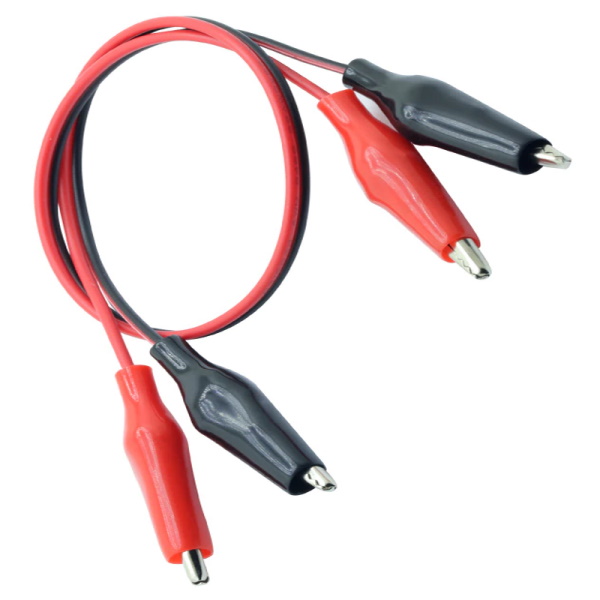
But, I'm an Engineer.
-
Over here those are known as alligator clips.
-
Not sure what the status of the OP’s adventure is but I would consider a pickguard mounted Kent Armstrong pickup. I have one on the only Chinese made archtop that I have and it is great. Nuanced tone with loads of depth. No drilling into the guitar’s good parts.



 Reply With Quote


Interesting Acoustic-Electric 7-String
Today, 06:32 PM in Guitar, Amps & Gizmos