
-
Hi,
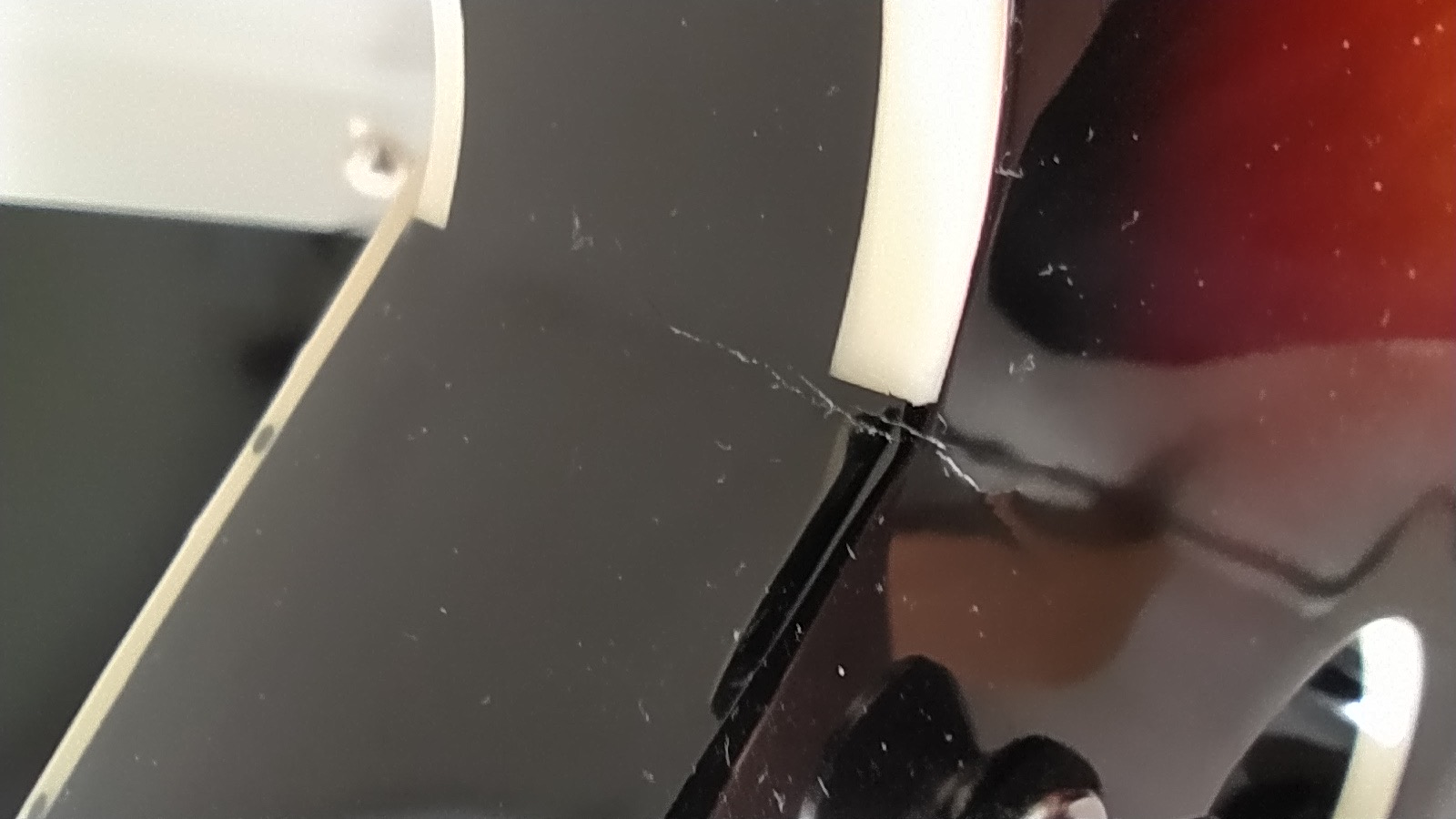
I'm a beginner and I have a question. After two months of playing my new guitar (Harley Benton HB-35Plus Vintage Burst 355), a crack appeared on the neck joint. The guitar has never been dropped, it is not worn and rests on a stand. Do you think this is a reason for a complaint? Does anyone have a similar problem?
-
-
When I worked for Ibanez, this would be the simplest part of the QC procedure. Instant rejection. Why? Because the finish is the first tell tale that something is going on underneath.
There's no way to know if it's inconsequential, or potentially catastrophic. It does indicate that something DID move in an area that you NEVER want to see evidence of anything but a solid join.
The fact that it didn't show up 'til now means nothing. It DOES mean that right now, something that needs to be solid...has moved. Whatever the reasonor cause, or when it occured, it's cause for concern IMHO.
That crazing says something moved. I saw this a lot after a guitar was improperly handled even while it was in the shipping carton. It can be nothing to do with anything you did, but somewhere after it was built, something happened.
Just for kicks, take a look at the neck, just below the nut at the headstock. Any crazing or finish cracks there?
Again, it might be fine. It might not be. But you've gone from a solid build to a gamble when you see something like this.
I know from experience. Neck join is not to be messed with. Period.
-
Thanks for the contribution. I don't really know what to focus on with the screw, that's why I'm posting pictures.


-
Truss rod issues? Do you have an allen key? What's the issue there? Post a photo of the neck, looking from the side, with a clear image of the profile of the neck, nut on top, neck below so I can see if there are stress marks below the nut. You'll be looking at the neck from 90 degrees from the length of the neck, body to one side, peghead to the other, nut at the top of the image, back of the neck at the bottom. I'm looking for any fine lines or "spider" checks.
These can tell me a lot.
Thanks
-
I misunderstood  , I'll look at the neck tomorrow. Thanks for now.





 Reply With Quote


Interesting Acoustic-Electric 7-String
Yesterday, 06:32 PM in Guitar, Amps & Gizmos