


-
Why not on an archtop?
 Originally Posted by Peter C
I agree that it's sometimes necessary to retune an instrument that has had its open strings tuned painstakingly.
What kind of archtop was that? Originally Posted by kris
A 0 fret solves the problem of having the action at the nut low enough, and provides a few other nice features. But a single 0 fret cannot solve compensation errors that cannot be fixed entirely at the saddle. For that you'd need a TOM version, which may be more or less what the Earvana nut implements. The nut compensation I describe above is basically that for a single string (and using a bone fret). Originally Posted by GuyBoden
-
12-03-2024 08:57 AM

-
I have an Earvana nut in my cupboard, that I have fitted to guitars for an experiment. It doesn't adjust intonation for the frets on the whole fretboard, only open strings. Even after adjusting the bridge saddles, it's a different intonation compromise. Originally Posted by RJVB
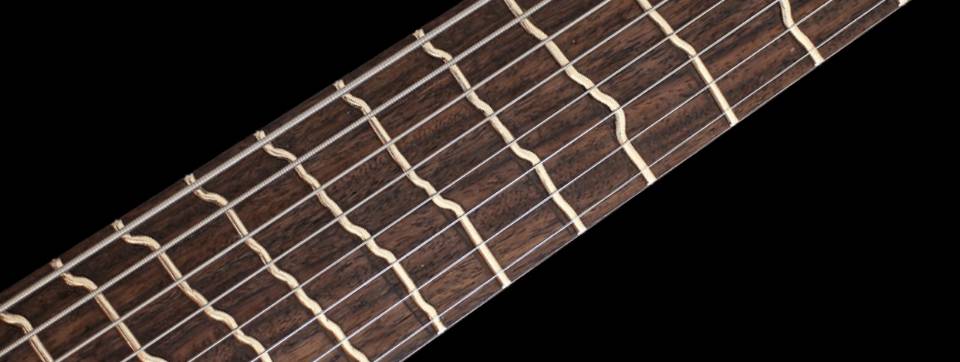
Below: Maybe, this is the answer to better intonation.
-
That probably stands to reason if you get proper intonation over your entire fretboard by tuning the open strings slightly flat. Maybe that's in fact their entire purpose. Originally Posted by GuyBoden
Although the reasoning in my post above (about altering the sounding vs. non-sounding proportion should still stand).
Wriggly frets could solve the compensation problem but theoretically only for 1 particular string set - and they'd have to be a lot less wriggly than in that photo unless you also want to use a different temperament.
-
With electric guitar, due to the size of my fingertips, I can't really play any chords near the nut anyway, the strings are too close. I only play single lines.
However, on classical, I have the nut cut so I can play chords with a somewhat wide fingerboard. In that case, one of these days I'd like to setup my classical like this:
-
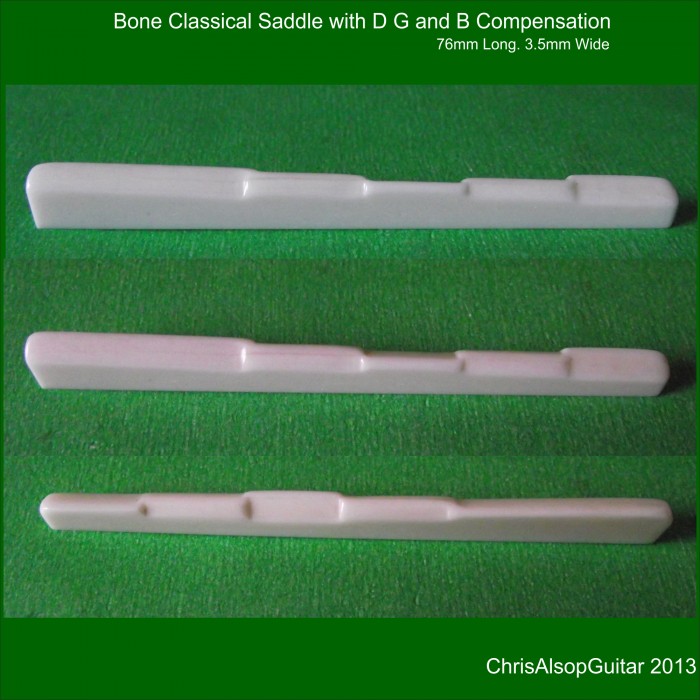
I thought that compensated bridge saddles were available to improve Classical Guitar Intonation. Originally Posted by icr
I'd think that they would be easier to fit than a compensated nut on a neck.
These:
-
You mean your string spread is narrower than usual on a classical, doesn't use the entire fingerboard? Originally Posted by icr
Interestingly I'm currently compensating the G string on my classical (647mm scale length) by just a bit more than 1mm.


 Reply With Quote


Interesting Acoustic-Electric 7-String
Yesterday, 06:32 PM in Guitar, Amps & Gizmos