
-
Hi everyone! Been reading this forum for ages, but this is my first post. 
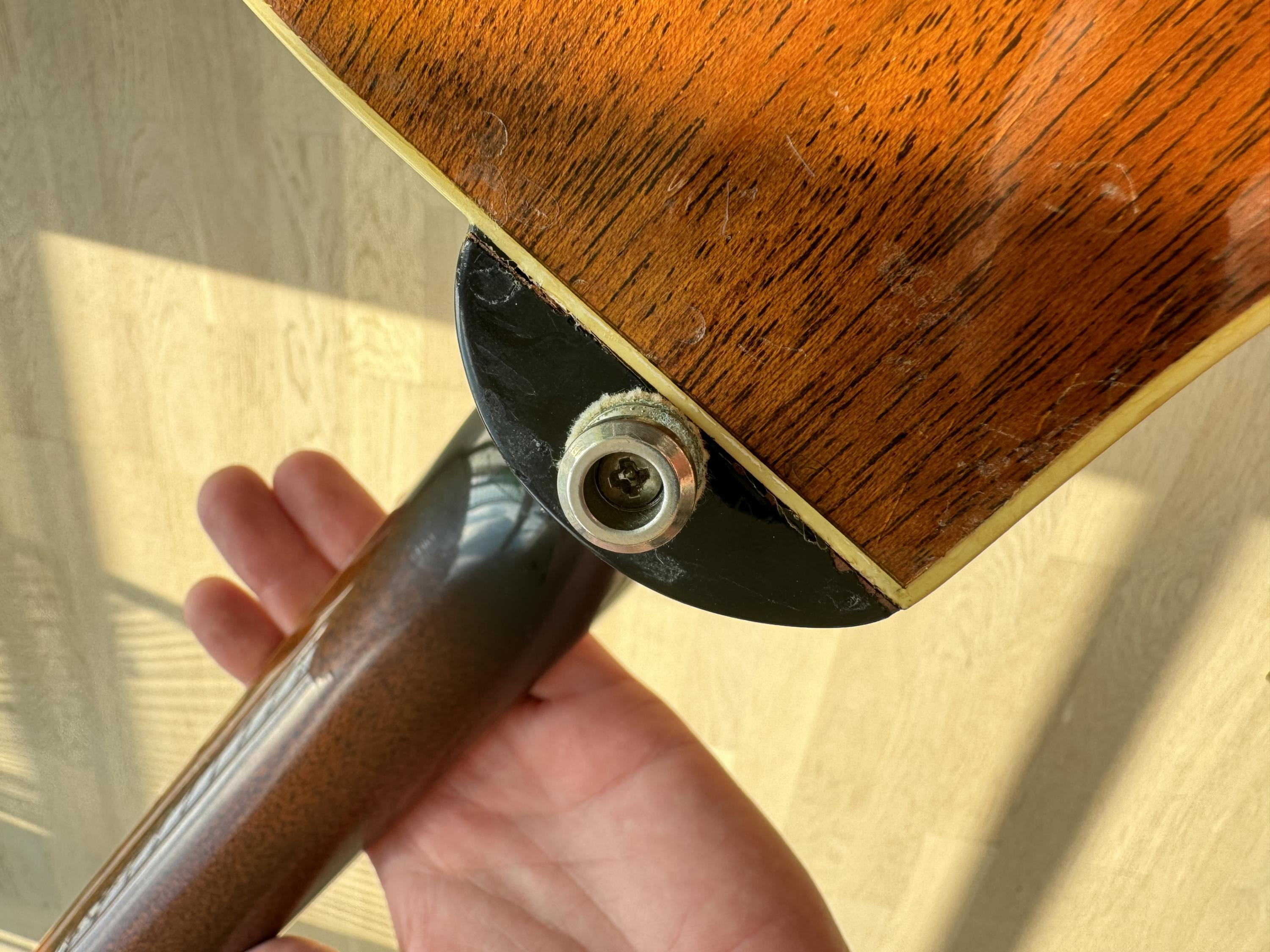
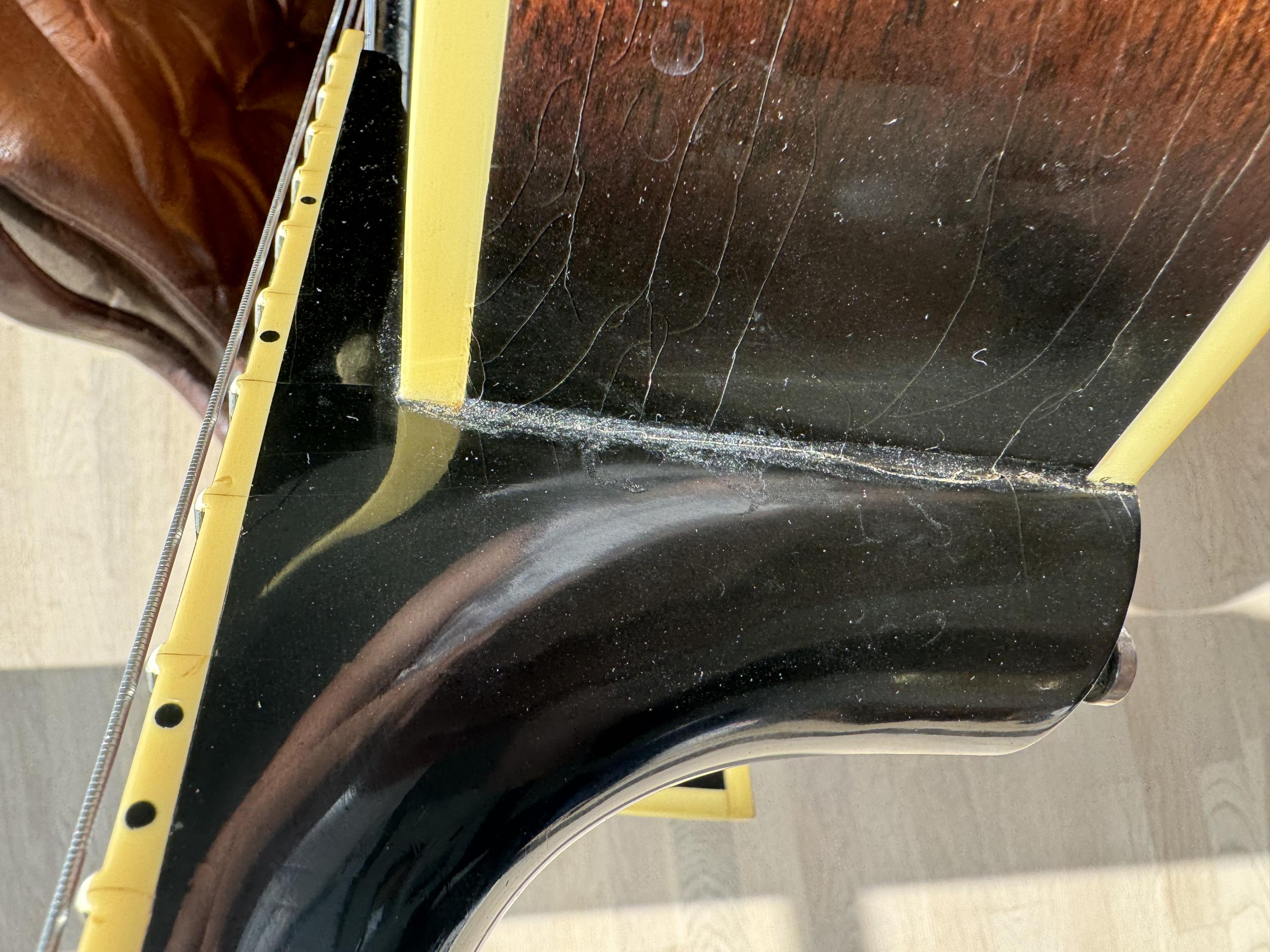
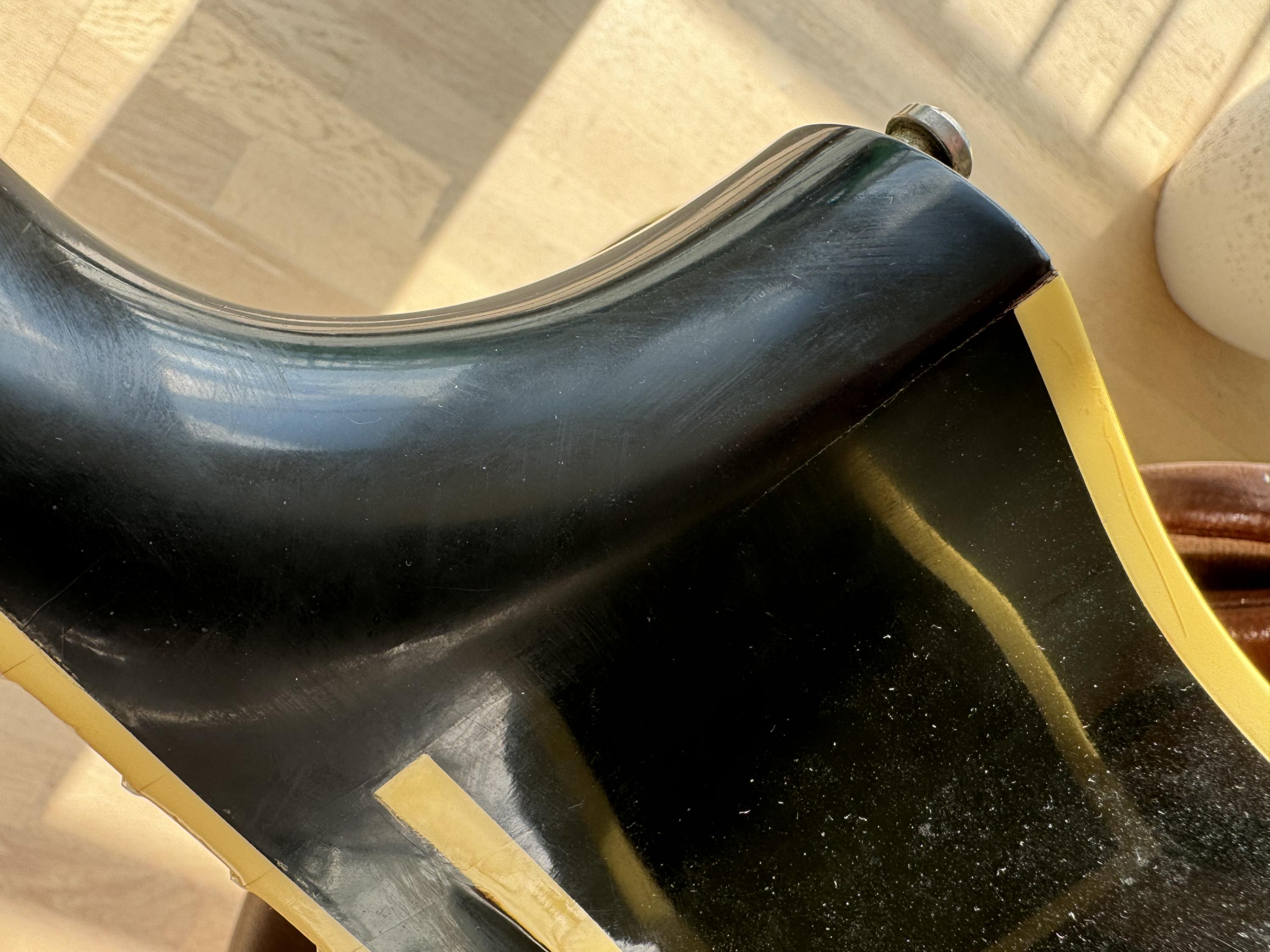
I recently bought a 1989 Gibson ES-175 (Mahogany) in good condition, except for the cracks shown in the pictures. I got it cheap, and it plays very well. I'm certainly not an expert, but I've seen similar cracking in other older archtops. Will it require a neck reset, or am I safe for now? I can't really tell if it's deep finish cracks or if the wood has actually separated. I'm not sure about the "smear" in the joint on the cutaway side. Could this be glue from an earlier (not so good) repair? It looks fine on the other side, more like a finish crack halfway up the joint.
Thanks!
-
-
Those lines in the finish are called 'checking', which happens as the lacquer shrinks over time: just cosmetic, not a structural concern. Gibson applied the finish to the guitar after the neck was joined to the body, so that 'smear' is simply a thick build-up of finish in the corner: again, merely cosmetic. The 'crack' at the neck heel to body joint is just shrunken filler and finish...merely cosmetic. Enjoy your new-to-you purchase!
-
Play the guitar it looks as if finish build up the clean look on the other side of neck suggest nothing going on. A neck reset on a 175 of this vintage would be rare I cannot remember any I have run into.
-
Congrats for getting a wonderful instrument! These ’80s mahogany ES-175 are nice. At least my ’84 is a great guitar.
If it stays in tune and the neck does not wiggle You don’t have to worry.
-
You won't need a neck reset...the top will sink and you will be OK...Ha Ha!
Seriously, if the action is OK and the neck is stable, I'd not worry too much about that.
-
-
I agree with the advice to play it and see how it goes. 175s are pretty tough to hurt, and it's probably structurally sound. But there are obvious signs that it was not kept properly humidified. You can see vertical splits in the neck binding at the ends of all the frets. This is how fret sprout from dryness shows itself when the neck is bound and the wood shrinks a bit as it dries out. The ends of the frets can protrude from an unbound neck as it dries out and you can feel them. But the binding covers those ends, so they push against the inside of the binding and split it over time.
Similarly, I suspect that the slight separation of the heel from the body resulted from shrinkage of the heel. But I've never seen that kind of finish buildup at the junction of the neck joint and the body on any Gibson coming out of the factory. You'd have to work hard to get nitro to pile up like that - it's not as viscous as poly, and it doesn't dry very fast. So I think it'd run long before it set up like that. I've never seen that much nitro buildup in a joint area like that before and imagine that you'd have to ingtentionally put it there coat by coat to get it to build up like that.
If the neck is solid, the set angle is fine, and action is good with room and bridge clearance to both raise and lower it, the dovetail is probably solid and stable - and you don't need a reset. But I think it's well worth using a rehydration set of D'Addario or Bovida humidification bags and slowly bringing the guitar back to a safe and healthy state of hydration, to prevent further damage like binding separation and wood cracking. A moisture content of 6% is generally considered the low end of the acceptable scale for most tonewood, with about 9% the top of the range. You can now buy a cheap ($25) digital moisture meter from Amazon and many other outlets and check your own instruments.






 Reply With Quote


Interesting Acoustic-Electric 7-String
Today, 06:32 PM in Guitar, Amps & Gizmos