


-
-
07-20-2025 05:21 AM

-
Interesting!
-
Good tips for Rock or Fusion shredding, but for more challenging Bop lines requiring more difficult string changing gymnastics, I'm not sure this approach will be as effective. For me, and for this reason, I have found that avoiding excessive slant angles improves efficiency for when, as an example, a downstroke on a higher string needs to be followed by an up stroke on a lower string, particularly if 2 or more strings lower.
However, what works for me may not work for anyone else, just as what works for you may not be easy for someone else to adopt. It's easy for people to assess your left (or fret) hand technique just by observation, but the right hand holds many hidden secrets, even from ourselves!
-
Primary diagnostic for right hand technique
Dunlop Nylon Standard (old) 0.73 mm pick
Exaggerates problems for close analysis
Changes tone with slight changes in tilt
Good for learning a new pick technique
-
Yeah, I guess a pick that huge would force you to get it together.
Kidding. Because the picture is so big. Just in case someone cant tell that I'm kidding...
-
Never liked the sound of nylon picks for acoustic or electric. As far as "fixing" your right hand technique, we always have to bear in mind that our left and right hands function together and we can't fix the technique of one hand without also addressing the technique of the other hand (also known as bilateral transfer). Poor picking habits are usually accompanied by poor fingering habits, and good picking habits are also usually accompanied by good fingering habits. I have not watched the video so I don't know whether that was addressed.
-
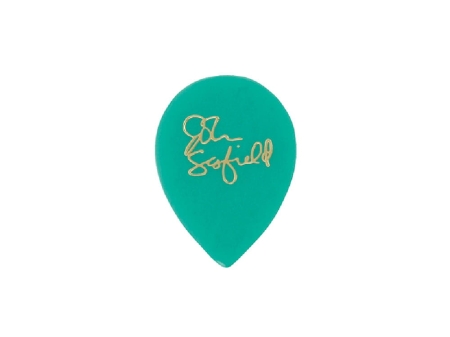
Great pick....I use it.
-

-
... such has not been my - and I suspect many others' - experience. I've long had reasonable fretting hand technique but this did not somehow translate into good picking hand technique.
 Originally Posted by Cunamara
-
I think all the stuff about hand position, pick type, pick angle, is somewhat of a red herring. It matters, but it's not what's going to fix right hand technique, and if you look at all the different players with good right hand facility, there's a *huge* range of those variables that can work. IMO the way to develop good right hand technique is:
1. Figure out how to tremolo pick in a way that is relaxed and even at a reasonable speed. It doesn't matter what hand position is used; if it sounds good and feels comfortable, it works. This should include some ability to change strings smoothly, say doing a bar of sixteenths on adjacent strings.
2. Identify what type of motion you're using. The Troy Grady categories are good; USX, DSX, DBX. This will tell you what kind of string changes you favor (ie, after an up or down stroke)
3. Figure out left hand fingerings of lines that are arranged such that the string changes match what your right hand favors. Besides alternate picking, you can use hammers and pull offs or sweeps to make this easier.
-
I think it's like this...
Left hand- fingering solution
- physical, mechanical, geometric, dynamic
- - ultimately the same output regardless of input and processing conversion
- information comprising the physical fingering solution
- - sequence of string/fret locations
- - - assignment of locations to fingers
- - - - lines
- - - - - one to one
- - - - - - one finger to fret
- - - - - many to one
- - - - - - many strings to one finger
- - - - - - many fingers to one string
- - - - chords
- - - - - one to one
- - - - - - one finger to string
- - - - - many to one
- - - - - - many strings to one finger (finger barre)
- - - - - - many fingers to one string (barre chords)
- - - Location attributes - array (string, sounded, fret, finger)
- - - - string (1,2,3,4,5,6)
- - - - sounded (y/n)
- - - - fret (0 (open), 1 - 22)
- - - - finger (1,2,3,4)
Comment
Location and sequence is sufficient to comprise:
- chord
- damped string
- line
- hammer
- pull
- slur
Pseudo attributes (implicit location reference unchanged)
- vibrato
- bending (jazz) peak bend no greater than quarter tone
- glissando (ending only, beginning and ending, as sufficient reference)
Position is an artifact of fingering solution
Right hand - picking solution
- uses a subset of the left hand fingering solution
- - two elements of the location solution array (string, sounded)
- - free to pick, thumb, hybrid, fingers, etc.
- - always knows if the next sound is
- - - same or different strings (lines)
- - - same or different string set (chords)
- - assigns technique
- - - up/down direction
- - - tone (pick slant, pick angle, etc.)
- - fine tunes and is final word on rhythmic character
- - - must be rhythmically "faster" than the left hand
It looks to me like the left hand's fingering solution for lines and chords to express an idea needs to come first, so then the right hand's sounding solution may use the string and sounding elements of the left hand's solution to execute a right hand sounding solution from various possible techniques.
I don't think the right hand can lead the left hand fingering solution with string selection and sound musical (apart from the right hand being the final word on the rhythmic character of the result).Last edited by pauln; 09-26-2025 at 12:45 AM.
-
I'm not following the preceding section, but on this part I disagree based on several considerations. Originally Posted by pauln
The first is that the right hand has more limitations on what it can do. For the vast majority of people who naturally have a USX or DSX right hand motion, there are certain rules that you're just required to follow. If your left hand choice is to play a line the requires DSX but your picking motion is USX, you're out of luck. Trying to force your right hand to do something it's not mechanically capable of is not a recipe for success.
I think your breakdown makes sense if every improvised line is spontaneously constructed and there were no repeated patterns in how lines were freted. But no experienced guitarist plays like this. We know and favor certain scale and arpeggios shapes, have repeated small chunks or licks that we play, etc. This, combined with the fact that the fretboard offers multiple ways to fret the same phrase means that we can sit down and be deliberate about the structure of what the left hand is playing such that it makes the job of the right hand easier.
I've chosen to use Gambale style economy picking which is an extreme version of this. Everything in the left hand is rearranged to facility sweep string changes, or at least to avoid "outside" string changes. But alternate pickers like Cecil Alexander talk about this too. He explicitly talks about arranging lines into even numbers of notes per string, or using hammers and pull offs to create even numbers of pick strokes, in order to fit lines to his right hand technique.
Every player with great right hand technique is following a set of rules like this, whether purposefully or not. Guitarists love the myth of the right hand that can "play anything", but it's very much a myth. We have to work within our limitations, and recognizing and adapting lines to those limitations is the best way to overcome them.
-
Thanks, interesting, I'll look at it and discuss more carefully later; I have a brunch this morning.

-
Limiting your left options to what your right hand enables is limiting your musical options, what lines you can express. If playing what one "hears in their head" is the ideal, then that is not possible if your right hand technique is like Gambale's, or even Scofield's. So what technique is the most "enabling"?. Well, perhaps in answering that we might consider how other instruments deal with technical limitations. If we were to reduce you right hand options to either a down or upstroke (yes, I know there's more options, but humor me), then what other instruments have limiting striking options? First that comes to mind is the vibraphone, imagine the player has only one mallet per hand, the player has a 2 stroke action - left and right. Yet that is enough to enable the player to express virtually any line he/she hears in their head (Hampton, Hutcherson, Burton etc). Originally Posted by BreckerFan
So if a guitar player has a working 2 stroke action (up and down stroke), then theoretically they should also be able to play any lines they hear. Easier said than done because the vibraphonist has no trouble with large intervals whereas cross picking across large string leaps is very difficult to cultivate. But it can be done and has been done whether by Jazz players like Pat Martino, Johnny Smith etc, or other styles like Bluegrass players (eg. Molly Tuttle).
If you developed a technique where your right hand can cleanly play a downstroke on the high E string followed by an upstroke on the low E string and repeated at 8ths at 300 bpm, and make it sound clean without brushing the strings in between, then you should be able to play most of Bobby Hutcherson's lines! Because it's the hardest thing to get the pick to do, every thing else should be easier. Although I don't aim to perfect such a technique, I do now think such facility is possible if focused on. The mechanics would involve a stable central equilibrium pivot point where the pick hovers centrally over the strings, with a neutral pick slant in either direction. Imagine how a robot would do it - that's probably the ultimate right hand technique to aspire to if you want access to more playable lines that vibes or piano can do.
Of course, you miss out on the more voice or horn like nuances that slurring and sliding affords, but life's too short to have it all...
-
This is the line of reasoning that I disagree with. It seems like playing what one hears in your head is equated with playing any random sequence of notes on any set of strings. But is that really what you're hearing in your head? When I'm playing jazz I'm hearing arpeggios, scale fragments and sequences, chromaticism, some intervalic jumps. Are those things that can be played with Gambale or Cecil Alexander style technique? Absolutely! There's no limitation there. You have to think and be strategic about you're going to execute those things, but that's the case for any instrument. Originally Posted by princeplanet
This idea of a perfect right hand that can cross pick any arbitrary sequence of notes on any set of strings with no prearrangement just isn't realistic. I can't think of any players who play like that. Trying to chase that, rather than work within the technique that comes naturally, is a greater inhibitor of self expression imo.
-
"This idea of a perfect right hand that can cross pick any arbitrary sequence of notes on any set of strings with no prearrangement just isn't realistic. I can't think of any players who play like that. Trying to chase that, rather than work within the technique that comes naturally, is a greater inhibitor of self expression imo."
The closest I can think of would be expert crosspickers like Pat Martino or bluegrass virtuosos. But there does seem to be an upper speed limit with that kind of playing. And there's a machine gun quality to that playing that may or may not sound appealing.
The other trick is to use something like hybrid picking. It can be a sort of "cheat code." For example, for USX players, lines with just a single note on a higher string can be really awkward. Use your middle finger to pluck it instead, and it's suddenly easy.
But yes, I think in general, you have to get away from the idea that you should be able to play any kind of line, with any configuration of fingers or strings, equally well.
Virtuosos cannot play anything and everything.
-
Originally Posted by BreckerFan
While I agree that "Even Kathy Berberian knows there's one roulade she can't sing," don't use that as an excuse for not trying to be the best version of your musical self that you can be. Originally Posted by dasein
Limiting yourself to just one picking technique is not necessary. If you have a hammer but you need a saw or a screwdriver, you're SOL. It's more work, yes, but there's no reason you can't learn (and use) multiple right-hand techniques. So, yeah, learn USX, DSX, cross-picking, edge picking, hybrid picking, fingerstyle.... all of it. Mix 'n match to suit your musical goals.
-
Fair point, and yes all of this totally depends on what it is that you actually hear in your head, so that if you listen to mainly guitar players (or just your own playing), then of course the ideas in your head will be "guitaristic". In other words, you tend to "hear" what you "know". Originally Posted by BreckerFan
But I listen more to other instruments and I can tell you that the sounds in my head certainly do not lay on the guitar very easily! I used to be much more of a "slurrer", but found that made certain lines much harder to play compared with alt picking. Another thing i noticed was that the slurring left hand also limits speed
as opposed to assisting, in particular the pulling off motion requires extra effort and movement from the left hand which actually slows you down. You only notice this once your alt picking gets up to speed. Also, another benefit I've discovered is the ability to have control over accenting any part of a line, any up or down stroke. This is simply not achievable with slurring, no matter how much you practice accenting into a slur! So to some extent a dynamic alt picking technique
can counteract the tendency to "machine gun" one's lines. Listen to the great vibes players, they don't sound like machine guns.
Sure, you can argue that a vibes player probably can't sound like a guitar player, but then, they probably wouldn't want to!
-
Which is the gatekeeper for guitar technique, your left or right hand?
The action of vibes is compelling but does not serve as an analogy to the guitar. The guitar's up down stroke action equivalent on the vibes is the sequence of two independent left and right hand down strokes where the guitar's left hand component on the vibes is the target bars being hit.
I see it as, to which hand do you present your musical ideas to be expressed? For me, that is the left hand, from which the right hand figures out what to do.
In my world, I just present the musical idea to the left hand and let the hand select the solution. Am I reading that some are actually having an ongoing meeting in their minds where the hands inform what they can do with regard to musical ideas and submit plans for execution (even/odd number of notes control, calculated string changes, etc?)Last edited by pauln; 09-28-2025 at 09:11 PM.
-
Well, for me personally, I used to think the left hand was the hard part, and that the right hand would just find a way to keep up. But I'm certain now that this led to the development of limiting right hand habits that took years of work to overcome. I know I'm not unique in this way, because there seems to be many that spend much time (and money?) on methods that overhaul their right hand technique in order to expand their options and their range of playable lines.
The guitar vs vibes thing, for me, is just a way to compare the binary nature of the action, there's something about the opposition of L vs R that keeps percussionists in the groove in the same way that up vs down can do for the plectrist.
Not saying you can't be inspired by a jazz drummer's phrasing if you're a slurrer, but a drummer's (or vibes player) phrasing is better captured with a binary picking action.
Like most, I still slur, slide and mini "rake" where I simply must, but if there is a run of notes where I can play either way (alt pick vs slur), I am increasingly preferring the strictly picked option for clarity and groove.
-
I remember countless times when watching a video of a performance where the camera would move to show the right hand instead of the left during a solo or some other flashy part of the guitarist's playing. I would always think, "Wrong hand, put a guitarist behind the camera to show us the hand we want to see".
I never gave a thought to whether a note should be an up or down stroke, never worried about whether a line needed to start with an up or down, or how many notes per string, or pick slant up or down, or alternate vs economy, etc. I really let my right hand totally free to figure out the techniques necessary to satisfy the requirements imposed on it by the left hand fingering solutions. My thought was that the complexity of what the hand can do far exceeds any understanding from which I might try to deliberately control it; thas is, any deliberate control would at best be well under the hand's real but mentally unrealized possibilities.
That same thinking is why I do not control my left hand by requesting it to do verbally or mechanically defined things; I only request "make me hear this sound". I began "all in" on this approach in order to learn to play everything (on the guitar*) by ear. Both hands have been totally enthusiastic since.
* traditional formal approach for violin, clarinet and classical piano
-
I don't know about clarinet, but bowing and piano fingering is an absolutely huge consideration Originally Posted by pauln
-
The misterious ways of the right hand... No really, I've been practicing Gypsy picking lately, where you supposed to use downstrokes primarily, and I thought that's the techinque that makes sense, versatile and all. But I tried to apply it to a tune we started to play with the band, Winelight by Grover Washington, there is a cool muted arrpegio guitar part where you basicaly just play m9 shapes, perfect for downstrokes right? But when I did that on stage it felt akward, so I thought ok let me switch to alternate picking for a sec and boom it felt so effortless and in the pocket. I was like wow, why, it seems it's counterintuitive and yet it felt much more natural to me.
I'm just saying so maybe it's indeed true that over analyizing and trying to change over to a different method when you already got something going for yourself is not always a good idea.
-
For woodwinds, one practices scales in all keys up and down because of different fingerings that produce the same pitch. One learns which particular fingerings are best* for the different scales and directions up or down with regard to level, tone, legato/stacatto, etc. The altissimo** register of the sax, for instance, has up to two dozen ways to finger some pitches. Originally Posted by joe2758
* particular variations in mechanical ease and speed with regard to previous or next note, variations in matching continuity of tone, variations in tuning precision, particular differences in how much breath pressure to produce, etc.
**Altissimo - uppermost register for woodwind instruments. The taper of the bore determines the fingering offset between registers (whether the next up register's same fingerings produce an octave above, like a flute with a constant bore tube, or up an interval for expanding bore).
Clarinets, which overblow on odd harmonics make altissimo notes based on the fifth, seventh, and higher harmonics. For other woodwinds, the altissimo notes are those based on the third, fourth, and higher harmonics.
-
I didn't say that mechanics inform note choice, though there will doubtless be some of this happening for any instrument. I said that because guitar offers multiple ways to play the same phrase, you can be deliberate about the left hand fingerings such that it makes the right hands job easier. This is the method that such limited improvisers as Frank Gambale and Cecil Alexander use. Originally Posted by pauln
Would you say that your left and right hands come up with an entirely random and different way to play the same phrase every time you try to play it? Or are there certain mechanical patterns that you favor for a phrase because it's easiest?
My point is that rather than randomly arriving at a set of mechanical habits, you can be deliberate about developing them. Your analogy to classical violin and piano actually reflects my point. There are very specific fingerings a bowings that have become part of the pedagogy, despite the fact that there is more than one way to get the job done. It's not a free for all.



 Reply With Quote


Andy Bartosh plays "Dolphin Dance"
Yesterday, 04:20 PM in The Players