


-
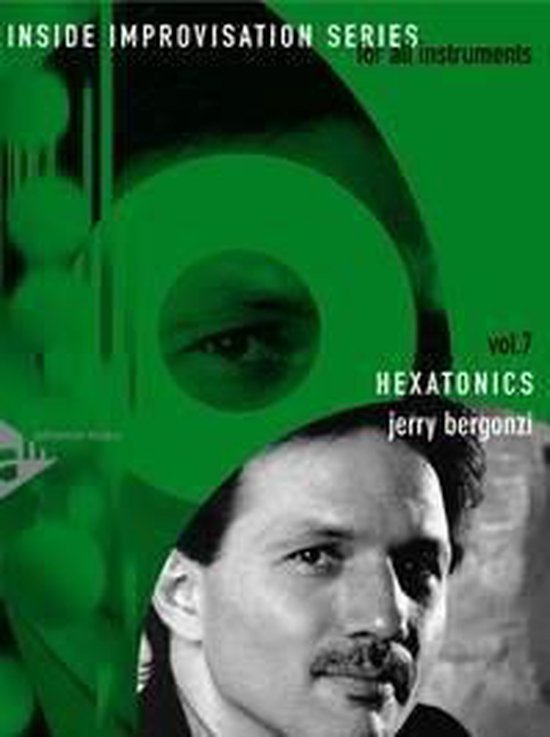
Has anyone studied Hexatonics in depth?
I remember perusing the book by Jerry Bergonzi many, many years ago. It seemed to create a more modern sound.
-
12-30-2025 06:53 AM

-
I'm beginning to study them, through the first chapter of Randy Vincent's Line Games book. If, that is, by 'study' you mean get them under my fingers and into my ears. There are also ways of treating it as three two-note cells which you can see on the hexatonic cheat-sheet I made over on the Practice Resolutions thread.
-
FYI Randy Vincent’s book Line Games starts out with a chapter on Hexatonics in case you don’t want an entire book on the subject. I had a few other Bergonzi books and really liked them.
Also this video demonstrates that part of the Line Games book:
-
I'm a Randy Vincent fan. His 'Three Note Voicings and beyond' study book is pretty good, if you can find it. He provides a lot of thoughtful exercises on triad pairs that I find helpful to both my hearing and thinking about these tonal relationships.
-
When people say hexatonics, they're usually referring to one of two similar but slightly different concepts. Both will give you a six note note, but you're thinking about them differently.
The first is either adding a note to a pentatonic scale, or dropping a note from a seven note scale. Usually this is to either add color to a pentatonic, or get rid of a potential avoid note in a seven note scale.
Example: a minor pentatonic scale, but you add a 2nd. Or a major scale, but you
drop the 4th. You can hear both approaches quite frequently in the wild. And
obviously, you can think of each scale in different ways. The first example can
be thought of as minor without the 6. The second can be thought of as a major
pentatonic with a seventh. I believe the Randy Vincent book approaches it this
way. If you already know your scales, this can be a very easy way to add some
common language to your playing.
The other concept is to think of them as two three note structures smashed
together. They are usually triads, but they don't have to be. There is a ton of
literature out there on "triad pairs," but again, they don't have to be triads.
The Mick Goodrick/Tim Miller book uses a ton of different three note sets. But
triad pairs are the most common. The solo that's generally considered the one
that "started it all" is McCoy Tyner on "Passion Dance," although I'm sure you
can find earlier examples if you really want. It is a more modern sound, and it
takes a lot of time to really get down, especially on guitar. But it sounds
great once you get it down. I believe the Jerry Bergonzi book goes over this
approach. There's another great book on this by Gary Campbell.
-
I've been working on the Miller/Goodrick thing for a few months BTW. I'll report back when I have something worth showing.
It's a sort of generalised triad pair concept that includes non tertial triads, but instead of eliminating the contentious note from the scale, they've kept it in and instead removed the root, which gives a bit more motion to these things.
-
Playing chord over chord triad pairs tends to lead one to hexatonic scales -- Slonimsky Curiosities
-
Jerry Bergonzi Hexatonics states:
"A hexatonic scale can be derived by combining the notes of two triads that do not share any common tones. For example, take a C triad and a D triad and combine the notes C-E-G and D-F#-A to create a hexatonic scale."Last edited by GuyBoden; 12-30-2025 at 04:42 PM.
-
H is my favourite note
Sent from my iPhone using Tapatalk
-
B natural?
 Originally Posted by Christian Miller
-
Originally Posted by Christian Miller
F#? Originally Posted by James W
H is a B in German notation. but this was a F#, the forum software changed the F# to a H.
-
and let's not forget there are FOUR of these scales
C Eb E G Ab B
12 triads = 3 Major 3 minor 6 Augmented



 Reply With Quote


Delete
Today, 03:21 AM in Guitar, Amps & Gizmos