


-
Since i read that interview in a library years ago, it might not even be online, but here's an interview from Vintage Guitar magazine shows his attitude towards "Old School Jazz":
 Originally Posted by Spook410
You heard a lot of bop players, yet you’ve had your own style from the beginning. How does that happen?
My instincts were very sharp, very early on. I didn’t want to be another old-school jazz player. I could have very easily done that, but I knew that was the kiss of death. I got an early taste of what it was like to get the acceptance of a huge rock audience when I was 19, with Return To Forever. That solidified my theory to never go back to old-school jazz. I experienced the future, which is far more exciting. Why would I want to wind up in a tiny jazz club?
-
06-30-2021 06:09 PM

-
Gilgamesh, with Phil Lee on a Les Paul Deluxe, getting a great jazz tone, albeit the tune is definitely 70s Prog:
-
If you want a dark tone, you can get it from an archtop -- and it's a more classic look and sound.
But, if you want a chimey tone (for lack of a better descriptor), the Tele really stands out.
So, there are more alternatives (and, arguably, better alternatives to a LP. But, it's hard to beat a Tele if you want that kind of sound.
-
One might say that ADM has been particularly successful in a way we’d all respect, that is, he is an original, distinctive voice on his own terms.
-
Also:
-
Even though he's very old here: this pictures proves the ergonomic issues of the LP: look at his shoulders and his wrist. Play in that position for hours a day and it will have an effect on your posture. Originally Posted by jonh
For me, the LP is too small to play seated and too heavy to play standing up.
-
Why should it be dark and muffled like 90% of Jazzguitarists sound the same for decades???
“Obviously, from a certain jazz tradition, you could say that jazz guitar has tended to be very dark, and those overtones are rolled off and the function, sonically, of the electric guitar is almost like a higher version of the double bass. You know what I mean? It’s got a muted, shorter tone, percussive, but not shiny in any sense of the word. That’s a particular tradition.
Treble is my best friend and it is rewarding when I use it well, and it is also very revealing – for better or worse – at other times. Anything worth playing is worth playing bright“Having said that, when you go back to George Barnes, and you go back to Charlie Christian – or if you listen to Eddie Lang for that matter, albeit on acoustic – the origins of the music included those overtones, and the jazz guitar was bright, and it was rockin’. It is! It was more that middle period, in the 50s, where the darkness became the new norm, but it wasn’t always that way.
“I feel like treble is my best friend, and it is rewarding when I use it well, and it is also very revealing – for better or worse – at other times. Anything worth playing is worth playing bright. [Laughs] And I don’t say that that’s for everyone! That’s very personal, but that’s how I look at it and I practise a lot that way.
Julian Lage
-
I spy...

a Jazz guitar!
I spy...
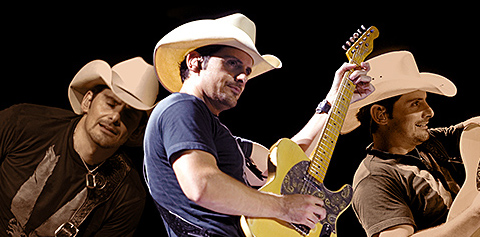
a cowboy guitar!
-
Imho association a Tele with country is very American... Originally Posted by JCat
I think in the other parts ot the world it is more associated with rock music... I cannot say for sure of course. Maybe in some countries too...
as kids we thought of a Tele as of Keith's guitar...
-
To me the Telly is the most versatile guitar ever. It‘s perfect for every genre. Still the ultimate guitar to me. Originally Posted by Jonah
-
I think that, at least in part, that the general idea that jazz guitar tone is rather dark is a result of having heard recordings in which the guitar is in a mix with drums, piano, multiple horns, sometimes strings and so forth and what you can hear of the guitar is this mid-heavy tone we associate with jazz. Even in a solo context, performers may set their amps and play their instruments in such a way as to duplicate their group (perceived) sound when soloing. Most of us have found that our at-home practice settings don't cut it in a group context. Check your amp settings after a session, and then try them at home to see and hear the difference. IMHO.

-
Yesterday I was in the night jam in a local jam club ... as a (pretty drunk) listener... this club does not let amateurs on stage and the local scene in general is very strong... Originally Posted by citizenk74
There was a guitarist (not often there)... young kid I never met before.. he was nice musically... nothing outstanding but nice... he had Gibson 175 with two humbucker and he was terribly dull ..
I could hardly hear him in the mix.
-
k. has it right. The "dark" guitar tone as the jazz guitar tone is largely a myth and was a function of recording technology, the effect of ensemble playing, etc.
Listen to many of the most prominent jazz guitarists: Charlie Christian, Wes Montgomery, Barney Kessel, Herb Ellis, Joe Pass, Johnny Smith, Django Reinhardt, Tal Farlow, Jimmy Raney up until the early 60s (and beyond). Their tone is not dark. Jim Hall was prone to a darkish tone and some after him followed suit.
-
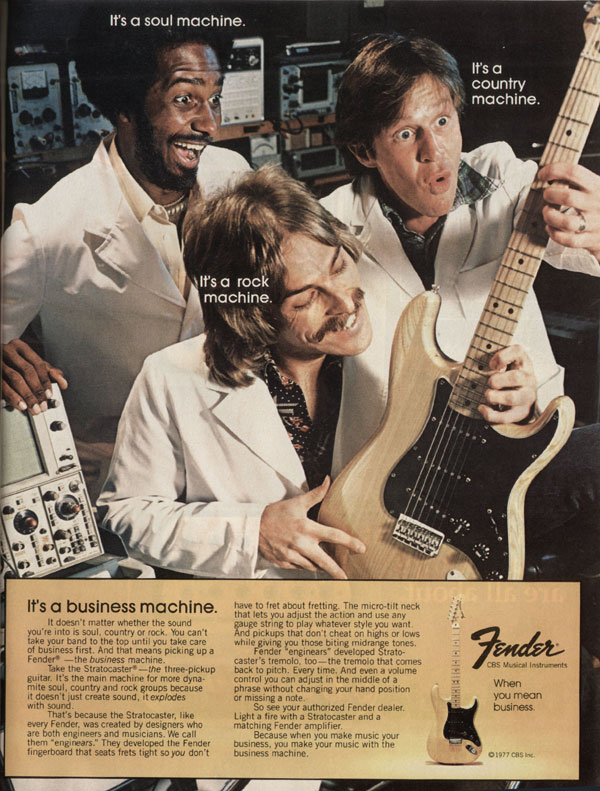
-
If you were into jazz fusion in the late 70’s, you probably wanted an LP or SG.I played SG then LP in early 70's. From Silent Way on thru Weather Report. By the late 70's fusion became boring and lame to me. I switched to Rickenbacker!By that time most of us lusted for a 335.
The talk about this guitar for that music is sometimes more about costuming. It's an important part of the live gig. Folks don't necessarily go out to listen to music. A lot of times they're there to be part of a club. You don't wear a ripped up leather jacket held together with safety pins and Doc Martins to go to an Opera gig. For the most part anyway...
I think the comfort level of LP is very much about left leg VS right leg. I always played strapped, and on the left leg when sitting. StringSwinger's somewhere in between. My gigs required standing. The weight got to me after a few years of 4 hour gigs 4 or 5 days a week. I think my shoulder's still a bit Bork'd from that.
For some reason I've never been very attracted to Fender. OK for bass players, but never felt (or looked) right for me. I feel like Lage & Frissell really got into the Tele for their 'Americana' thing. Goes well with that. Sounds great in the hands of Bickert, Greene and Lerch. I'd like to own one someday. Maybe after I find my White Whale Borys...
-
Perfect summary. Originally Posted by Joeontheguitar
-
Some of the "problem" behind this is the changing role of the guitar in jazz. Big band players needed brightness to cut through the mix, and "rhythm guitar" was a serious and complex role with its own set of sonic requirements. The guitar sound we associated with jazz was not at all heavy and dark. It only takes one quick listen to the great rhythm players to appreciate this - Allan Reuss, Freddie Green, Eddie Lang, early George Van Eps, etc. The most skilled rhythm players avoided chording with more than 3 or 4 notes because that would sound heavy and dark. Many of the best rely / relied on 2 notes per stroke and integrated with the bass line to lay the groove down and pave it with a chordal texture. The tight integration between bass and guitar left more room for both to play all over their fingerboards without getting in each other's way because they were working as a team. A sensitive guitar/bass team made it sound like they were one instrument, with the guitar adding rich harmonic content to the bass notes. Originally Posted by citizenk74
Solos were played on woody archtops with pickups added, but you simply can't pretend you're Freddie Green one minute and Peter Green the next with the same guitar. As instruments and amplification focused more on the guitar as a lead instrument, tonal qualities changed to make the guitar more "horn-like" for solos. This also made it sound less like the guitars that preceded it - the guitar sound became bigger and darker, with a prominent low end. It no longer needed to attenuate the lows and have sparkling mids and highs to he heard through a band. And while this was going on, the bass changed from an acoustic instrument complementary to the guitar to an electric instrument with a more guitar-like timbre. Its sound was darkened in the same way that the electric jazz guitar was, which changed the sonic and musical relationship between the two.
The evolution of electric guitars contributed to this too. That woody tone was less prominent in each generation of guitar, finally reaching the point at which the beautiful sound of an acoustic archtop was no longer "the sound of jazz guitar". But I think this was largely because of changes in the instrument, the music, and the evolving role of the guitar in that music. As things continue to evolve, we're seeing more jazz guitarists using instruments and accessories that are (for now) out of the mainstream. The best example is pedals and effects, neither of which was ever seen on a jazz gig in the '50s or '60s. When used in the '70s an '80s, effects were controversial (to be polite) in jazz. Many claimed that music made by guitars played through choruses, flangers etc was simply not jazz. Even Miles barely got away with it (both on his own horn and on the guitars in his bands), and it pushed away many of his biggest fans. It's not yet the general idea of jazz guitar tone - but it will be. That dark tone we now consider to be the sound of jazz guitar wasn't the sound of jazz guitar when it first came along. It took decades of change in musical styles, the instruments themselves, and those who play them.
And we have to keep in mind that even in the '60s & '70s, that dark sound wasn't the holy grail. A 175 was a compromise made for cost, convenience, and reliability by many players. Look at all the greats who "matured" into carved archtops from 175s. If that dark sound was so great, why'd so many wonderful players end up with a more traditional archtop after years of a 175? Listen to Joe Pass's later recordings - the wood's back! And now, we're seeing posts on this and other forums decrying players who've been using effects for decades and have earned their stripes as jazz artists. As I see it, this is no different from the evolution of the acoustic archtop into the electric archtop and the full hollow body sound into the thin semi-hollow sound. It's the use of Telecasters, Chapman Sticks and Kleins in jazz. We're moving toward an age in which there is no "sound of jazz guitar" because there are so many. This is evolution and growth in art and music - and it's great!
-
Les Paul are great. Here’s my favorite for gigging:

Sent from my iPhone using Tapatalk Pro
-
Can't play my Les Paul. Great sound. Bad ergos.
Don't own a traditional Tele. Skinny necks. Thin sound.
So for me, it's 'none of the above'.
-
Do you‘ve ever played a real good Telecaster? They‘re everything but „thin“ sounding and many got fat necks. The neck on my Thinline is 1“ from 1st to 12th fret. It sounds warm, mighty and sweet. Only 6 lbs including a B16 Originally Posted by Spook410

-
Chuck Wayne was another one who used the dark sound exclusively, to go along with his sweep picking technique. Originally Posted by Cunamara
Several times I've listened to a guy play with a dark sound, and use a great deal of sweep picking. I'll come up to them, and ask them, "So how long did you study with Chuck Wayne?"
In variably, the answer is something like "a few years".
John Lewis said he'd rather hear some of the rock guitarists play than listen to the muffled sound of most jazz guitarists.
The only obvious solution is to hunt down these dark sounding varmints, and place them in some type of internment camps, where they can play with dark tones to their hearts' content, away from the haunting mids of the general population.
-
And a good Les Paul isn’t muddy, humbucker or P90, doesn’t matter. That’s what the tone controls are for.
-
Add Pat Martino to the list of players with dark sounds?
-
I’d pluck that! Originally Posted by Stefan Eff
-
I don’t know that Jim Hall was solely responsible for the “dark sound” in jazz guitar, but there is a clear evolution in his tone from fairly bright and distinct to dark and “muddy”.
I’m not saying it’s a bad tone, but it seems a conscious choice on his part to, IDK, smooth things out on the top end.
And then guitarists who noticed what he and others were doing went for even more processing in their tone, ala Metheny and Scofield.
And of course there are jazzers who started out in rock or at least were heavily influenced by rock like DiMeola and McLaughlin.
It’s not surprising that guitar sounds have evolved over time. It’s really surprising that certain tones like piano and some horns have remained relatively static over time—though of course playing styles have evolved.


 Reply With Quote


Interesting Acoustic-Electric 7-String
Yesterday, 06:32 PM in Guitar, Amps & Gizmos