


-
Were you charged a tariff over and above the purchase price?
-
02-28-2026 10:15 PM

-
The asking price was $179 plus tax.
The TC Electronics website shows USD $129 as the list price, "Excl. US".
So yes, I was charged a $50 tariff. (( ))
))
NB: The list price for the BAM200 outside the USA is $88.90. Dang, that's *cheap*.
-
I just ordered a BQ500. It should arrive Thursday or Friday.
A Speakon cable is an added expense for this, and it's truly unexpected in a bargain device. In fairness, it's described in the product spec section, and it's clearly seen in the pics. But TBH, I didn't give it a thought because my RE 10 and RevSound 8 cabinets both use them, and the DV Mark EG250 has a compound Speakon output jack that takes a 1/4" plug in the center hole. For a $129 amplifier (except in the US, where we pay $179), a locking jack is impressive, assuming it's not such cheap plastic that it breaks in routine use. I'm not surprised that they didn't use the costlier Speakon combo, and I've never seen a cheap knock-off combo jack - Neutrik Speakon is the only show in town for this AFAIK.
I'm surprised that they used a locking connector, although it looks like a cheap knock-off and may not cost much more than a 1/4" jack. The speaker jack is screwed to the panel, which is great. The input jack also looks like it's panel mounted, with a hex nut on the outside and a plasic bezel cradling it. If these are all solidly on the metal, it's better made than most amps anywhere near this price. It's possible that the bezel is actually a grommet in the panel hole and that the input jack is mounted directly to the board. I'll know when I get mine.
I'm really looking forward to comparing the sound of the BQ500 through its MOSFET preamp with the sound of the EG250 and the Quilter 202. It'll also be interesting to see how the sound compares with the BAM200, which does not have a MOSFET preamp.
-
A quote from one of the many BAM200 descriptions on the net
"A specially designed high-voltage MOSFET preamp gives BAM200 its warm sound and immediate feel of an actual tube amp, while the responsive 3-band EQ provides a ..."
Many people have observed that BAM200 warms up quite a bit. I believe it's just because of the MOSFET preamp.
Our two samples were again in good use over the weekend at the Finland Tonefest guitar show, powering my son's Toob 12F full-range speaker as well as several Toobs and Metros on our stand. The amp arsenal was complemented last week with the arrival of a Quilter ToneBlock 202. Yummy! We now have all bases covered with SBUS, TB 202, BAM200 and the Darkglass Microtubes 200 bass amp. Under development: an active version of the 12F, powered by an Icepower 200 AS1 module.
-
Interesting. I checked the TC website just before posting that, and it does not mention a MOSFET preamp in the BAM200. I assumed they'd include it as a feature if it were there. Mea culpa!
 Originally Posted by Gitterbug
Hmmm - an active Toob with an ICE module. Where'd you get that idea???
-
Coincidence! I'll be ordering one of those tomorrow at the local GC as part of a big trade deal with my MarkBass gear. But mine is intended for bass & kb. Originally Posted by nevershouldhavesoldit
For guitar, I'm still very interested to see what this sucker with reverb can do. If it can keep up at 8 Ohms, and if the reverb is not chorusey/metallic. I may just order one to try if I can get a free return.

-
Not coincidence. Great minds just think alike Originally Posted by Woody Sound
-
All of these discussions make me wonder why single 4 Ohm guitar cabs are not more common.

-
I think Marshall still uses 16 ohm single speakers. Legend has it that their tolerances were initially so loose they wanted to play it safe. 8 ohm is fine, allowing another as an extension cab for the 3 dB SPL increment. Many small amps are unable to handle 4 ohm. The Orange Micro Terrors are a case in point. Their rating was originally 4 ohm, but went successively to 6, then 8 ohm. Originally Posted by Woody Sound
-
But so many of the little Class D amps really need a 4 Ohm load to bring out the best. And how many of us drag around 2 8 Ohm cabs for a gig? Originally Posted by Gitterbug
Eminence Texas Heat Speaker 12'' 4 OHM 150W
– Mojotone
-
Originally Posted by Woody Sound
A reminder that these tc electronic heads are designed for bass guitar...and as a bass player, while I'll often only bring a single speaker cabinet to a rehearsal or jam session, I almost always bring a pair of speaker cabinets to gigs. Originally Posted by Woody Sound
In my less-charitible moods I'll also suspect that it's intentional on the manufacturers' part ...to sell more speaker cabinets.
-
One can always replace the speaker in the cabinet with a 4 ohm.
-
I don’t think that’s the case. First, whatever tone an amp adds to the signal (which is theoretically none in a perfect “wire with gain” amp but often audible in the real world) is identical into 4 or 8 Ohms. The only difference is output power, and a doubling of RMS power into the same speaker only adds a theoretical 3 dB (a hair less in the real world) to SPL with the same input signal level. This is barely audible, except where it means a bit more clean headroom. Originally Posted by Woody Sound
Almost all of the reports I’ve seen of thermal protection shutdown in little sub-$300 class D amps were from attempts to substitute them for larger and more powerful traditional amps. They were wide open and/or running into less than 8 Ohm loads. You won’t get far trying to make a $129 amp work as long and hard as a $2500 SVT or even a $1500 Twin. This affects Elf, BAM200, Gnome etc. A $1500 Quilter will hang with a Twin. A $2000 Fuchs ODH will hang with a big Boogie. No $300 head will do heroic duty IME. But at an SPL level they can maintain all night, they sound great and will do so for a long time.
No inexpensive head will pump 200W through 4 Ohms for very long, but we don’t need that kind of power for most jazz guitar use. You get what you pay for, and it’s a lot. But going to a single 4 Ohm speaker from an 8 won’t change much about a BAM200 etc in practical use. If you need more oomph, you need more of everything.
-
I disagree. As I wrote earlier, my TE Elf 10" combo sounded like a pipsqueak next to my MarkBass 12" combo. But when I plugged the MB head into the Elf cab, it sounded just about as good as the MB combo itself. Well I have the TC 500 on the way, so we shall see how it works. Originally Posted by nevershouldhavesoldit
-
Is this in response to my comment that I don't think the load on an amp affects its tone? Originally Posted by Woody Sound
-
Well, I have used the Bam 200 a lot this previous summer, with a toob 6.5 speaker, with a toob 6.5 FR+ and with a 10' Eminence beta speaker. With the Eminence beta 10 i also played a bunch of bass gigs. I tried a tele, an archtop, a bass and a Taylor acoustic (with the FR+) and was happy with all results, very easy to get a giggable sound. I have two bam200 actually, i keep one in the bass gigbag
, the other on top of one toob. Most of the gigs are without a PA so only amps, sometimes i also send a di out to a bandmates tower, but it's not necessary. Never had a problem with overheating.
If talking regular jazz gig volumes these setups can easily do it. When reaching the volume limit the Bam200 starts to gradually compress, but for me it only happens when using a looper and an octave pedal, so asking this amp to deliver what essentially is three instruments (solo, rhythm and bass) can be too much. For regular guitar, say a jazz trio, especially a no drums one it is very comfortable. For actually playing open space hotel gigs (so pretty big for around 100-150 people usually), it can still do it but only because the volume IS supposed to be chill, and it's working hard.
If planning to play with loopers and especially an octave pedal though, you do need something more powerful to have the bass up high and avoid occasional clipping. I wouldn't go Bam250 but get a PA speaker instead, i'm actually getting an RCF Art 708-A MK V this year.
-
I found a used BAM200 online in a Guitar Centre and bought it. $99 US. It’s on its way.
-
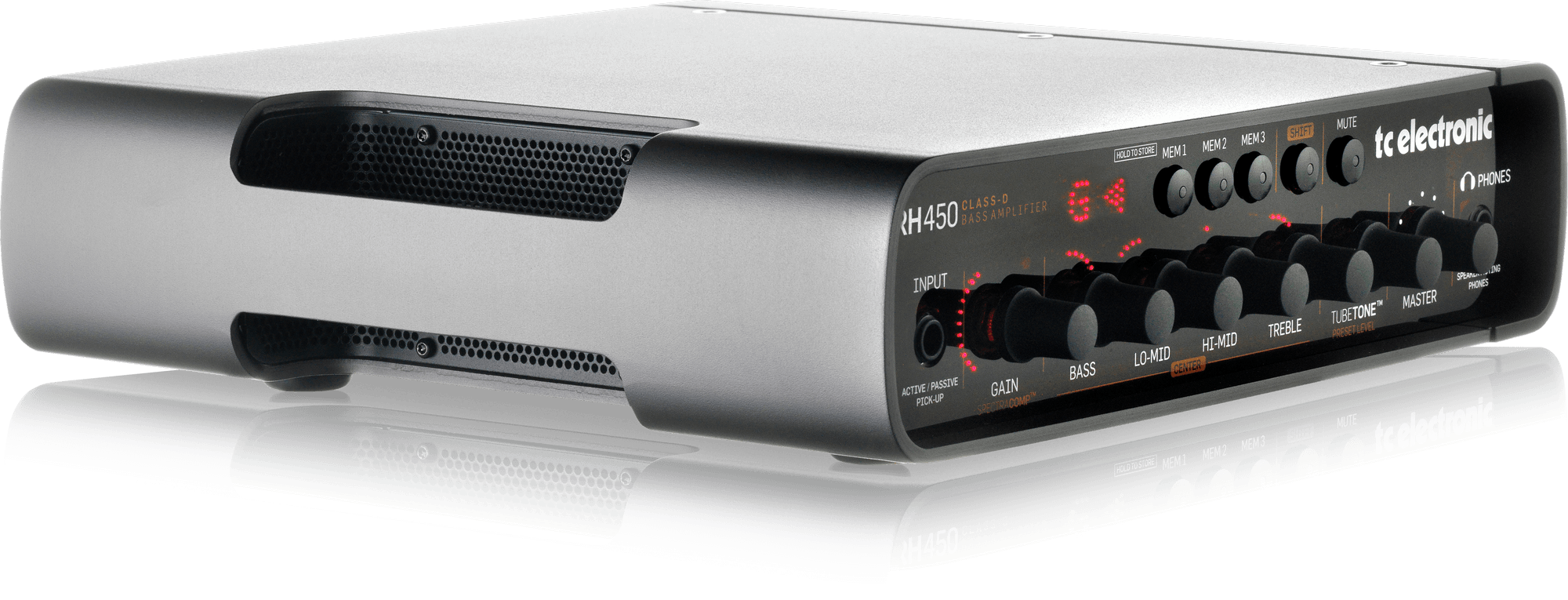
Alternatively, I had the TC Electronic RH450 bass amp for many years, it's maybe worth considering buying used at a low price. If the BAM are not available.

-
I love that form factor with the built-in handle! Originally Posted by GuyBoden
-
I finally got a chance to try out my newly acquired TC Electronic BQ500 amp head with an open back 1-12" cab (with mid-1960s Jensen C12N driver, 8 ohms). I was at a jam session in a fairly loud room, so I think it was a good test. I was playing my old Gibson Howard Roberts Custom (with the oval soundhole) fitted with a Duncan Alnico II Pro pickup.
The only place I could put the speaker cab was up against the back wall. The reinforcement from the wall made the bass way too loud, so I dialed it down to zero on the amp. I guess the amp is voiced for bass. I had no lack of bass coming from the speaker even with the bass control all the way down.
The verdict?
The tone was pretty good, I'd say. A couple of other guitar players complimented the sound I was getting. It didn't sound cold and sterile to me. I was able to dial in a usable tone almost instantly. The BQ500 has a pretty dark tone overall. I guess that means it sounds "warm." It doesn't have the magic smoky aura of my Ampeg Reverberocket 2, but that amp is pretty special that way.
I think it worked well. It certainly has plenty of volume, lots of headroom. I would have to be playing it really loud to get it to fart out.
I would have liked to have had the real featherweight BAM200, but the BQ500 fits in a small backpack, which leaves my hands free to carry my gig bag and the speaker cab in one trip. I can also choose to make two trips and not get so overloaded. That's a lot different than lugging my Fender Deluxe, which makes me feel like it's pulling my arm off.
Speaking of Ampeg amps, I found this photo of Wes Montgomery with Creed Taylor from about 1966. I think Wes was playing his custom L5 with the heart inlay through an Ampeg Gemini amp there. Pretty cool.

-
I've played a few more gigs and rehearsals with this TC Electronic BQ500 head.
I've found that the BQ500 with my (cheap) Seismic 1x12 cab loaded with a 1960s Jensen C12N makes too much bass. I had the Bass control set all the way down and it was still kind of boomy sounding. That might have been caused by room acoustics, but I have tried that combo twice, in two different rooms. My low E string seemed too loud, which made it conflict with the bass (acoustic with a pickup, through a small amp of its own). I've since lowered my guitar pickup on the low strings end, which seems to have reduced the boominess.
I had bought a (really inexpensive) Monoprice 'Stage Right' 1x12 cabinet loaded with a Chinese-made Celestion Vintage 30 speaker. This cab with the BQ500 sounded very good today at a low volume rehearsal. At one point I had a chance to play it a little louder and it still sounded very good. Still lot of bass, but not too much. (I had the Bass knob down around 8 o'clock.) Nice projection of the mids, not harsh and bright or 'hard' or 'sterile' sounding. It felt good playing through the combo. That's important to me.
I got to compare it to a different contemporary small amp, too:
At one rehearsal, there was an expensive, very small but powerful amp for me to play through. It's obviously a well designed amp for keyboards, acoustic-electric guitar, etc., but it sounds too clinical and sterile for my archtop. It doesn't feel good while I'm playing, even at very low volume where I can hear my guitar acoustically as well as through the amp. I like to hear more color from my amp. This amp sounds colorless, 'stiff' and 'hard' to me. It's not fun to play through, at least for me.
I also played a gig with my trusty Ampeg Reverberocket (1960s, tubes, original Utah speaker), and the sort of 'flutey' sound it gets just makes me feel good when I'm playing. The BQ500 doesn't sound quite that 'juicy,' but it gets fairly close, and it has an attractive sound of its own.
Re: The "THRUST" feature - I tried using the built in compressor, and I think it's preset to a setting that squashes the dynamics with too much enthusiasm. I find the effect is too intense, not subtle enough. I don't use it.
Re: Tone Controls:
- The BQ500's Bass control seems to really boost the frequencies from low E up to around C on the low E string. I keep the Bass control way down around 7 or 8 o'clock.
- The Low Mid control does a lot of work for me. I keep it around 1 or 2 o'clock. I think I like a little bit of boost around 400 Hz.
- The High Mid control works like a treble control for me. I usually keep it around 10 o'clock, with the guitar volume backed off to no more than about '8' on the dial. Guitar tone control at about '6', but I vary it depending on what I'm doing at any particular moment.
- The Treble control sounds like it brings out the very top end of the guitar sound, which I normally roll off. That control stays down around 7 o'clock.
I find I can dial in a useful sound quickly, now that I've used the amp a few times. The 4-band EQ works well for me.
Re: Gain and Master Volume controls:
- I keep the Gain up around 10 o'clock.
- The Master Volume works how you'd expect it work. I usually have it set to around 8 or 9 o'clock and roll off the Vol control on my guitar a bit. It's plenty loud like that. If I have to get more clean volume, I can dial back the Gain and turn up the Master, and I think there will be plenty of headroom.
- However, turning the Gain control up past about 3 o'clock doesn't yield a useful overdrive or smooth breakup kind of sound. It grinds and blats for me. I guess using the THRUST control would control that and let me play really loud, if I had to.
And what of this MOSFET preamp question?
- On TCE's webpage for the BQ500, a feature bullet says, "High-voltage Mosfet preamplifier for authentic sound and feel of a tube amp."
- On TCE's BAM200 page, the bullet says, "TC Electronic preamplifier design for authentic sound and feel of a tube amp." That's kind of vague.
I guess I can rest assured that the BQ500 does use MOSFETs in the preamp circuit. Whether or not that makes any difference at all is an open question.
Anyway, I like the BQ500. I'm keeping it as a backup and as a lighter weight rig for smaller gigs and rehearsals.
--
-
Slight Digression: Was that the combo amp with the ~20 watt tube head built in? Originally Posted by RonGon
I bought a Monoprice 'Stage Right' tube combo amp with a Celestion Vintage 30 speaker in it maybe 5 years ago, and I used it for two gigs before A) I determined that no matter how I set the controls, it was always way too bright and a bit too distorted; and B) it broke. Seriously, two gigs and it died.
An observation, based on my use of the BQ500 for bass: Be aware that the balanced XLR output, even when set for "pre EQ", is post Gain control...so all of the careful balancing of Gain versus Master that I've come up with in rehearsals and gigs with no PA support got thrown out of the window as soon as I started playing venues where the bass was put through the PA. I had to dial the Gain way down to avoid clipping the FOH mic preamps. Originally Posted by RonGon
Stupid design, if you ask me.
-
Class D amps do not clip gracefully. Simply overdriving the output stage (which is what high gain + low master volume do) yields exactly what you describe and sounds terrible. It will also overheat the amp if played that way. The gain control is there to match the input signal to the power stage. Set it higher for low output signals from weak passive pickups and lower for high output active pickups. I don’t know what circuitry Quilter uses to get decent O/D - it’s proprietary. But it’s clearly much more than simple preamp gain boost. Originally Posted by RonGon
I also assumed that the BAM200 does not have a MOSFET preamp because TC does not say so anywhere on the amp, its packaging, or in any literature. But multiple reviews say it does, and it sounds smoother and warmer than a cheap SS preamp ought to sound. So I can believe it - but it sure is odd that a desirable feature like that wouldn’t be splashed all over TC’s marketing.
Bass players seem to love having compressors. It’s not very useful for us unless you use O/D or distortion-based effects that need a little more sustain. But I find it useful (“thrust” set at about 11 o’clock) when backing singers solo, because it reduces rare but distracting transients if I accidentally brush, pluck, or strike a string a little too hard during quiet passages. This happens on occasion when I have to reach up and turn the page on my tablet if I have to use a chart that’s more than one page (which vocalists often provide because they were prepared for piano players). Yes, I know there are page turning pedals - I’m too cheap to buy one and too lazy to carry it. I do make a shorter chart that fits on one page when I have the time, but most such charts are thrust () on me just before a gig starts.
-
This definitely got my attention. Here's a good explanation (including a discussion of cab ohms and why this is really a 50 watt amp for most people). HE also points out that it has a built in power supply so no laptop cable. I definitely like that. It seems to me that this would match up really nicely with an RE NY8. The section of the video that deals with the amp starts at around 12:12 (I tried the YT starts at X time function but it didn't work) Originally Posted by Woody Sound
There's also this one from EH. Just skip the first 12 seconds. After the voice over it goes straight to some decent clean tones.
-
"Was that the combo amp with the ~20 watt tube head built in?"
No, I bought the Stage Right separate 1x12 cabinet that's supposed to go with their 30 watt tube head. This one:
Just a moment...
It was on super-sale, cheap, so I got it then.


 Reply With Quote


What is it?!? Why am I still at it?!?
Today, 04:53 AM in Everything Else