Pattern 33 – Dm7, E7#9, Bm7b5 (Cry Me a River)


Pattern 33 is called the Cry Me a River motif, named after the opening melody of the famous jazz standard.
This pattern uses a Dm(add 9) arpeggio:
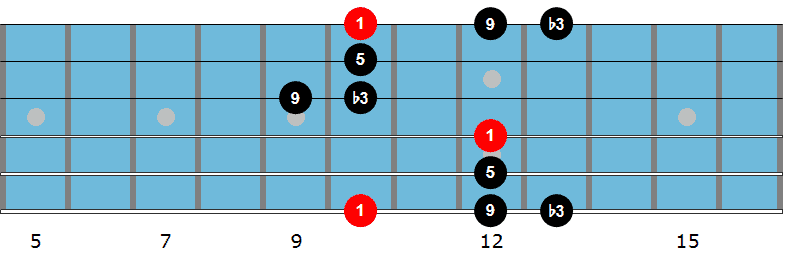
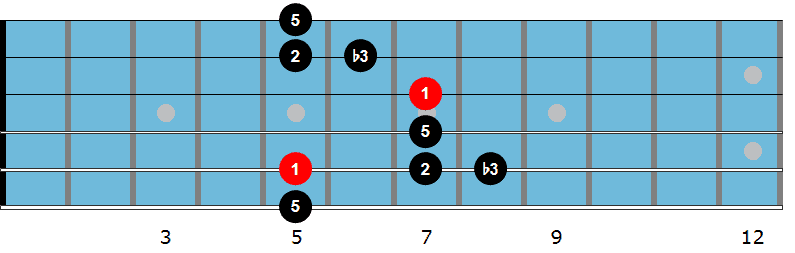
Over Minor Chords
Pattern 33 works over minor chords:
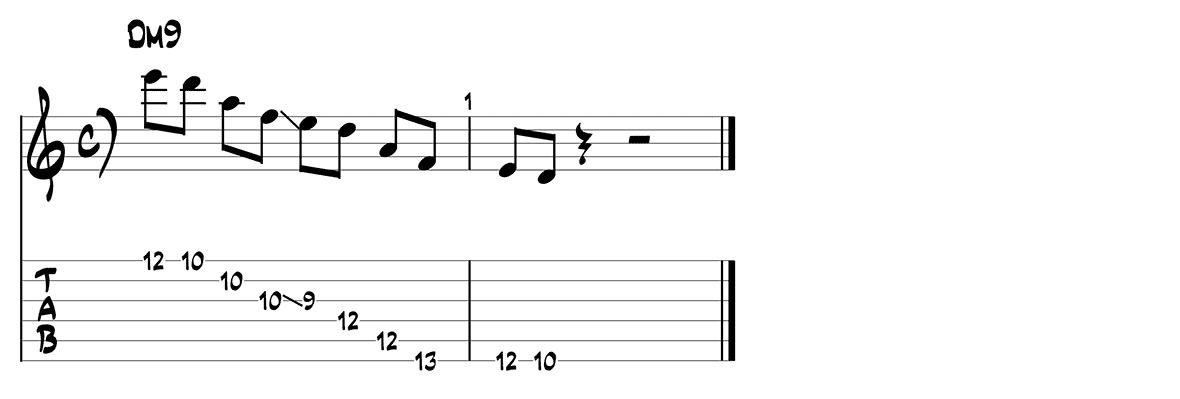
Over Dominant Chords
It also works well over altered dominant chords.
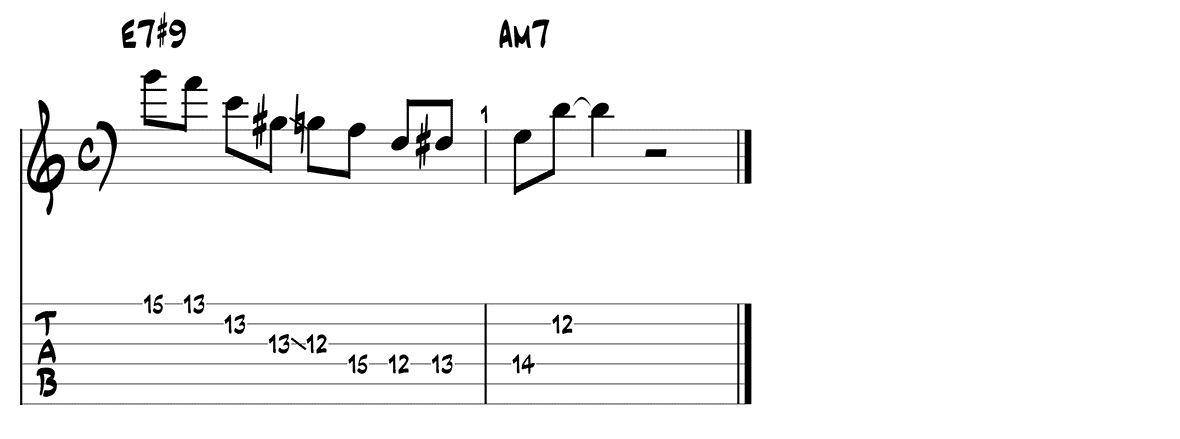
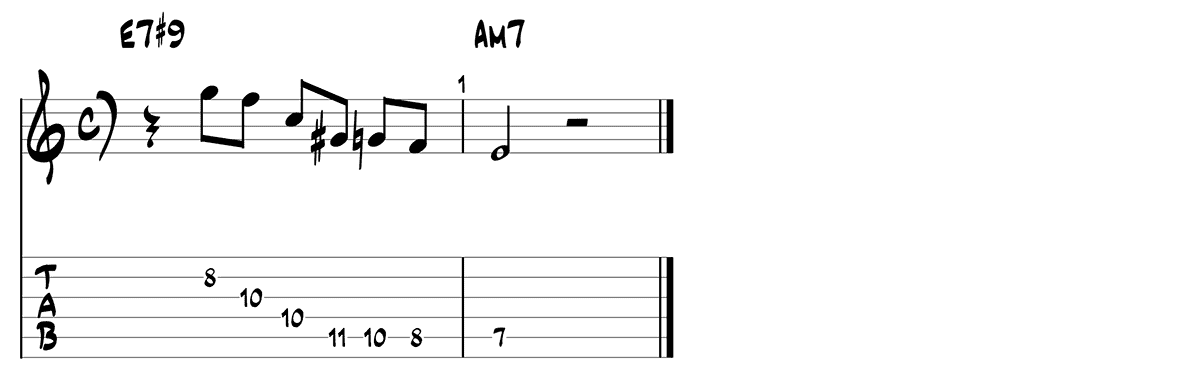
You can play a m(add9) arpeggio over altered dominant chords, starting on the b9.
For example: Fm(add9) over E7#9.
| Fm(add9) arpeggio | F | G | Ab | C |
|---|---|---|---|---|
| Played over E7 | b9 | #9 | 3 | #5 |
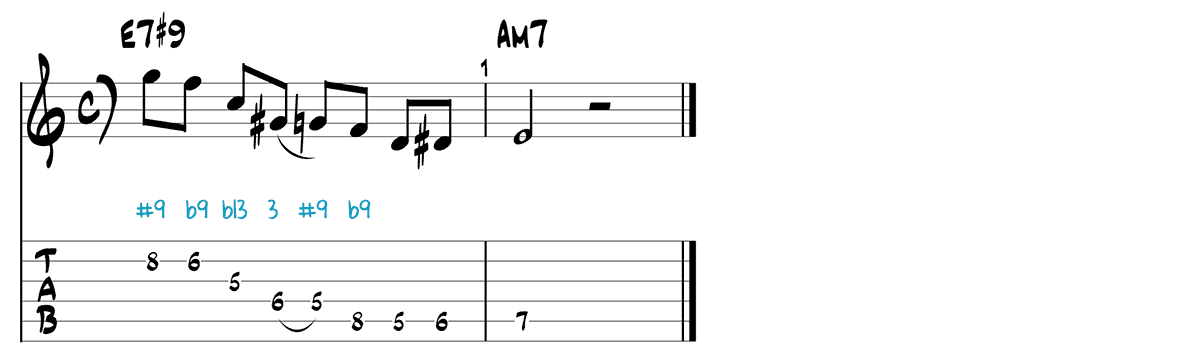
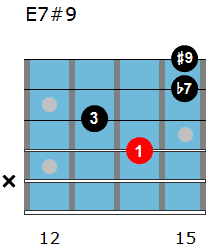
This line is loosely based on an E7#9 voicing and uses an Fm(add9) arpeggio.
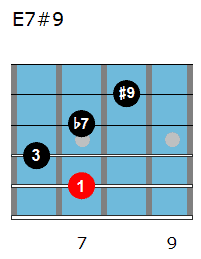
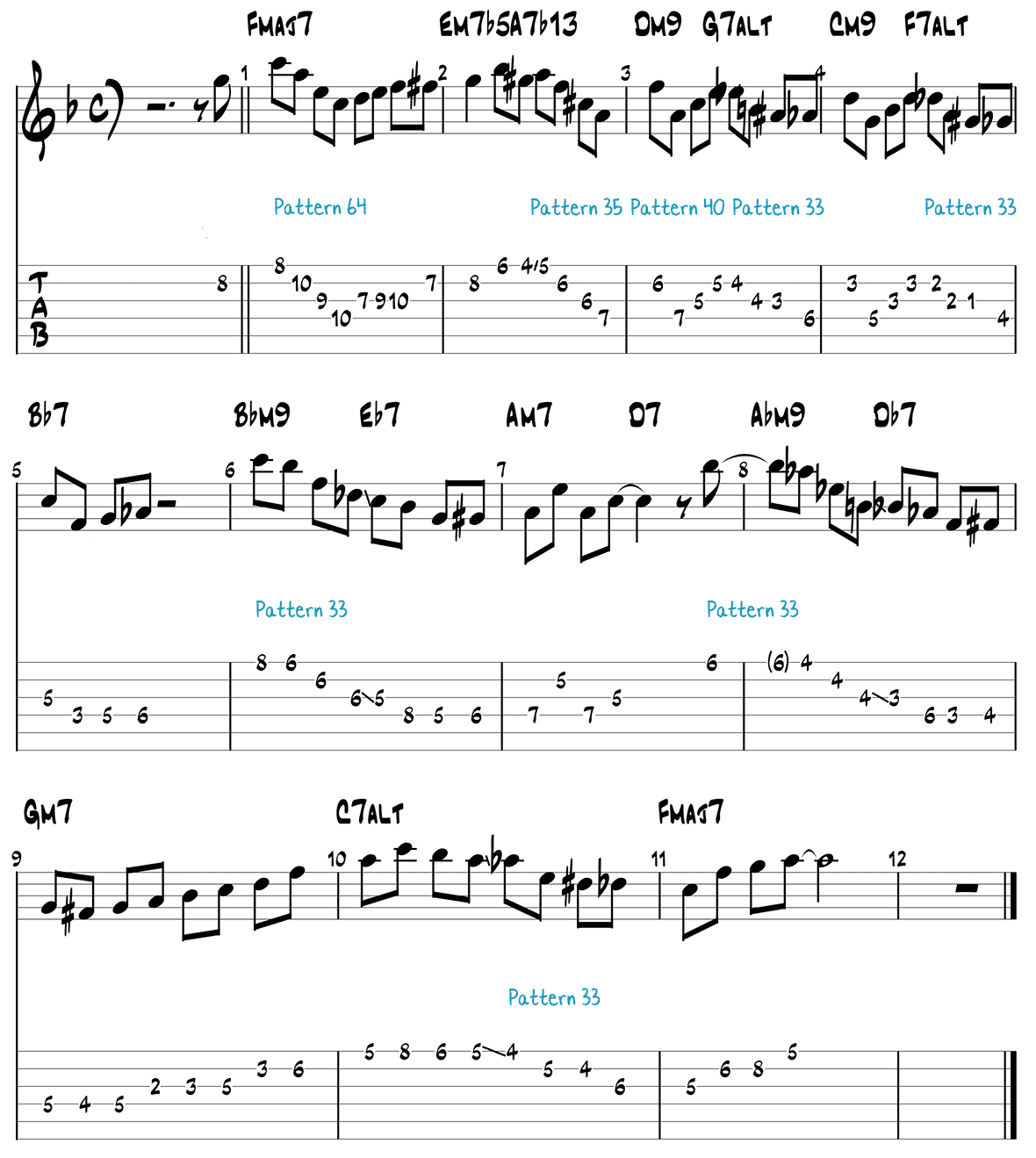
Here is a study over the chords changes of Blues for Alice that will help you get pattern 33 under your fingers.
Backing Track
Listen & Play-Along
Over half-Diminished Chords
Pattern 33 can also be used over half-diminished chords.
You can play a m(add9) arpeggio over half-diminished chords, starting on the b3.
For example: Dm(add9) over Bm7b5.
| Dm(add9) arpeggio | D | E | F | A |
|---|---|---|---|---|
| Played over Bm7b5 | b3 | 11 | b5 | b7 |
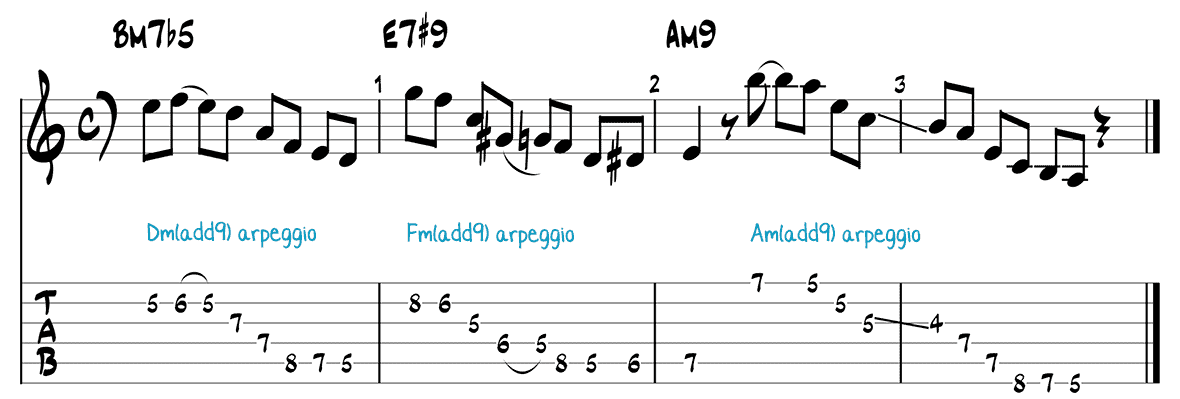
Here is an example lick over a minor II V I that uses pattern 33 over all three chords:
Other Positions
Used in (study/bar): 3/23 – 3/28 – 4/33 – 5/9
Hi Dirk, for There will Never Be Another you, on bar 27 over the D7, I noticed the pattern and notes are from the D altered scale. Are we treating the D7 as resolving dominant?, I don’t see a nearby 2 or 1 if its a 5 chord.
Thanks Ray, I fixed the typo…
I’ve been using this since forever, never realized it comes from Cry Me A River 🙂